Shuanglin Temple
⭐ 4.60
Shuanglin Temple Scenic Area, Pingyao County, Shanxi Province, China
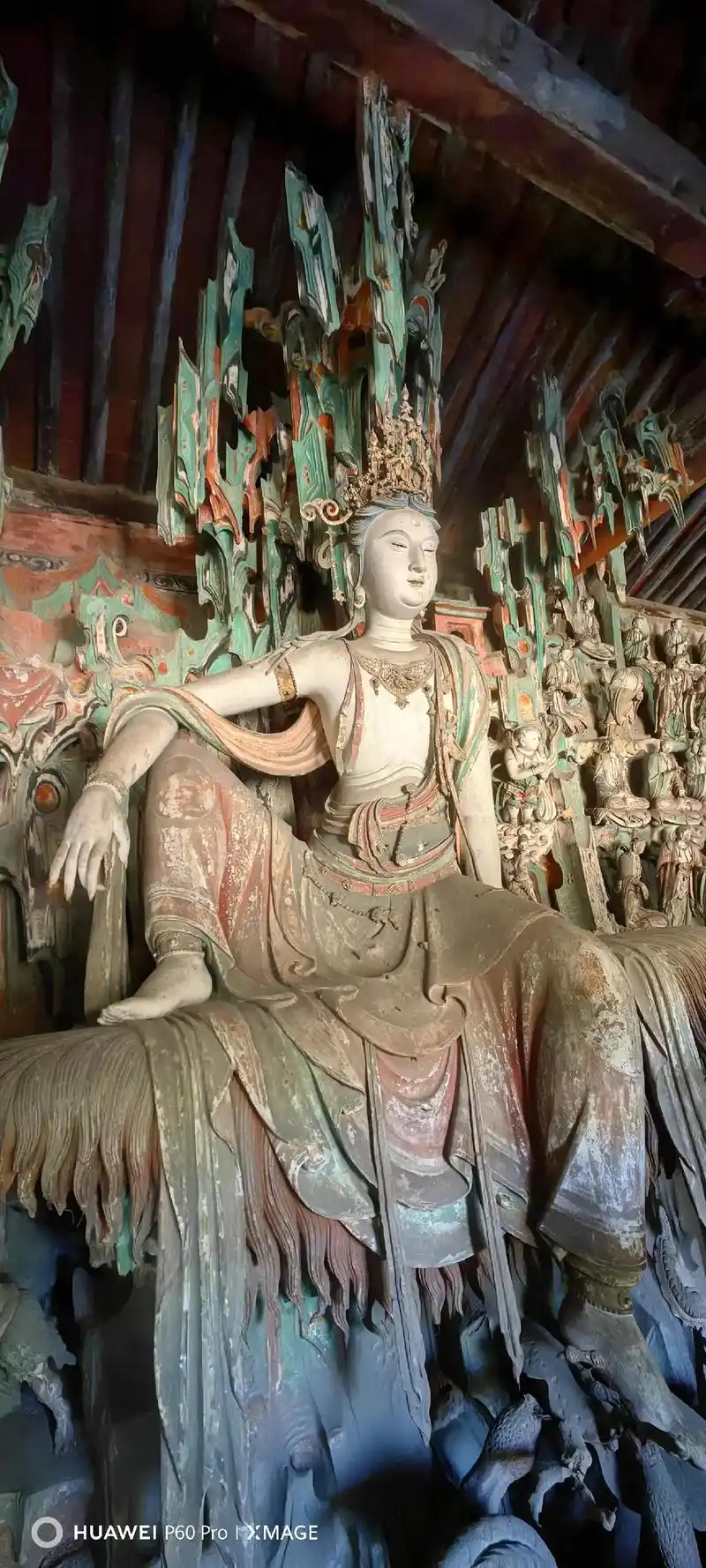 Shuanglin Temple traces its origins to the Northern Wei dynasty in the 6th century, a period when Buddhism flowered across northern China much as Gothic cathedrals were rising across medieval Europe. Originally called Zhongdu Temple, it was rebuilt on a grand scale during the Ming dynasty, and the structures and sculptures you see today date primarily from the 15th and 16th centuries. Together with nearby Zhenguo Temple, it forms part of the UNESCO World Heritage designation "Ancient City of Pingyao," often summarized as "One City, Two Temples." For two millennia, this place has functioned as a living workshop of Buddhist devotion, and scholars regard it as an irreplaceable archive of Chinese religious art and folk belief.
The architecture follows a traditional axial layout of ten main halls, but it is the sculptures—more than 2,000 in total—that truly astonish. Ming artisans worked in polychrome clay using a sophisticated combination of round carving, suspended sculpture clinging to walls and ceilings, and relief panels. The figures are strikingly naturalistic: you can see the tension in muscles, the flutter of drapery folds, and individual personalities shining through painted eyes. Where medieval European sculpture often stiffened into iconographic formulas, Shuanglin's craftsmen injected street-level vitality into sacred subjects, creating deities who look as though they might step down from their pedestals and join the conversation.
Several halls deserve special attention. The Heavenly Kings Hall houses towering three-meter guardian figures with piercing glass eyes that seem to track your movement. In the Shakyamuni Hall, a suspended sculpture depicts Guanyin crossing the sea in a composition of remarkable dynamism. The Arhat Hall contains eighteen disciples rendered with such individuality that two of them—the "Mute Arhat" and the "Sick Arhat"—are celebrated for capturing the tenderness and frailty of ordinary human life. The Thousand Buddhas Hall is dominated by a Wei Tuo bodhisattva twisted mid-motion, widely hailed as the finest depiction of this warrior-monk guardian in all of China, surrounded by more than 500 suspended bodhisattvas that fill the space like a celestial kaleidoscope.
Equally remarkable is the Bodhisattva Hall, where a thousand-armed, thousand-eyed Guanyin spreads twenty-six arms radiating from her body, each palm incised with a wisdom eye. Across the courtyard, the Dizang Hall offers a complete sculptural cycle of the Ten Courts of Hell, where the judges of the dead wear official Ming dynasty robes rather than demonic masks—a striking visualization of how Buddhist afterlife concepts merged with imperial Chinese bureaucracy. These ensembles are not merely decorative; they served as vivid tools of moral instruction for illiterate pilgrims, blending theology with theatrical storytelling in ways that recall the painted Last Judgments of Italian churches or the carved tympana of Gothic cathedrals.
Practical planning matters here. Tickets cost 33 yuan for adults, purchased with real-name ID at the gate, and are not included in the Pingyao ancient city pass. The temple opens from 8:00 a.m. to 6:30 p.m., and photography is strictly prohibited inside the halls—no flash, no tripods, and absolutely no touching the sculptures. Located about six kilometers outside the walled town, Shuanglin is easiest reached by taxi from Pingyao (roughly 20–30 yuan each way); arrange your return trip with the driver in advance, as cabs are scarce at the site. Allow two to three hours for a meaningful visit; hire a local guide or download an audio tour beforehand, since the religious symbolism and sculptural subtleties are easy to miss without context. Sunlight streaming through latticed windows in the early afternoon brings the figures dramatically to life.
Shuanglin Temple is not a casual stop but a contemplative pilgrimage into the soul of late imperial Chinese craftsmanship. Without the carnival distractions of larger tourist sites, it offers something increasingly rare: an unmediated encounter with artworks that have watched over worshippers for half a millennium. Whether you are an art historian, a practicing Buddhist, or simply a curious traveler who lingered in the Uffizi and felt your breath catch, you will find here the same quiet shock of recognition before beauty that has outlasted dynasties. Pingyao's beautifully preserved Ming walls get the headlines, but for many visitors, a morning among Shuanglin's painted clay figures becomes the unexpected highlight of the journey.
Shuanglin Temple traces its origins to the Northern Wei dynasty in the 6th century, a period when Buddhism flowered across northern China much as Gothic cathedrals were rising across medieval Europe. Originally called Zhongdu Temple, it was rebuilt on a grand scale during the Ming dynasty, and the structures and sculptures you see today date primarily from the 15th and 16th centuries. Together with nearby Zhenguo Temple, it forms part of the UNESCO World Heritage designation "Ancient City of Pingyao," often summarized as "One City, Two Temples." For two millennia, this place has functioned as a living workshop of Buddhist devotion, and scholars regard it as an irreplaceable archive of Chinese religious art and folk belief.
The architecture follows a traditional axial layout of ten main halls, but it is the sculptures—more than 2,000 in total—that truly astonish. Ming artisans worked in polychrome clay using a sophisticated combination of round carving, suspended sculpture clinging to walls and ceilings, and relief panels. The figures are strikingly naturalistic: you can see the tension in muscles, the flutter of drapery folds, and individual personalities shining through painted eyes. Where medieval European sculpture often stiffened into iconographic formulas, Shuanglin's craftsmen injected street-level vitality into sacred subjects, creating deities who look as though they might step down from their pedestals and join the conversation.
Several halls deserve special attention. The Heavenly Kings Hall houses towering three-meter guardian figures with piercing glass eyes that seem to track your movement. In the Shakyamuni Hall, a suspended sculpture depicts Guanyin crossing the sea in a composition of remarkable dynamism. The Arhat Hall contains eighteen disciples rendered with such individuality that two of them—the "Mute Arhat" and the "Sick Arhat"—are celebrated for capturing the tenderness and frailty of ordinary human life. The Thousand Buddhas Hall is dominated by a Wei Tuo bodhisattva twisted mid-motion, widely hailed as the finest depiction of this warrior-monk guardian in all of China, surrounded by more than 500 suspended bodhisattvas that fill the space like a celestial kaleidoscope.
Equally remarkable is the Bodhisattva Hall, where a thousand-armed, thousand-eyed Guanyin spreads twenty-six arms radiating from her body, each palm incised with a wisdom eye. Across the courtyard, the Dizang Hall offers a complete sculptural cycle of the Ten Courts of Hell, where the judges of the dead wear official Ming dynasty robes rather than demonic masks—a striking visualization of how Buddhist afterlife concepts merged with imperial Chinese bureaucracy. These ensembles are not merely decorative; they served as vivid tools of moral instruction for illiterate pilgrims, blending theology with theatrical storytelling in ways that recall the painted Last Judgments of Italian churches or the carved tympana of Gothic cathedrals.
Practical planning matters here. Tickets cost 33 yuan for adults, purchased with real-name ID at the gate, and are not included in the Pingyao ancient city pass. The temple opens from 8:00 a.m. to 6:30 p.m., and photography is strictly prohibited inside the halls—no flash, no tripods, and absolutely no touching the sculptures. Located about six kilometers outside the walled town, Shuanglin is easiest reached by taxi from Pingyao (roughly 20–30 yuan each way); arrange your return trip with the driver in advance, as cabs are scarce at the site. Allow two to three hours for a meaningful visit; hire a local guide or download an audio tour beforehand, since the religious symbolism and sculptural subtleties are easy to miss without context. Sunlight streaming through latticed windows in the early afternoon brings the figures dramatically to life.
Shuanglin Temple is not a casual stop but a contemplative pilgrimage into the soul of late imperial Chinese craftsmanship. Without the carnival distractions of larger tourist sites, it offers something increasingly rare: an unmediated encounter with artworks that have watched over worshippers for half a millennium. Whether you are an art historian, a practicing Buddhist, or simply a curious traveler who lingered in the Uffizi and felt your breath catch, you will find here the same quiet shock of recognition before beauty that has outlasted dynasties. Pingyao's beautifully preserved Ming walls get the headlines, but for many visitors, a morning among Shuanglin's painted clay figures becomes the unexpected highlight of the journey.