Mount Emei Cableway
⭐ 4.20
Mount Emei Cableway, Emeishan City, Leshan City, Sichuan Province, China
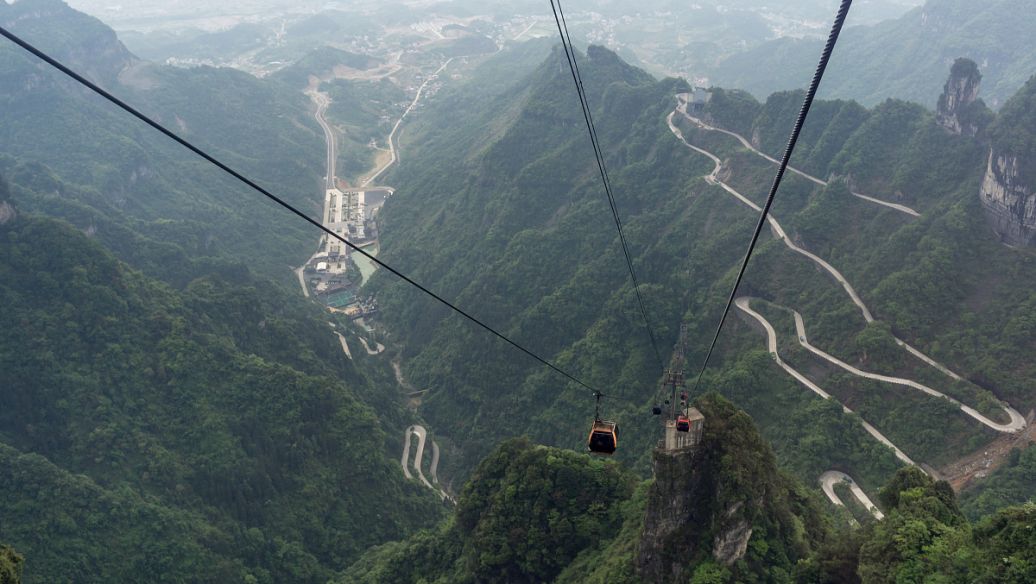 Mount Emei, a UNESCO World Heritage Site since 1996, has drawn Buddhist pilgrims for nearly two millennia—long before Marco Polo first marveled at China's wonders. Its Golden Summit represents one of the Four Sacred Buddhist Mountains of China, revered since the 2nd century when the first monastery was established here. Today, the cable car system carries over a million visitors annually to this spiritual epicenter, much as the funicular railways of Switzerland's Alps transformed pilgrimage to remote mountaintop chapels like the Matterhorn's chapel into accessible spiritual adventures for European travelers.
The Jinding Cableway itself is an engineering triumph, built with Austrian Doppelmayr reversible technology typically deployed in the European Alps. Spanning nearly 500 vertical meters in just three to five minutes, the cabin ascends through distinct ecological zones—from broadleaf forest to alpine meadow—offering passengers what feels like a compressed journey from the foothills of Bavaria to the rocky heights of the Dolomites. The Wannian Cableway, by contrast, serves the lower-elevation Wannian Temple area, a 4th-century monastery complex where visitors can witness centuries-old Buddhist statuary in atmospheric mountain settings.
At the summit awaits the magnificent Golden Summit complex, crowned by the towering 48-meter Samantabhadra statue—one of the largest bronze Buddhist sculptures on Earth, comparable in ambition to Rio's Christ the Redeemer. The surrounding Huazang Temple, rebuilt after a devastating 19th-century fire, features gilded bronze halls where monks have chanted sutras for centuries. When weather permits, the famous "sea of clouds" phenomenon creates a surreal landscape where only the highest peaks pierce the mist, evoking mystical visions recorded in Chinese poetry for over a thousand years.
Practical planning is essential for this adventure. During peak season (April–October), expect Jinding cable car tickets priced at 65 yuan ascending and 55 yuan descending (120 yuan round-trip), while the Wannian line costs 110 yuan round-trip. Both systems operate roughly 5:30 AM to 6:00 PM in summer. Crucially, the Golden Summit enforces a daily cap of 8,000 visitors—reservations must be made in advance through the official "Mount Emei Scenic Area" WeChat account. Queues during peak hours can stretch from one to three hours, so early-bird arrivals or late-afternoon visits are strongly recommended.
Weather dictates everything on Emei. Clear mornings deliver the legendary golden sunrise, while fog obliterates the views entirely—a common occurrence, so checking the summit webcam or forecast before departure is non-negotiable. Temperatures at 3,077 meters can plummet 15°C below the base, meaning summer visitors should still pack a windbreaker or light down jacket. Those with heart conditions or severe hypertension should consult physicians before riding, as the rapid ascent mimics the effects of a quick altitude gain similar to crossing the Alps from Geneva to Chamonix.
For an efficient one-day itinerary, arrive at the Huangwan Visitor Center before 7:00 AM, board the sightseeing bus to Leidongping, walk 40 minutes to Jieyindian station, then transfer to the Jinding Cableway. After exploring the Samantabhadra statue and Huazang Temple, return the same route. Sunrise chasers must book accommodation at Leidongping or the summit in advance and confirm first-cableway departure times. A final warning: the wild Tibetan macaques along the Jieyindian-Leidongping trail are notorious for snatching plastic bags, food, and loose belongings—think of them as China's more aggressive cousins of Gibraltar's famous Barbary macaques—so secure all items and avoid eating in their presence.
Mount Emei, a UNESCO World Heritage Site since 1996, has drawn Buddhist pilgrims for nearly two millennia—long before Marco Polo first marveled at China's wonders. Its Golden Summit represents one of the Four Sacred Buddhist Mountains of China, revered since the 2nd century when the first monastery was established here. Today, the cable car system carries over a million visitors annually to this spiritual epicenter, much as the funicular railways of Switzerland's Alps transformed pilgrimage to remote mountaintop chapels like the Matterhorn's chapel into accessible spiritual adventures for European travelers.
The Jinding Cableway itself is an engineering triumph, built with Austrian Doppelmayr reversible technology typically deployed in the European Alps. Spanning nearly 500 vertical meters in just three to five minutes, the cabin ascends through distinct ecological zones—from broadleaf forest to alpine meadow—offering passengers what feels like a compressed journey from the foothills of Bavaria to the rocky heights of the Dolomites. The Wannian Cableway, by contrast, serves the lower-elevation Wannian Temple area, a 4th-century monastery complex where visitors can witness centuries-old Buddhist statuary in atmospheric mountain settings.
At the summit awaits the magnificent Golden Summit complex, crowned by the towering 48-meter Samantabhadra statue—one of the largest bronze Buddhist sculptures on Earth, comparable in ambition to Rio's Christ the Redeemer. The surrounding Huazang Temple, rebuilt after a devastating 19th-century fire, features gilded bronze halls where monks have chanted sutras for centuries. When weather permits, the famous "sea of clouds" phenomenon creates a surreal landscape where only the highest peaks pierce the mist, evoking mystical visions recorded in Chinese poetry for over a thousand years.
Practical planning is essential for this adventure. During peak season (April–October), expect Jinding cable car tickets priced at 65 yuan ascending and 55 yuan descending (120 yuan round-trip), while the Wannian line costs 110 yuan round-trip. Both systems operate roughly 5:30 AM to 6:00 PM in summer. Crucially, the Golden Summit enforces a daily cap of 8,000 visitors—reservations must be made in advance through the official "Mount Emei Scenic Area" WeChat account. Queues during peak hours can stretch from one to three hours, so early-bird arrivals or late-afternoon visits are strongly recommended.
Weather dictates everything on Emei. Clear mornings deliver the legendary golden sunrise, while fog obliterates the views entirely—a common occurrence, so checking the summit webcam or forecast before departure is non-negotiable. Temperatures at 3,077 meters can plummet 15°C below the base, meaning summer visitors should still pack a windbreaker or light down jacket. Those with heart conditions or severe hypertension should consult physicians before riding, as the rapid ascent mimics the effects of a quick altitude gain similar to crossing the Alps from Geneva to Chamonix.
For an efficient one-day itinerary, arrive at the Huangwan Visitor Center before 7:00 AM, board the sightseeing bus to Leidongping, walk 40 minutes to Jieyindian station, then transfer to the Jinding Cableway. After exploring the Samantabhadra statue and Huazang Temple, return the same route. Sunrise chasers must book accommodation at Leidongping or the summit in advance and confirm first-cableway departure times. A final warning: the wild Tibetan macaques along the Jieyindian-Leidongping trail are notorious for snatching plastic bags, food, and loose belongings—think of them as China's more aggressive cousins of Gibraltar's famous Barbary macaques—so secure all items and avoid eating in their presence.