Mount Emei Grand Buddha Temple
⭐ 4.50
Grand Buddha Temple, Emeishan City, Leshan City, Sichuan Province, China
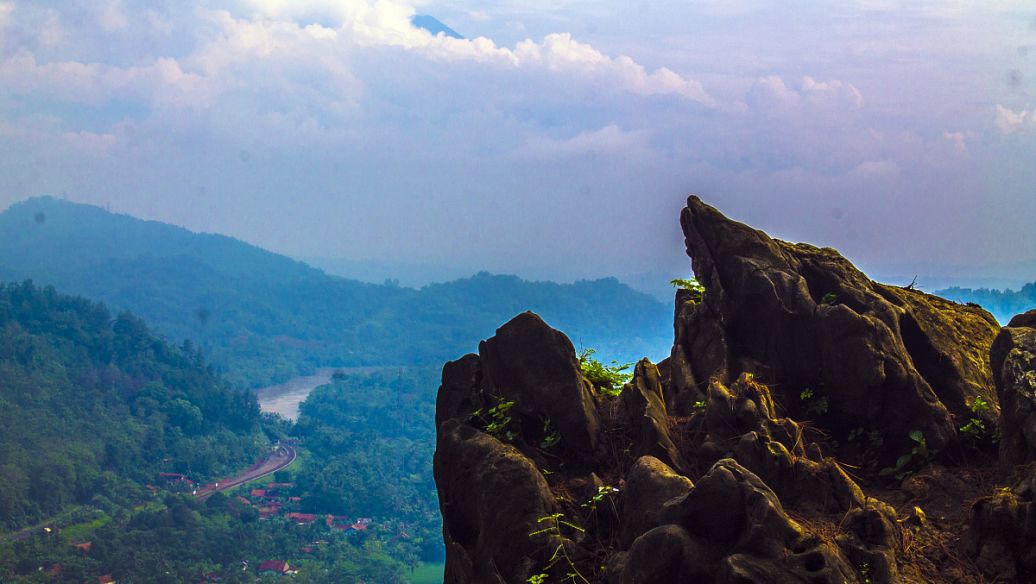 The temple traces its origins to the late Ming dynasty, when a Dafo Si first rose near Mount Emei, a Buddhist holy mountain venerated for over a millennium alongside four other sacred peaks of China. Ravaged and rebuilt across the centuries, the present complex was begun in 1992 under the Mount Emei Buddhist Association, completed after more than a decade of work, and opened in 2008. Think of it as an Asian echo of Europe's great abbey reconstructions, like the Benedictine Monte Cassino rising again on its medieval foundations after wartime destruction.
Laid out on a traditional monastic plan of seven principal halls, the 56,000-square-meter complex marches northward through eleven ascending courtyards framed by vermilion walls and gilded roofs. The central axis links the Great Light Pavilion, Heavenly Kings Hall, Mahavira Hall, halls honoring Samantabhadra and Manjushri, and culminates in the towering Sutra Library. The carved beams, bracket sets, and sweeping eaves recall the imperial grandeur of Beijing's Forbidden City, while the rhythmic procession of halls evokes a great European cathedral close such as Burgos or Toledo.
The spiritual heart is a 12-meter Thousand-Armed and Thousand-Eyed Guanyin, carved from a single ancient ebony log and unrivaled among Han Buddhist sculpture. Beyond it stretches an 800-meter scripture corridor, where inscribed passages and shifting light create an immersive atmosphere reminiscent of illuminated medieval psalters. Monastics from the Sichuan Buddhist Academy study here, and visitors may join daily Chan meditation, sutra copying, bell-ringing, and blessing-stamp rituals, making the temple a working center of contemporary Chinese Buddhism rather than a static museum.
To the south, the garden quarter unfolds like the cloister garths of a Cistercian abbey. Three lotus pools named Yuanjue, Dengjue, and Miaojue trace the character "fu" when seen from above, blooming with peonies in spring, lotus in summer, and chrysanthemums in autumn. Koi drift beneath a 500-year-old bodhi tree, black swans glide past, and the grounds function as much as a city park as a sacred precinct, offering quiet reflection between soaring halls.
The temple sits at 274 Foguang South Road on Leshan's eastern outskirts, about ten minutes by taxi from the Mount Emei high-speed rail station. Entry has been permanently free since 9 February 2024, with no reservation required. Doors open daily 08:00-18:00, though some halls may close briefly during ceremonies. Plan two to three hours; enter the north gate, walk south along the main axis, and exit through the south gate after the gardens. Step over (never on) thresholds, dress modestly, stay silent, and never photograph inside halls.
Few places make Chinese Buddhist architecture this accessible to the first-time visitor. Pair it with the colossal Leshan Giant Buddha, a 71-meter Tang-dynasty sculpture carved into a cliff face (on the scale of Michelangelo's David, only reclining), and a cable-car ascent of Mount Emei itself for a perfect day. Afterward, refuel with local specialties such as qiaojiao niurou (spicy beef-and-herb soup) and tianpi ya (sweet-skinned duck). Whether you arrive as pilgrim, photographer, or simply the culturally curious, the Grand Buddha Zen Temple extends a serene and remarkably generous welcome.
The temple traces its origins to the late Ming dynasty, when a Dafo Si first rose near Mount Emei, a Buddhist holy mountain venerated for over a millennium alongside four other sacred peaks of China. Ravaged and rebuilt across the centuries, the present complex was begun in 1992 under the Mount Emei Buddhist Association, completed after more than a decade of work, and opened in 2008. Think of it as an Asian echo of Europe's great abbey reconstructions, like the Benedictine Monte Cassino rising again on its medieval foundations after wartime destruction.
Laid out on a traditional monastic plan of seven principal halls, the 56,000-square-meter complex marches northward through eleven ascending courtyards framed by vermilion walls and gilded roofs. The central axis links the Great Light Pavilion, Heavenly Kings Hall, Mahavira Hall, halls honoring Samantabhadra and Manjushri, and culminates in the towering Sutra Library. The carved beams, bracket sets, and sweeping eaves recall the imperial grandeur of Beijing's Forbidden City, while the rhythmic procession of halls evokes a great European cathedral close such as Burgos or Toledo.
The spiritual heart is a 12-meter Thousand-Armed and Thousand-Eyed Guanyin, carved from a single ancient ebony log and unrivaled among Han Buddhist sculpture. Beyond it stretches an 800-meter scripture corridor, where inscribed passages and shifting light create an immersive atmosphere reminiscent of illuminated medieval psalters. Monastics from the Sichuan Buddhist Academy study here, and visitors may join daily Chan meditation, sutra copying, bell-ringing, and blessing-stamp rituals, making the temple a working center of contemporary Chinese Buddhism rather than a static museum.
To the south, the garden quarter unfolds like the cloister garths of a Cistercian abbey. Three lotus pools named Yuanjue, Dengjue, and Miaojue trace the character "fu" when seen from above, blooming with peonies in spring, lotus in summer, and chrysanthemums in autumn. Koi drift beneath a 500-year-old bodhi tree, black swans glide past, and the grounds function as much as a city park as a sacred precinct, offering quiet reflection between soaring halls.
The temple sits at 274 Foguang South Road on Leshan's eastern outskirts, about ten minutes by taxi from the Mount Emei high-speed rail station. Entry has been permanently free since 9 February 2024, with no reservation required. Doors open daily 08:00-18:00, though some halls may close briefly during ceremonies. Plan two to three hours; enter the north gate, walk south along the main axis, and exit through the south gate after the gardens. Step over (never on) thresholds, dress modestly, stay silent, and never photograph inside halls.
Few places make Chinese Buddhist architecture this accessible to the first-time visitor. Pair it with the colossal Leshan Giant Buddha, a 71-meter Tang-dynasty sculpture carved into a cliff face (on the scale of Michelangelo's David, only reclining), and a cable-car ascent of Mount Emei itself for a perfect day. Afterward, refuel with local specialties such as qiaojiao niurou (spicy beef-and-herb soup) and tianpi ya (sweet-skinned duck). Whether you arrive as pilgrim, photographer, or simply the culturally curious, the Grand Buddha Zen Temple extends a serene and remarkably generous welcome.