Xuanwu Lake
⭐ 4.80
Xuanwu Lake Scenic Area, Xuanwu District, Nanjing, Jiangsu, China
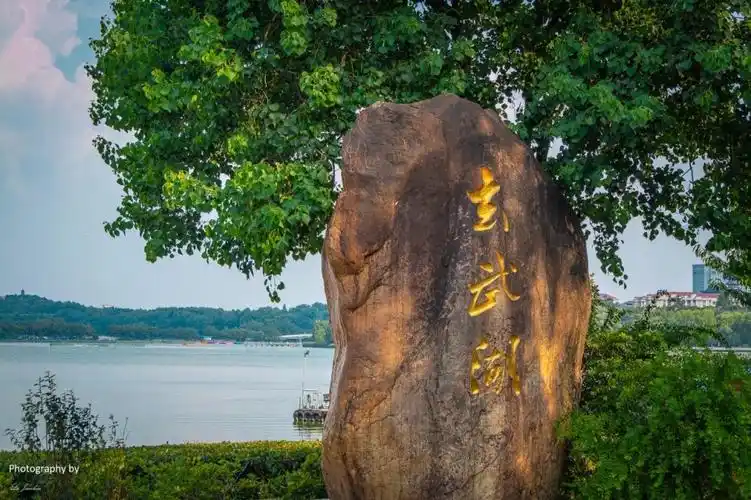 The lake's story begins in the Six Dynasties period (222–589 AD), placing its origins in an era roughly contemporary with the decline of the Western Roman Empire. Over the following millennium and a half, it served as a royal retreat, a military training ground, and finally a National Day archive repository under the Ming Dynasty—a record-keeping function akin to the Vatican Apostolic Archives in scale and significance. Today, the surviving Yellow Register Archive ruins on Liangzhou Island stand as a tangible reminder of imperial China's bureaucratic sophistication.
Architecturally, the scene is a dialogue between centuries. The Ming city wall—comparable in ambition and length to the surviving walls of Carcassonne or Ávila—curves along the lake's western edge, while across the water the forested ridges of Purple Mountain echo the wooded slopes that might cradle a Tuscan hill town. In the distance, the sleek silhouette of the Zifeng Tower punctuates the skyline, creating a visual conversation between medieval and modern that few cities can match.
The lake's cultural weight extends beyond politics into poetry and seasonal ritual. Lotus blooms transform the shores each summer into a scene reminiscent of Claude Monet's Giverny gardens, while spring cherry blossoms on Huanzhou Island draw crowds comparable to those flocking to Japan's sakura festivals. The grand basalt Xuanwu sculpture in the main plaza serves as a beloved photo landmark, its mythological tortoise-and-snake iconography resonating with visitors familiar with similar legends from Greco-Roman antiquity.
Practical planning is refreshingly simple. Admission is entirely free with no reservation required, and the lakeshore path remains open 24 hours. The Yellow Register Archive exhibition operates 9:00–16:30, while the five islands stay accessible until 22:00 in summer and 21:00 in winter. Bicycle rentals cost roughly 30 yuan per hour, paddle boats and pleasure craft about 20 yuan per person, and the nearest metro stations (Xuanwumen on Lines 1 and 3) deliver you directly to the water's edge—convenient for travelers arriving from Nanjing Railway Station just minutes away.
For the best experience, time your visit to late afternoon: sunset paints the ten-li causeway in amber, and from July through September the lotus reaches full bloom. Evening brings illuminated water-screen projections and occasional concerts that turn the lake into an open-air theatre. Enter through Xuanwumen Gate, stroll eastward along the shore to admire the lotuses on Huanzhou, continue to Liangzhou for the history museum and archive ruins, then either retrace your steps or hop a boat back across the water. In August's fierce heat, mornings and dusk are far more comfortable than the midday hours. Note that fishing, lotus-picking, and roller-skating are prohibited, and children should remain supervised near the water's edge.
Why visit? Because Xuanwu Lake offers something rare: a free, walkable, historically layered green space where a 600-year-old defensive wall, a forested sacred mountain, a glass-and-steel supertall skyscraper, and a working imperial archive share a single horizon. Few urban landscapes condense so much of a nation's past and present into such an approachable afternoon.
The lake's story begins in the Six Dynasties period (222–589 AD), placing its origins in an era roughly contemporary with the decline of the Western Roman Empire. Over the following millennium and a half, it served as a royal retreat, a military training ground, and finally a National Day archive repository under the Ming Dynasty—a record-keeping function akin to the Vatican Apostolic Archives in scale and significance. Today, the surviving Yellow Register Archive ruins on Liangzhou Island stand as a tangible reminder of imperial China's bureaucratic sophistication.
Architecturally, the scene is a dialogue between centuries. The Ming city wall—comparable in ambition and length to the surviving walls of Carcassonne or Ávila—curves along the lake's western edge, while across the water the forested ridges of Purple Mountain echo the wooded slopes that might cradle a Tuscan hill town. In the distance, the sleek silhouette of the Zifeng Tower punctuates the skyline, creating a visual conversation between medieval and modern that few cities can match.
The lake's cultural weight extends beyond politics into poetry and seasonal ritual. Lotus blooms transform the shores each summer into a scene reminiscent of Claude Monet's Giverny gardens, while spring cherry blossoms on Huanzhou Island draw crowds comparable to those flocking to Japan's sakura festivals. The grand basalt Xuanwu sculpture in the main plaza serves as a beloved photo landmark, its mythological tortoise-and-snake iconography resonating with visitors familiar with similar legends from Greco-Roman antiquity.
Practical planning is refreshingly simple. Admission is entirely free with no reservation required, and the lakeshore path remains open 24 hours. The Yellow Register Archive exhibition operates 9:00–16:30, while the five islands stay accessible until 22:00 in summer and 21:00 in winter. Bicycle rentals cost roughly 30 yuan per hour, paddle boats and pleasure craft about 20 yuan per person, and the nearest metro stations (Xuanwumen on Lines 1 and 3) deliver you directly to the water's edge—convenient for travelers arriving from Nanjing Railway Station just minutes away.
For the best experience, time your visit to late afternoon: sunset paints the ten-li causeway in amber, and from July through September the lotus reaches full bloom. Evening brings illuminated water-screen projections and occasional concerts that turn the lake into an open-air theatre. Enter through Xuanwumen Gate, stroll eastward along the shore to admire the lotuses on Huanzhou, continue to Liangzhou for the history museum and archive ruins, then either retrace your steps or hop a boat back across the water. In August's fierce heat, mornings and dusk are far more comfortable than the midday hours. Note that fishing, lotus-picking, and roller-skating are prohibited, and children should remain supervised near the water's edge.
Why visit? Because Xuanwu Lake offers something rare: a free, walkable, historically layered green space where a 600-year-old defensive wall, a forested sacred mountain, a glass-and-steel supertall skyscraper, and a working imperial archive share a single horizon. Few urban landscapes condense so much of a nation's past and present into such an approachable afternoon.