Baoguo Temple
⭐ 4.20
Baoguo Temple, Emeishan City, Sichuan Province, China
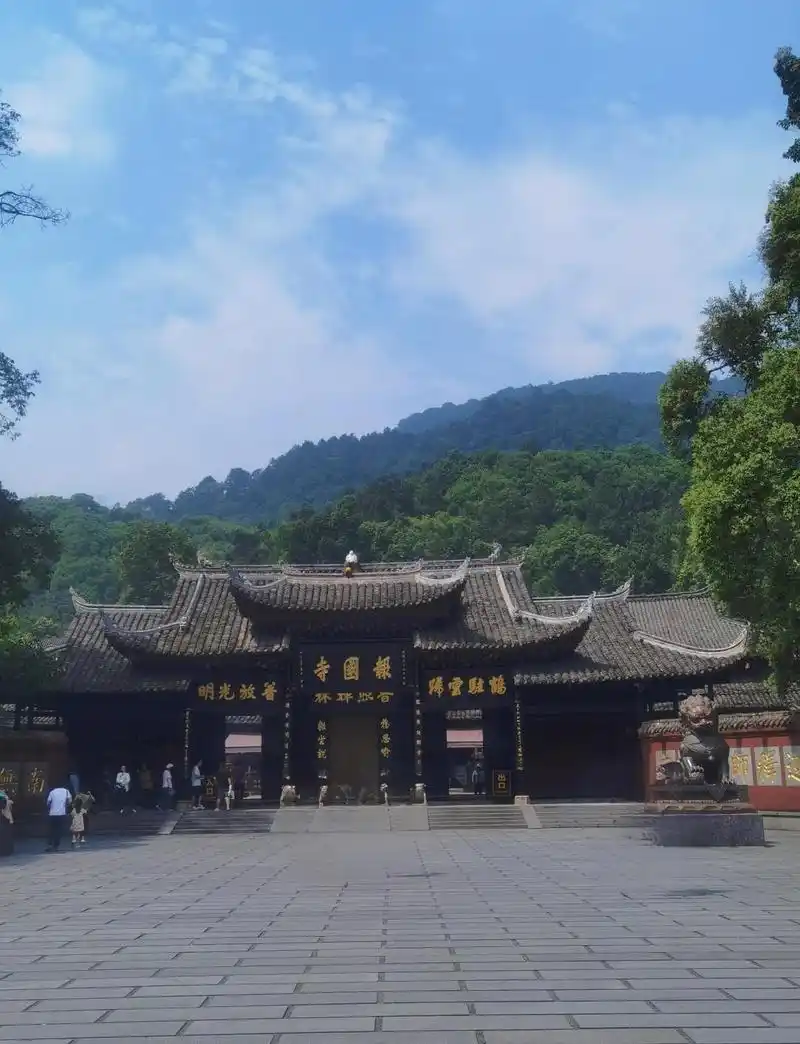 Baoguo Temple was originally built in the late 1500s during the Wanli reign of the Ming dynasty — an era contemporary with Shakespeare's London and the early Jesuit missions to Beijing. Originally named "Huizong Hall" to symbolize the unity of Confucianism, Buddhism, and Taoism, it received its present name in 1703 when the Kangxi Emperor, a contemporary of Louis XIV of France, bestowed the title "Temple of Reporting to the Nation." The site is now a nationally protected monastery and serves as headquarters of the Mount Emei Buddhist Association, making it both an active place of worship and a vital record of Sichuan's religious history spanning more than four centuries.
The temple occupies roughly 40,000 square meters and follows the classic Chinese axial plan, with halls arranged in sequence from the mountain gate through the Maitreya Hall, the Great Hall of the Buddha, the Seven Buddhas Hall, and finally the Samantabhadra Hall. Crimson walls and dark tiled roofs shelter ancient nanmu trees whose canopies filter the mountain light. At the entrance, a gilded plaque bearing Kangxi's calligraphy hangs above a pair of imposing Ming-era stone lions — a composition that will feel familiar to anyone who has toured the great monastery complexes of Europe, from Montserrat to Mont Saint-Michel.
The temple is celebrated for three remarkable treasures. In the Seven Buddhas Hall stands a stunning 2.47-meter glazed porcelain Buddha fired during the Yongle reign of the early 15th century — a period when Ming porcelain was beginning to captivate European courts and would later inspire the great Delftware tradition. Beside it rises a 14-tiered bronze Huayan Pagoda, seven meters tall, inscribed with passages from the Avatamsaka Sutra. The third treasure, housed in the Shengji Bell Pavilion, is a 12.5-ton bronze bell cast during the Jiajing era of the 16th century. Though modest compared with Moscow's 202-ton Tsar Bell, it earns the title "King of Bells of Sichuan" and ranks among Mount Emei's ten classic scenic highlights. A wooden screen bearing Northern Song calligrapher Huang Tingjian's Seven Buddhas Verses adds further artistic prestige.
Entry to Baoguo Temple itself is permanently free from January 1, 2026, with no reservation required, although visitors must still purchase a Mount Emei scenic area ticket and transport pass to access the surrounding mountain. The temple is generally open from 7:30 to 17:30, with slight variations in peak season. Arriving between 7:00 and 10:00 is strongly recommended — the soft morning light, sparse crowds, and cool mountain air create an ideal atmosphere for quiet contemplation. The flat terrain allows a full visit in just one to one and a half hours, making it suitable for travelers of all ages, including families with children.
Respectful behavior is essential: visitors should speak softly, refrain from flash photography inside the halls, and observe the strict no-smoking, no-open-flame regulations that protect Mount Emei's forests. The temple provides free incense, so visitors should politely decline offers of expensive "consecrated" items or blessing services from unofficial vendors. Located only about 40 minutes' drive from the UNESCO-listed Leshan Giant Buddha, Baoguo Temple serves as a perfect cultural overture to a Mount Emei itinerary — a gentle morning introduction to altitude, atmosphere, and Sichuan's deep Buddhist heritage before continuing upward into the mountain's mist-shrouded peaks.
Baoguo Temple was originally built in the late 1500s during the Wanli reign of the Ming dynasty — an era contemporary with Shakespeare's London and the early Jesuit missions to Beijing. Originally named "Huizong Hall" to symbolize the unity of Confucianism, Buddhism, and Taoism, it received its present name in 1703 when the Kangxi Emperor, a contemporary of Louis XIV of France, bestowed the title "Temple of Reporting to the Nation." The site is now a nationally protected monastery and serves as headquarters of the Mount Emei Buddhist Association, making it both an active place of worship and a vital record of Sichuan's religious history spanning more than four centuries.
The temple occupies roughly 40,000 square meters and follows the classic Chinese axial plan, with halls arranged in sequence from the mountain gate through the Maitreya Hall, the Great Hall of the Buddha, the Seven Buddhas Hall, and finally the Samantabhadra Hall. Crimson walls and dark tiled roofs shelter ancient nanmu trees whose canopies filter the mountain light. At the entrance, a gilded plaque bearing Kangxi's calligraphy hangs above a pair of imposing Ming-era stone lions — a composition that will feel familiar to anyone who has toured the great monastery complexes of Europe, from Montserrat to Mont Saint-Michel.
The temple is celebrated for three remarkable treasures. In the Seven Buddhas Hall stands a stunning 2.47-meter glazed porcelain Buddha fired during the Yongle reign of the early 15th century — a period when Ming porcelain was beginning to captivate European courts and would later inspire the great Delftware tradition. Beside it rises a 14-tiered bronze Huayan Pagoda, seven meters tall, inscribed with passages from the Avatamsaka Sutra. The third treasure, housed in the Shengji Bell Pavilion, is a 12.5-ton bronze bell cast during the Jiajing era of the 16th century. Though modest compared with Moscow's 202-ton Tsar Bell, it earns the title "King of Bells of Sichuan" and ranks among Mount Emei's ten classic scenic highlights. A wooden screen bearing Northern Song calligrapher Huang Tingjian's Seven Buddhas Verses adds further artistic prestige.
Entry to Baoguo Temple itself is permanently free from January 1, 2026, with no reservation required, although visitors must still purchase a Mount Emei scenic area ticket and transport pass to access the surrounding mountain. The temple is generally open from 7:30 to 17:30, with slight variations in peak season. Arriving between 7:00 and 10:00 is strongly recommended — the soft morning light, sparse crowds, and cool mountain air create an ideal atmosphere for quiet contemplation. The flat terrain allows a full visit in just one to one and a half hours, making it suitable for travelers of all ages, including families with children.
Respectful behavior is essential: visitors should speak softly, refrain from flash photography inside the halls, and observe the strict no-smoking, no-open-flame regulations that protect Mount Emei's forests. The temple provides free incense, so visitors should politely decline offers of expensive "consecrated" items or blessing services from unofficial vendors. Located only about 40 minutes' drive from the UNESCO-listed Leshan Giant Buddha, Baoguo Temple serves as a perfect cultural overture to a Mount Emei itinerary — a gentle morning introduction to altitude, atmosphere, and Sichuan's deep Buddhist heritage before continuing upward into the mountain's mist-shrouded peaks.