Hu Family Ancestral Hall
⭐ 4.20
Hu Family Ancestral Hall, Xuanzhou District, Xuancheng City, Anhui Province, China
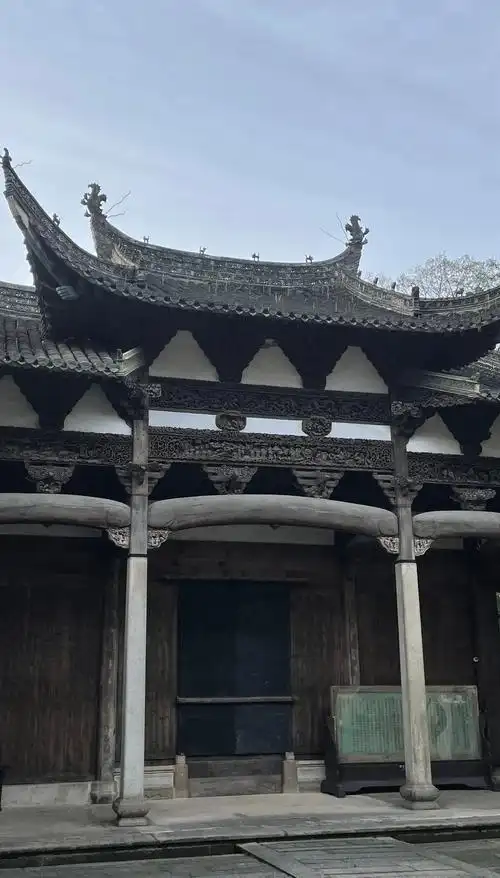 The Hu Clan Ancestral Hall traces its origins to the Song dynasty but owes its present grandeur to a sweeping Ming-era restoration supervised by Hu Zongxian, the Minister of War whose naval campaigns in the 1550s finally broke the back of the wokou pirate raids threatening China's coast. Comparable in cultural weight to England's great Tudor-era ancestral estates like Hardwick Hall, this hall is the physical manifestation of a clan's accumulated prestige. Designated a national key cultural relic in 1988, it bears witness to the remarkable Hu family's "Generations of Ministers" legacy—a local tradition that produced generations of imperial officials, mirroring how aristocratic dynasties shaped European courts.
Architecturally, the hall follows the textbook layout of a Huizhou-style ancestral shrine, facing due south on a raised stone plinth. Three ascending courtyards unfold in strict symmetry: a spirit screen, ceremonial gate, grand hall, and ancestral sleeping chambers, all connected by a soaring timber frame that relies purely on interlocking wooden joints—a technique as sophisticated as the joinery found in Japan's ancient temples. Winter-melon beams, layered coffered ceilings, and dougong-style bracket sets cascade overhead, showcasing the skill of carpenters who elevated carpentry into an art form without a single iron nail.
The true wonder, however, lies in the woodcarvings that crowd nearly every surface. In the main hall, the famous "Nine Lions Wrestling with a Ball" beams erupt in dramatic motion, while the "Hundred Deer" and "Four Harmonies" panels unfold like tapestries carved in wood—each motif layered with Confucian symbolism and clan lore. Where medieval European cathedrals used stone to tell biblical stories, this hall uses camphor and pine to narrate family values, filial piety, and auspicious wishes. The carvers' chisels transformed structural timbers into a three-dimensional encyclopedia of clan ethics, making the building less a structure than an embroidered sermon in timber.
Visiting requires some planning: the hall is included in the Longchuan Scenic Area ticket (around 77 RMB), with opening hours typically from 8:00 to 17:00. Allow 1 to 1.5 hours for a meaningful visit and engage a guide on arrival—without expert interpretation, the carvings remain silent beauties rather than readable histories. Early morning or late afternoon light filters softly through the central courtyards and illuminates the brick-carved gatehouse, creating the best photographic conditions and thinner crowds. A respectful demeanor is essential, as the hall remains an active site of ancestral veneration.
The experience is enriched by combining the ancestral hall with the nearby "Generations of Ministers" Memorial Archway—a Ming stone-carving masterpiece echoing the funerary arches of ancient Rome—along with the Hu Zongxian Memorial Residence and the tranquil Water Street historic district. Together they form a complete immersion into the Huizhou cultural landscape that once powered southern China's mercantile and intellectual elite. For travelers seeking the equivalent of stepping into a Tuscan hill town or an Andalusian patio village, this corner of Anhui offers the same intoxicating blend of refined artistry, family heritage, and timeless rural charm—only rendered in the dark honey tones of aged camphor wood rather than Mediterranean stone.
The Hu Clan Ancestral Hall traces its origins to the Song dynasty but owes its present grandeur to a sweeping Ming-era restoration supervised by Hu Zongxian, the Minister of War whose naval campaigns in the 1550s finally broke the back of the wokou pirate raids threatening China's coast. Comparable in cultural weight to England's great Tudor-era ancestral estates like Hardwick Hall, this hall is the physical manifestation of a clan's accumulated prestige. Designated a national key cultural relic in 1988, it bears witness to the remarkable Hu family's "Generations of Ministers" legacy—a local tradition that produced generations of imperial officials, mirroring how aristocratic dynasties shaped European courts.
Architecturally, the hall follows the textbook layout of a Huizhou-style ancestral shrine, facing due south on a raised stone plinth. Three ascending courtyards unfold in strict symmetry: a spirit screen, ceremonial gate, grand hall, and ancestral sleeping chambers, all connected by a soaring timber frame that relies purely on interlocking wooden joints—a technique as sophisticated as the joinery found in Japan's ancient temples. Winter-melon beams, layered coffered ceilings, and dougong-style bracket sets cascade overhead, showcasing the skill of carpenters who elevated carpentry into an art form without a single iron nail.
The true wonder, however, lies in the woodcarvings that crowd nearly every surface. In the main hall, the famous "Nine Lions Wrestling with a Ball" beams erupt in dramatic motion, while the "Hundred Deer" and "Four Harmonies" panels unfold like tapestries carved in wood—each motif layered with Confucian symbolism and clan lore. Where medieval European cathedrals used stone to tell biblical stories, this hall uses camphor and pine to narrate family values, filial piety, and auspicious wishes. The carvers' chisels transformed structural timbers into a three-dimensional encyclopedia of clan ethics, making the building less a structure than an embroidered sermon in timber.
Visiting requires some planning: the hall is included in the Longchuan Scenic Area ticket (around 77 RMB), with opening hours typically from 8:00 to 17:00. Allow 1 to 1.5 hours for a meaningful visit and engage a guide on arrival—without expert interpretation, the carvings remain silent beauties rather than readable histories. Early morning or late afternoon light filters softly through the central courtyards and illuminates the brick-carved gatehouse, creating the best photographic conditions and thinner crowds. A respectful demeanor is essential, as the hall remains an active site of ancestral veneration.
The experience is enriched by combining the ancestral hall with the nearby "Generations of Ministers" Memorial Archway—a Ming stone-carving masterpiece echoing the funerary arches of ancient Rome—along with the Hu Zongxian Memorial Residence and the tranquil Water Street historic district. Together they form a complete immersion into the Huizhou cultural landscape that once powered southern China's mercantile and intellectual elite. For travelers seeking the equivalent of stepping into a Tuscan hill town or an Andalusian patio village, this corner of Anhui offers the same intoxicating blend of refined artistry, family heritage, and timeless rural charm—only rendered in the dark honey tones of aged camphor wood rather than Mediterranean stone.