Xuan Paper Museum
⭐ 4.50
Xuan Paper Museum, Xuanzhou District, Xuancheng City, Anhui Province, China
 **A Millennium of Paper Heritage**
The Xuan Paper Museum sits near Jingxian County in Anhui, the birthplace of Xuan paper since the Tang dynasty. Recognised by UNESCO as Intangible Cultural Heritage of Humanity in 2009, Xuan paper rivals the importance of medieval European vellum in preserving cultural memory. Its extraordinary longevity—works painted on it over a thousand years ago remain vivid today—stems from a unique blend of green sandalwood bark and paddy straw from local wetlands. For Western visitors familiar with the rag-based papers of pre-industrial Europe, Xuan paper offers a fascinating parallel: a craft refined over centuries into an irreplaceable artistic medium.
**Architecture Worth the Journey Alone**
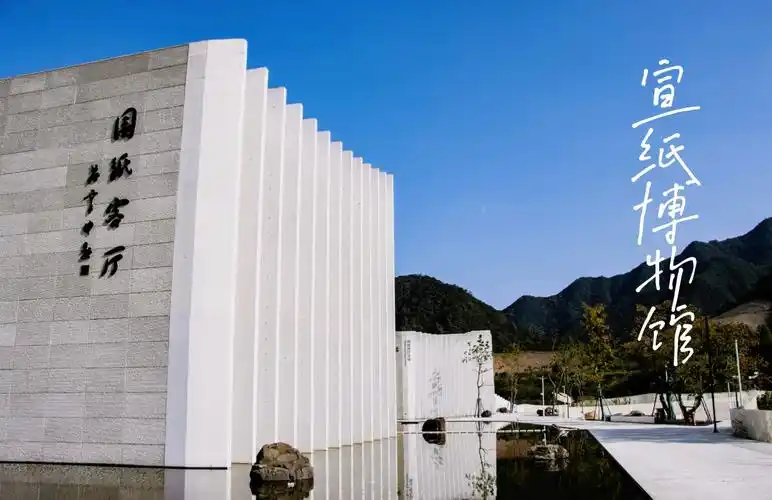
The building itself is a showpiece, having earned the prestigious Da Vinci Award at the 2019 Florence Biennale of Art and Design. Its stacked white fair-faced concrete volumes evoke sheaves of drying paper, while an outdoor mirror pool, undulating arched corridors, and cloud-shaped skylights create shifting plays of light and shadow. The aesthetic recalls the meditative minimalism of Tadao Ando's concrete churches in Japan or Le Corbusier's Ronchamp—proof that a museum can be both a guardian of ancient craft and a piece of contemporary art.
**Inside the Galleries**
Three floors of permanent exhibition unfold the complete story of Xuan paper. The ground floor dissects raw materials and walks visitors through all 108 traditional工序 (craft stages)—a depth of process detail unmatched by most European craft museums, which typically explain paper-making in a few panels. The second floor safeguards historic paper samples alongside masterpieces by celebrated Chinese painters, while the third hosts rotating special exhibitions. The living-craft demonstration area is the heart of the experience, where artisans dip, shake, and peel sheets with mesmerising precision.
**Hands-On Experiences**
Unlike most Chinese museums, this one encourages touching and making. Visitors can join supervised sheet-forming sessions, try traditional rubbings from carved blocks, and take home their own freshly made paper as a souvenir. These workshops are especially popular with families and offer a tangible connection to a craft that is otherwise hard to visualise. Booking a workshop slot in advance is strongly recommended, particularly during peak travel seasons.
**Practical Visiting Tips**
The museum lies about 20 minutes' drive from Jingxian town; renting a car or arranging a private driver is the most convenient option. Opening hours typically run 8:30 to 17:00, and admission is around 60 RMB, with several workshop activities included. Weekday mornings offer the softest light for photographing the mirror pool and the fewest crowds. Flash photography is prohibited inside the galleries. Pair your visit with the nearby Taohuatan, celebrated by the Tang poet Li Bai, and the ancient village of Zhaji for a full two-day cultural loop through southern Anhui.
**Why It Belongs on Your Itinerary**
Few places allow such an intimate encounter with a living tradition that has shaped an entire civilisation's visual art. The Xuan Paper Museum is where East Asian ink painting begins—literally, on a sheet pulled by hand—and where the patient, meditative spirit of Chinese craft survives in full force. For travellers seeking depth beyond the great imperial sights, it is an unmissable stop.
**A Millennium of Paper Heritage**
The Xuan Paper Museum sits near Jingxian County in Anhui, the birthplace of Xuan paper since the Tang dynasty. Recognised by UNESCO as Intangible Cultural Heritage of Humanity in 2009, Xuan paper rivals the importance of medieval European vellum in preserving cultural memory. Its extraordinary longevity—works painted on it over a thousand years ago remain vivid today—stems from a unique blend of green sandalwood bark and paddy straw from local wetlands. For Western visitors familiar with the rag-based papers of pre-industrial Europe, Xuan paper offers a fascinating parallel: a craft refined over centuries into an irreplaceable artistic medium.
**Architecture Worth the Journey Alone**
The building itself is a showpiece, having earned the prestigious Da Vinci Award at the 2019 Florence Biennale of Art and Design. Its stacked white fair-faced concrete volumes evoke sheaves of drying paper, while an outdoor mirror pool, undulating arched corridors, and cloud-shaped skylights create shifting plays of light and shadow. The aesthetic recalls the meditative minimalism of Tadao Ando's concrete churches in Japan or Le Corbusier's Ronchamp—proof that a museum can be both a guardian of ancient craft and a piece of contemporary art.
**Inside the Galleries**
Three floors of permanent exhibition unfold the complete story of Xuan paper. The ground floor dissects raw materials and walks visitors through all 108 traditional工序 (craft stages)—a depth of process detail unmatched by most European craft museums, which typically explain paper-making in a few panels. The second floor safeguards historic paper samples alongside masterpieces by celebrated Chinese painters, while the third hosts rotating special exhibitions. The living-craft demonstration area is the heart of the experience, where artisans dip, shake, and peel sheets with mesmerising precision.
**Hands-On Experiences**
Unlike most Chinese museums, this one encourages touching and making. Visitors can join supervised sheet-forming sessions, try traditional rubbings from carved blocks, and take home their own freshly made paper as a souvenir. These workshops are especially popular with families and offer a tangible connection to a craft that is otherwise hard to visualise. Booking a workshop slot in advance is strongly recommended, particularly during peak travel seasons.
**Practical Visiting Tips**
The museum lies about 20 minutes' drive from Jingxian town; renting a car or arranging a private driver is the most convenient option. Opening hours typically run 8:30 to 17:00, and admission is around 60 RMB, with several workshop activities included. Weekday mornings offer the softest light for photographing the mirror pool and the fewest crowds. Flash photography is prohibited inside the galleries. Pair your visit with the nearby Taohuatan, celebrated by the Tang poet Li Bai, and the ancient village of Zhaji for a full two-day cultural loop through southern Anhui.
**Why It Belongs on Your Itinerary**
Few places allow such an intimate encounter with a living tradition that has shaped an entire civilisation's visual art. The Xuan Paper Museum is where East Asian ink painting begins—literally, on a sheet pulled by hand—and where the patient, meditative spirit of Chinese craft survives in full force. For travellers seeking depth beyond the great imperial sights, it is an unmissable stop.