Nanyi Lake
⭐ 3.80
Nanyi Lake Scenic Area, Xuanzhou District, Xuancheng City, Anhui Province, China
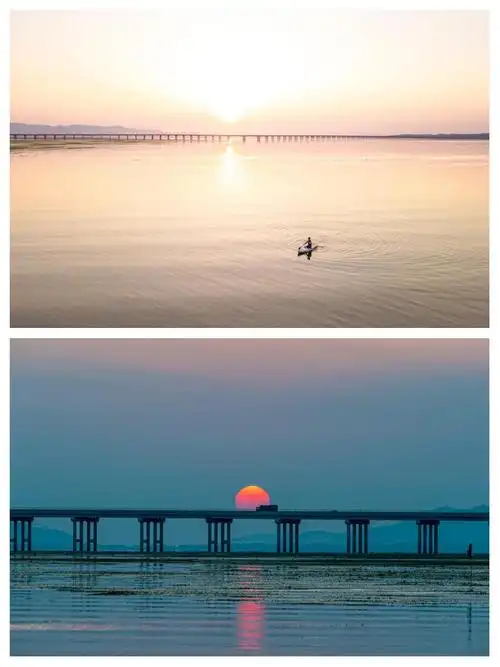 Spanning the border between Xuancheng District and Langxi County, Nanyi Lake traces its origins to the ancient Danyang Lake system, a vast inland sea that once covered much of the lower Yangtze basin before tectonic shifts divided it into smaller bodies of water some 10,000 years ago. Comparable in scale to Germany's Lake Constance but far less developed, its waters are framed by forested mountains on three sides, creating a landscape that has inspired painters and poets since the Tang Dynasty. The "Southern Lake Returning Geese" was counted among Xuancheng's Ten Classical Scenes, immortalized in verse by literati who compared its misty horizons to celebrated scenes along West Lake in Hangzhou.
The lake's irregular geography produces its signature "Nine Points and Thirteen Bays," a maze-like perimeter that unfolds into dramatic vistas at every turn. South Nanuo Cape extends into the water like a dragon's snout, while Fushou Island, encircled by emerald tea plantations, has earned comparisons to China's Yunnan highlands for its mirror-still waters reflecting surrounding peaks. Further east, the Danyang Peninsula preserves ancient Ming and Qing-era cypress groves alongside traditional wetland paddies, evoking the timeless rural landscapes depicted in 17th-century ink paintings.
Each autumn and winter, Nanyi Lake transforms into a vital waypoint on the East Asian-Australasian Flyway, welcoming flocks of egrets and Siberian geese that descend in great rippling waves across the shallows. This ecological significance mirrors that of European wetland reserves like the Camargue in France. The surrounding fishing villages maintain centuries-old traditions; the annual harvest festival in late August features dragon dances and the ceremonial auction of the first catch, an event rooted in Tang-era customs celebrating the bounty of the waters.
The lake's gastronomic reputation rivals that of Yangcheng Lake near Shanghai for hairy crabs, though visitors here enjoy prices a fraction of those at China's more famous crab destinations. Local farmhouse restaurants serve delicacies including translucent silverfish soup, braised crabs glistening with orange roe, tender mandarin fish, and freshwater shrimp caught the same morning. Given the lake's non-commercialized status, dining here offers an unfiltered glimpse into rural Anhui cuisine, where ingredients rather than technique take center stage.
Practical access requires a private vehicle, as public transportation to the shoreline is virtually nonexistent. No entrance fees apply, though facilities remain rustic, and mobile phone reception fades along certain stretches. The prime season runs September through November, when autumn light gilds the water and migratory birds arrive in peak numbers. Sunset between 5 and 7 PM delivers the most dramatic photography, while overnight camping rewards visitors with star-filled skies undimmed by urban light pollution. Visitors should observe the strict fishing moratorium before late August, carry ample drinking water and insect repellent, and download offline maps before venturing along the scenic 40-kilometer lakeside drive.
Spanning the border between Xuancheng District and Langxi County, Nanyi Lake traces its origins to the ancient Danyang Lake system, a vast inland sea that once covered much of the lower Yangtze basin before tectonic shifts divided it into smaller bodies of water some 10,000 years ago. Comparable in scale to Germany's Lake Constance but far less developed, its waters are framed by forested mountains on three sides, creating a landscape that has inspired painters and poets since the Tang Dynasty. The "Southern Lake Returning Geese" was counted among Xuancheng's Ten Classical Scenes, immortalized in verse by literati who compared its misty horizons to celebrated scenes along West Lake in Hangzhou.
The lake's irregular geography produces its signature "Nine Points and Thirteen Bays," a maze-like perimeter that unfolds into dramatic vistas at every turn. South Nanuo Cape extends into the water like a dragon's snout, while Fushou Island, encircled by emerald tea plantations, has earned comparisons to China's Yunnan highlands for its mirror-still waters reflecting surrounding peaks. Further east, the Danyang Peninsula preserves ancient Ming and Qing-era cypress groves alongside traditional wetland paddies, evoking the timeless rural landscapes depicted in 17th-century ink paintings.
Each autumn and winter, Nanyi Lake transforms into a vital waypoint on the East Asian-Australasian Flyway, welcoming flocks of egrets and Siberian geese that descend in great rippling waves across the shallows. This ecological significance mirrors that of European wetland reserves like the Camargue in France. The surrounding fishing villages maintain centuries-old traditions; the annual harvest festival in late August features dragon dances and the ceremonial auction of the first catch, an event rooted in Tang-era customs celebrating the bounty of the waters.
The lake's gastronomic reputation rivals that of Yangcheng Lake near Shanghai for hairy crabs, though visitors here enjoy prices a fraction of those at China's more famous crab destinations. Local farmhouse restaurants serve delicacies including translucent silverfish soup, braised crabs glistening with orange roe, tender mandarin fish, and freshwater shrimp caught the same morning. Given the lake's non-commercialized status, dining here offers an unfiltered glimpse into rural Anhui cuisine, where ingredients rather than technique take center stage.
Practical access requires a private vehicle, as public transportation to the shoreline is virtually nonexistent. No entrance fees apply, though facilities remain rustic, and mobile phone reception fades along certain stretches. The prime season runs September through November, when autumn light gilds the water and migratory birds arrive in peak numbers. Sunset between 5 and 7 PM delivers the most dramatic photography, while overnight camping rewards visitors with star-filled skies undimmed by urban light pollution. Visitors should observe the strict fishing moratorium before late August, carry ample drinking water and insect repellent, and download offline maps before venturing along the scenic 40-kilometer lakeside drive.