Wanxi Bridge
⭐ 2.80
Wanxi Bridge, Wanxi Street, Xuanzhou District, Xuancheng City, Anhui Province, China
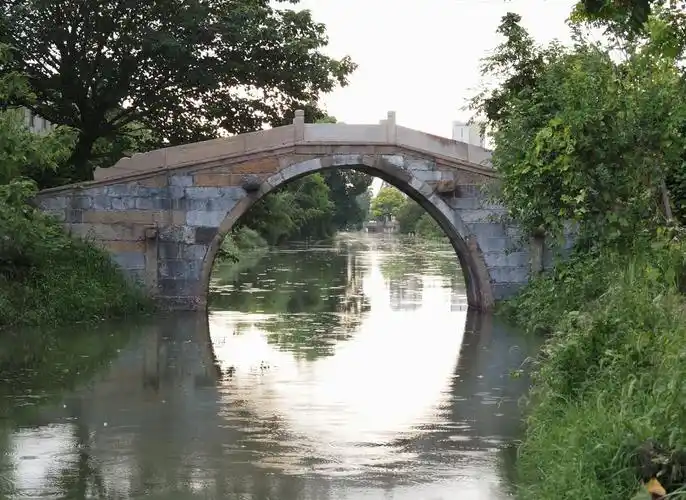 The crossings over Xuancheng's Wanxi River trace back to the Sui and Tang dynasties (6th–10th centuries), placing them in the era of Charlemagne and the early caliphates. Tang poet Li Bai, China's most celebrated lyricist, visited Xuancheng repeatedly and composed "Two rivers like mirrors clasped between, twin bridges descending like a rainbow"—a couplet still memorized in every Chinese classroom. The "twin bridges" are Jichuan and Fenghuang. When both were rebuilt during the Ming dynasty (15th–16th century, contemporary with the Italian Renaissance and the Tudor court), the layout visible today was largely established. Few urban scenes in China preserve such a perfect match between a poem, a place, and a skyline for a thousand years.
Jichuan Bridge is the architectural prize: roughly 55 meters long and nearly 9 meters wide, carrying five stone arches in a single sweep—reminiscent of a flattened Roman aqueduct or France's Pont du Gard, though built six centuries later. The hand-carved stone lions along its parapets have weathered Ming and Qing winters but keep their expressions legible. Fenghuang Bridge, repeatedly rebuilt, lost its antique form, though its lyrical name endures. The modern "Rainbow Bridge," added in recent decades, updates the legend through contemporary engineering, its swooping silhouette echoing the rainbow line Li Bai set down in the 8th century.
Like Verona is inseparable from Romeo and Juliet, Xuancheng is inseparable from its poetry. The bridges function as a three-dimensional footnote to Li Bai's verse, inviting visitors to step into a Tang-dynasty couplet and read it as landscape. Adjacent cultural waypoints—Aofeng Park and the pavilion honoring Xie Tiao, a 5th-century poet often compared to his English contemporary the Venerable Bede—turn a short riverside walk into a literature trail. For travelers curious about the "Poetry City" reputation Xuancheng has carried for over a millennium, these crossings are the missing opening chapter.
The bridges are open public infrastructure, free and unfenced. Jichuan Bridge carries municipal heritage protection status, broadly comparable to a Grade II listed structure in Britain. Most travelers arrive by taxi from central Xuancheng; the city sits about an hour by high-speed rail from Nanjing and roughly three hours from Shanghai. A logical loop begins at the Xietiao Tower Ruins Park, drifts downstream past Jichuan and Fenghuang Bridges, and finishes at the modern Wanxi River Bridge—a comfortable half-day stroll of roughly two kilometers along well-kept embankments.
The optimum window is the hour before sunset through the hour after dark, when warm lighting turns the arches into the literal rainbow Li Bai described. Summer visitors should bring mosquito repellent. Pair the bridges with Jingting Mountain—another celebrated Li Bai landmark—and the nearby Xuan Paper Cultural Park to assemble a full literary day in southern Anhui. Few Chinese cities let travelers walk directly into a poem; Xuancheng's bridges still do, gently and without ceremony.
The crossings over Xuancheng's Wanxi River trace back to the Sui and Tang dynasties (6th–10th centuries), placing them in the era of Charlemagne and the early caliphates. Tang poet Li Bai, China's most celebrated lyricist, visited Xuancheng repeatedly and composed "Two rivers like mirrors clasped between, twin bridges descending like a rainbow"—a couplet still memorized in every Chinese classroom. The "twin bridges" are Jichuan and Fenghuang. When both were rebuilt during the Ming dynasty (15th–16th century, contemporary with the Italian Renaissance and the Tudor court), the layout visible today was largely established. Few urban scenes in China preserve such a perfect match between a poem, a place, and a skyline for a thousand years.
Jichuan Bridge is the architectural prize: roughly 55 meters long and nearly 9 meters wide, carrying five stone arches in a single sweep—reminiscent of a flattened Roman aqueduct or France's Pont du Gard, though built six centuries later. The hand-carved stone lions along its parapets have weathered Ming and Qing winters but keep their expressions legible. Fenghuang Bridge, repeatedly rebuilt, lost its antique form, though its lyrical name endures. The modern "Rainbow Bridge," added in recent decades, updates the legend through contemporary engineering, its swooping silhouette echoing the rainbow line Li Bai set down in the 8th century.
Like Verona is inseparable from Romeo and Juliet, Xuancheng is inseparable from its poetry. The bridges function as a three-dimensional footnote to Li Bai's verse, inviting visitors to step into a Tang-dynasty couplet and read it as landscape. Adjacent cultural waypoints—Aofeng Park and the pavilion honoring Xie Tiao, a 5th-century poet often compared to his English contemporary the Venerable Bede—turn a short riverside walk into a literature trail. For travelers curious about the "Poetry City" reputation Xuancheng has carried for over a millennium, these crossings are the missing opening chapter.
The bridges are open public infrastructure, free and unfenced. Jichuan Bridge carries municipal heritage protection status, broadly comparable to a Grade II listed structure in Britain. Most travelers arrive by taxi from central Xuancheng; the city sits about an hour by high-speed rail from Nanjing and roughly three hours from Shanghai. A logical loop begins at the Xietiao Tower Ruins Park, drifts downstream past Jichuan and Fenghuang Bridges, and finishes at the modern Wanxi River Bridge—a comfortable half-day stroll of roughly two kilometers along well-kept embankments.
The optimum window is the hour before sunset through the hour after dark, when warm lighting turns the arches into the literal rainbow Li Bai described. Summer visitors should bring mosquito repellent. Pair the bridges with Jingting Mountain—another celebrated Li Bai landmark—and the nearby Xuan Paper Cultural Park to assemble a full literary day in southern Anhui. Few Chinese cities let travelers walk directly into a poem; Xuancheng's bridges still do, gently and without ceremony.