Qu Yuan's Hometown
⭐ 4.50
Binhu Avenue, Maoping Town, Zigui County, Hubei Province, China
 Qu Yuan (c. 340–278 BCE) was born in the state of Chu during China's Warring States period—a turbulent era contemporary with Classical Greece, when Socrates walked the Athenian agora and Plato founded his academy. Where Homer gave the West the Iliad and Odyssey, Qu Yuan gifted China the foundational works of romantic poetry: the soaring Li Sao (Encountering Sorrow) and the cosmic Tian Wen (Heavenly Questions). His suicide in the Miluo River inspired the Dragon Boat Festival, much as the myth of Adonis gave the Mediterranean its springtime rites of mourning and renewal.
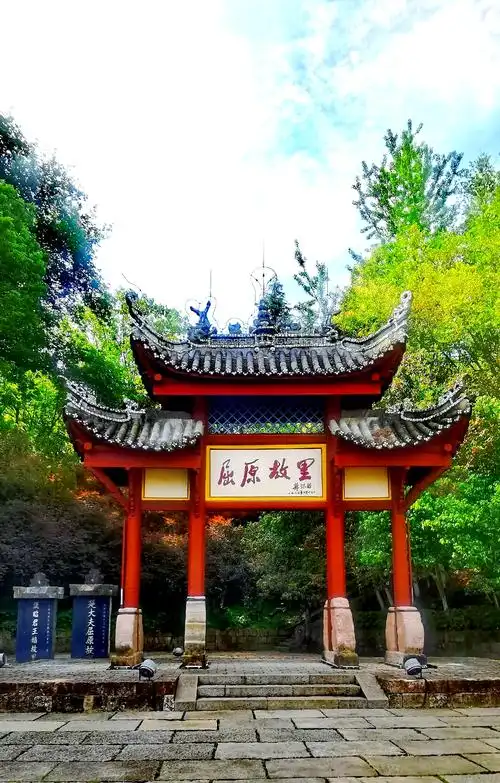
The Qu Yuan Temple, rebuilt on Phoenix Mountain after the Three Gorges Dam reservoir flooded the original site, follows a stately Qing-dynasty palatial layout reminiscent of imperial halls in Beijing's Forbidden City. Visitors pass through a monumental gate, traverse a front hall, and arrive at the main hall where a bronze statue of the poet presides over his cenotaph and a gallery of stone inscriptions and calligraphy. The atmosphere, like that of ancient Greek hero shrines, invites quiet contemplation amid dramatic mountain scenery.
Just beyond the temple, the Yangtze Gorges Folk Houses form a remarkable cluster of Ming and Qing buildings relocated stone by stone from the now-submerged town of Qingtan. Tiered along the slope in grey-tiled terraces, the complex has earned the nickname "Three Gorges Potala Palace," though its stacked walls and narrow lanes more closely recall Italy's cliff-hugging Amalfi villages or the medieval hamlets of the Cinque Terre. Each courtyard preserves the memory of the trackers who once hauled boats upstream against the river's furious current.
The site is one of China's most important living transmitters of the Dragon Boat Festival (Duanwu), inscribed by UNESCO on the Representative List of the Intangible Cultural Heritage of Humanity in 2009. Throughout the year, visitors can watch demonstrations of zongzi wrapping, dragon-boat racing, and the hanging of mugwort, while scheduled performances such as Li Hun (Rite of the Soul) and Grand Duanwu weave Qu Yuan's legacy into Chu ritual music, exorcistic dances, and regional dialects. A digital pavilion offers interactive Chu Ci exhibits and traditional hanfu dress-up experiences—an engaging entry point for travelers unfamiliar with classical Chinese literature.
The park sits on Phoenix Mountain in Maoping Town, Zigui County, directly across the Yangtze from the Three Gorges Dam. It opens daily from 08:00 to 17:00, and two to three hours is sufficient for a relaxed visit. Admission is 80 yuan for adults, with half-price concessions for students and seniors aged 60–69; those over 70 and children under 1.2 m enter free. Bus 809 connects the site to Yichang East railway station in roughly an hour, and joint tickets with the Three Gorges Dam make a same-day twin visit effortless.
Mornings offer the softest light for photography and the richest schedule of cultural performances. Wear sturdy, non-slip footwear—the grounds are stepped and uneven—and book a multilingual guide in advance to unlock the poetry's deeper meanings. Respect the silence of the temple precincts, never touch or carve the relics, and ask permission before photographing folk rituals. For Western travelers, this is a rare chance to step into the spiritual cradle of Chinese romantic literature while gazing upon one of the modern world's largest engineering marvels.
Qu Yuan (c. 340–278 BCE) was born in the state of Chu during China's Warring States period—a turbulent era contemporary with Classical Greece, when Socrates walked the Athenian agora and Plato founded his academy. Where Homer gave the West the Iliad and Odyssey, Qu Yuan gifted China the foundational works of romantic poetry: the soaring Li Sao (Encountering Sorrow) and the cosmic Tian Wen (Heavenly Questions). His suicide in the Miluo River inspired the Dragon Boat Festival, much as the myth of Adonis gave the Mediterranean its springtime rites of mourning and renewal.
The Qu Yuan Temple, rebuilt on Phoenix Mountain after the Three Gorges Dam reservoir flooded the original site, follows a stately Qing-dynasty palatial layout reminiscent of imperial halls in Beijing's Forbidden City. Visitors pass through a monumental gate, traverse a front hall, and arrive at the main hall where a bronze statue of the poet presides over his cenotaph and a gallery of stone inscriptions and calligraphy. The atmosphere, like that of ancient Greek hero shrines, invites quiet contemplation amid dramatic mountain scenery.
Just beyond the temple, the Yangtze Gorges Folk Houses form a remarkable cluster of Ming and Qing buildings relocated stone by stone from the now-submerged town of Qingtan. Tiered along the slope in grey-tiled terraces, the complex has earned the nickname "Three Gorges Potala Palace," though its stacked walls and narrow lanes more closely recall Italy's cliff-hugging Amalfi villages or the medieval hamlets of the Cinque Terre. Each courtyard preserves the memory of the trackers who once hauled boats upstream against the river's furious current.
The site is one of China's most important living transmitters of the Dragon Boat Festival (Duanwu), inscribed by UNESCO on the Representative List of the Intangible Cultural Heritage of Humanity in 2009. Throughout the year, visitors can watch demonstrations of zongzi wrapping, dragon-boat racing, and the hanging of mugwort, while scheduled performances such as Li Hun (Rite of the Soul) and Grand Duanwu weave Qu Yuan's legacy into Chu ritual music, exorcistic dances, and regional dialects. A digital pavilion offers interactive Chu Ci exhibits and traditional hanfu dress-up experiences—an engaging entry point for travelers unfamiliar with classical Chinese literature.
The park sits on Phoenix Mountain in Maoping Town, Zigui County, directly across the Yangtze from the Three Gorges Dam. It opens daily from 08:00 to 17:00, and two to three hours is sufficient for a relaxed visit. Admission is 80 yuan for adults, with half-price concessions for students and seniors aged 60–69; those over 70 and children under 1.2 m enter free. Bus 809 connects the site to Yichang East railway station in roughly an hour, and joint tickets with the Three Gorges Dam make a same-day twin visit effortless.
Mornings offer the softest light for photography and the richest schedule of cultural performances. Wear sturdy, non-slip footwear—the grounds are stepped and uneven—and book a multilingual guide in advance to unlock the poetry's deeper meanings. Respect the silence of the temple precincts, never touch or carve the relics, and ask permission before photographing folk rituals. For Western travelers, this is a rare chance to step into the spiritual cradle of Chinese romantic literature while gazing upon one of the modern world's largest engineering marvels.