Three Gorges Dam
⭐ 4.20
No. 13, Jiangxia Avenue, Three Gorges Dam Area, Yichang, Hubei, China
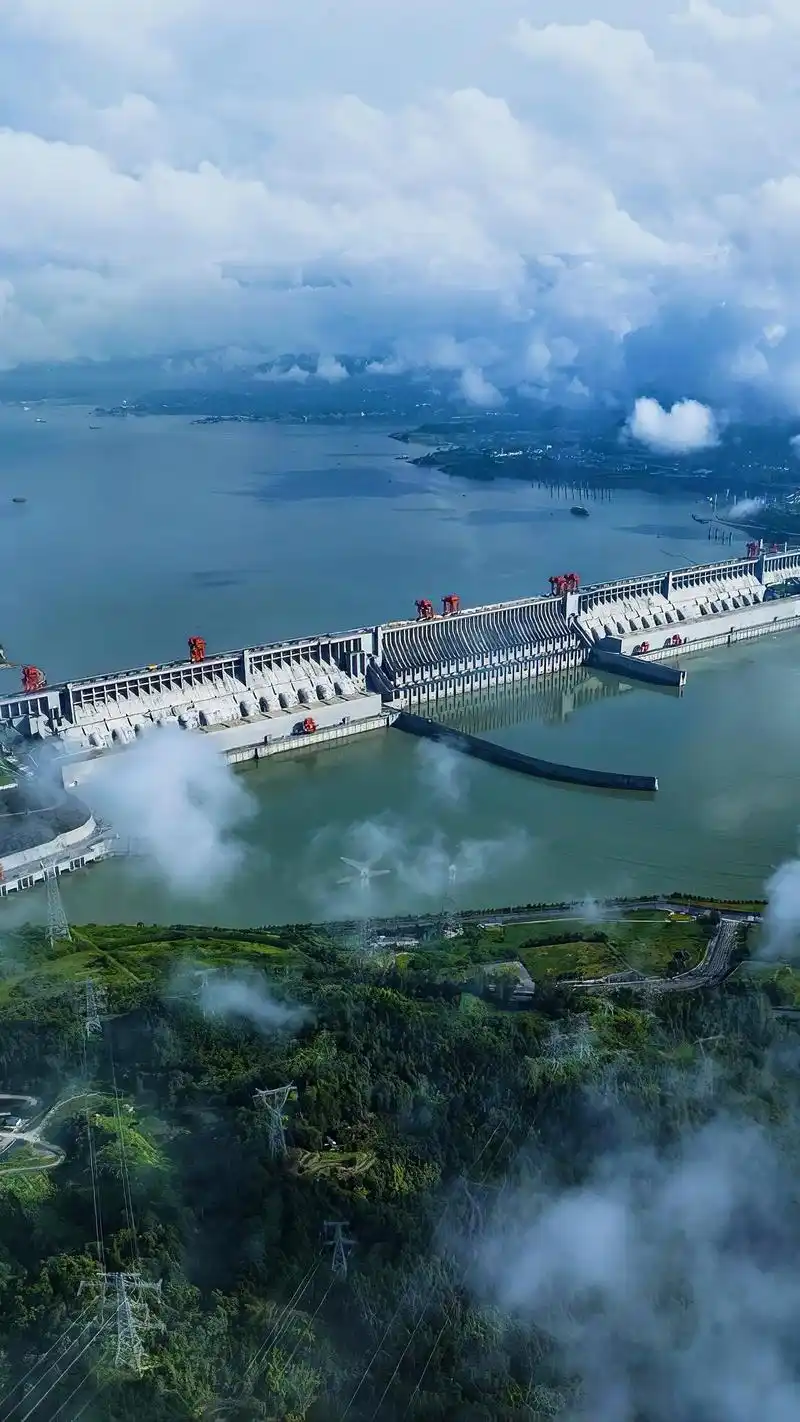 Construction of the Three Gorges Dam began in 1994 and reached full completion in 2009, at a cost of roughly 250 billion yuan. The project fulfilled a century-old dream that had occupied Chinese engineers and statesmen since the era of Sun Yat-sen. Comparable in ambition to the Roman aqueducts or the Panama Canal, it represents a defining achievement of post-war infrastructure, channeling generations of hydraulic expertise into a single barrier across Asia's longest river. The site was deliberately chosen at the Xiling Gorge, the strategic chokepoint controlling the upper-middle Yangtze.
The dam stretches 2,335 meters across the river valley, rises 181 meters high, and holds back a reservoir reaching 175 meters above sea level. Its 22.5-gigawatt installed capacity makes it the most powerful power station ever built, surpassing the Hoover Dam by an order of magnitude. Navigation is handled by ingenious double-track five-step ship locks working alongside a colossal ship lift, while the spillway sections unleash torrents that resemble artificial waterfalls. The whole structure evokes the Great Wall reimagined in steel and concrete, an immovable fortress against the ancient river.
Beyond its technical triumphs, the dam stands as an emblem of China's national rejuvenation. It shields the densely populated Jianghan Plain from devastating floods, supplies over 100 billion kilowatt-hours annually to homes and industries, and serves as a living classroom for patriotic education and engineering study. Schoolchildren and international researchers alike come to understand how a single project can reshape geography, economics, and identity for an entire nation.
Practical planning is essential for foreign visitors. Tickets cost approximately 105 RMB and include mandatory sightseeing-bus transport, as even Chinese citizens must pay 35 RMB for the same shuttle service. All guests must reserve in advance through the official "Three Gorges Dam Tourism" platform one to seven days ahead, present a passport, and pass airport-style security screening. Drones are strictly prohibited, and the entire complex is a no-fly zone for safety reasons.
A recommended one-way route takes about three to four hours: begin at the Visitor Center, ascend to Tanziling Ridge at 262 meters for a panoramic overview, descend to the 185 Platform to view the dam face and ship lift at eye level, and finish at the Diversion Memorial Park where the colossal structure can be appreciated from below. Travelers visiting between June and August may witness dramatic flood discharges, while spring and autumn offer milder weather. Arriving before 8:30 AM helps avoid the busiest crowds.
[DETAILED - 5 paragraphs total, 80-120 words each, covering history, architecture, culture, practical info, and visit recommendations with vivid imagery and helpful tips for international tourists.]
Construction of the Three Gorges Dam began in 1994 and reached full completion in 2009, at a cost of roughly 250 billion yuan. The project fulfilled a century-old dream that had occupied Chinese engineers and statesmen since the era of Sun Yat-sen. Comparable in ambition to the Roman aqueducts or the Panama Canal, it represents a defining achievement of post-war infrastructure, channeling generations of hydraulic expertise into a single barrier across Asia's longest river. The site was deliberately chosen at the Xiling Gorge, the strategic chokepoint controlling the upper-middle Yangtze.
The dam stretches 2,335 meters across the river valley, rises 181 meters high, and holds back a reservoir reaching 175 meters above sea level. Its 22.5-gigawatt installed capacity makes it the most powerful power station ever built, surpassing the Hoover Dam by an order of magnitude. Navigation is handled by ingenious double-track five-step ship locks working alongside a colossal ship lift, while the spillway sections unleash torrents that resemble artificial waterfalls. The whole structure evokes the Great Wall reimagined in steel and concrete, an immovable fortress against the ancient river.
Beyond its technical triumphs, the dam stands as an emblem of China's national rejuvenation. It shields the densely populated Jianghan Plain from devastating floods, supplies over 100 billion kilowatt-hours annually to homes and industries, and serves as a living classroom for patriotic education and engineering study. Schoolchildren and international researchers alike come to understand how a single project can reshape geography, economics, and identity for an entire nation.
Practical planning is essential for foreign visitors. Tickets cost approximately 105 RMB and include mandatory sightseeing-bus transport, as even Chinese citizens must pay 35 RMB for the same shuttle service. All guests must reserve in advance through the official "Three Gorges Dam Tourism" platform one to seven days ahead, present a passport, and pass airport-style security screening. Drones are strictly prohibited, and the entire complex is a no-fly zone for safety reasons.
A recommended one-way route takes about three to four hours: begin at the Visitor Center, ascend to Tanziling Ridge at 262 meters for a panoramic overview, descend to the 185 Platform to view the dam face and ship lift at eye level, and finish at the Diversion Memorial Park where the colossal structure can be appreciated from below. Travelers visiting between June and August may witness dramatic flood discharges, while spring and autumn offer milder weather. Arriving before 8:30 AM helps avoid the busiest crowds.
[DETAILED - 5 paragraphs total, 80-120 words each, covering history, architecture, culture, practical info, and visit recommendations with vivid imagery and helpful tips for international tourists.]