Stone Village
⭐ 3.80
Juye County, Heze City, Shandong Province, China
 **A Village Older Than the Renaissance**
Shitou Zhai was founded in 1398 during the reign of the Ming Hongwu Emperor, when waves of settlers moved into southwestern Shandong to farm and fortify the frontier. To put its age in perspective, the village predates Columbus's Atlantic crossing by nearly a century and has stood continuously for more than 600 years. Designated a National 3A Scenic Area in 2024 and listed among China's Historic and Cultural Villages, it ranks as the largest and best-preserved Ming-Qing stone settlement in the entire region—a rare survivor in a country where most old villages have been swallowed by modern development.
**Architecture Without Mortar**
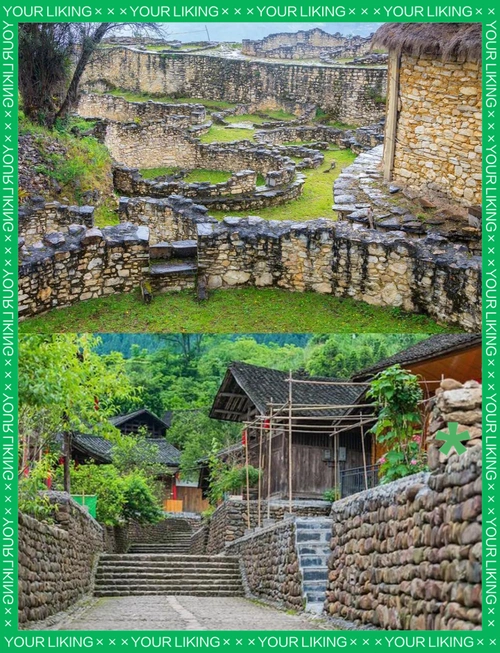
The village's signature feature is its 158 courtyard houses, all built from local blue granite using a dry-stack technique in which stones are fitted together by hand alone, with no cement or mortar—comparable in spirit to the Inca walls of Peru or the drystone constructions of rural Ireland. Standout structures include a Ming-era granary tower, the polygonal Wujiao Tower, and the elegant Wang Family Compound, whose textured stone walls catch the shifting light beautifully throughout the day. Architecture historians consider these homes a living laboratory for studying regional building traditions.
**Where Civil War History Comes Alive**
Beyond its dynastic charm, the village carries a powerful 20th-century story. During the 1947 Battle of Yangshan—a decisive engagement in the Chinese Civil War, fought in the closing months of World War II's aftermath—Generals Liu Bocheng and Deng Xiaoping established their frontline command post here, and the field hospital that treated wounded soldiers still stands intact. As a designated "Red Beautiful Village," Stone Village fuses imperial-era architecture with revolutionary memory in a way few sites can.
**Living Folk Culture**
The community continues to practice traditional crafts and customs, including the dramatic "Rou Hua Lan" iron-filing fireworks—spark-spitting folk performances unique to the area—and yangge folk dances. Visitors can try their hand at stone-grinding sesame oil, sample locally brewed spirits, or watch artisans carving Jinshan inkstones. A handful of stone cottages have been converted into guesthouses such as the charming Wutong Xiaoyuan, allowing travelers to spend a night within the historic walls.
**Practical Tips for Visitors**
Admission is free, though small fees apply to certain exhibition halls and hands-on workshops. From Heze city, the village is roughly 50 kilometers away—an easy drive or a ride on the dedicated Tourist Bus Line 201. Spring and autumn offer the most comfortable weather, while Lunar New Year brings special folk performances (confirm schedules with the local cultural bureau in advance). Set aside two to three hours for a leisurely wander through the lanes, keeping in mind that some courtyards remain private residences—photographers should be respectful of residents' privacy.
**Why It's Worth the Detour**
What sets Stone Village apart from more famous Chinese heritage sites like Pingyao or the walled city of Lijiang is its dual character: a genuine working village where families still live among centuries-old stone walls, combined with a pivotal chapter of modern Chinese history. Pair a visit with the nearby Baihushan Heavenly Pool, the Jinshan scenic area, or the ancestral home of Ming-Grand Secretary Zhang Juzheng to craft a rewarding half- or full-day excursion into one of Shandong's least-known cultural treasures.
**A Village Older Than the Renaissance**
Shitou Zhai was founded in 1398 during the reign of the Ming Hongwu Emperor, when waves of settlers moved into southwestern Shandong to farm and fortify the frontier. To put its age in perspective, the village predates Columbus's Atlantic crossing by nearly a century and has stood continuously for more than 600 years. Designated a National 3A Scenic Area in 2024 and listed among China's Historic and Cultural Villages, it ranks as the largest and best-preserved Ming-Qing stone settlement in the entire region—a rare survivor in a country where most old villages have been swallowed by modern development.
**Architecture Without Mortar**
The village's signature feature is its 158 courtyard houses, all built from local blue granite using a dry-stack technique in which stones are fitted together by hand alone, with no cement or mortar—comparable in spirit to the Inca walls of Peru or the drystone constructions of rural Ireland. Standout structures include a Ming-era granary tower, the polygonal Wujiao Tower, and the elegant Wang Family Compound, whose textured stone walls catch the shifting light beautifully throughout the day. Architecture historians consider these homes a living laboratory for studying regional building traditions.
**Where Civil War History Comes Alive**
Beyond its dynastic charm, the village carries a powerful 20th-century story. During the 1947 Battle of Yangshan—a decisive engagement in the Chinese Civil War, fought in the closing months of World War II's aftermath—Generals Liu Bocheng and Deng Xiaoping established their frontline command post here, and the field hospital that treated wounded soldiers still stands intact. As a designated "Red Beautiful Village," Stone Village fuses imperial-era architecture with revolutionary memory in a way few sites can.
**Living Folk Culture**
The community continues to practice traditional crafts and customs, including the dramatic "Rou Hua Lan" iron-filing fireworks—spark-spitting folk performances unique to the area—and yangge folk dances. Visitors can try their hand at stone-grinding sesame oil, sample locally brewed spirits, or watch artisans carving Jinshan inkstones. A handful of stone cottages have been converted into guesthouses such as the charming Wutong Xiaoyuan, allowing travelers to spend a night within the historic walls.
**Practical Tips for Visitors**
Admission is free, though small fees apply to certain exhibition halls and hands-on workshops. From Heze city, the village is roughly 50 kilometers away—an easy drive or a ride on the dedicated Tourist Bus Line 201. Spring and autumn offer the most comfortable weather, while Lunar New Year brings special folk performances (confirm schedules with the local cultural bureau in advance). Set aside two to three hours for a leisurely wander through the lanes, keeping in mind that some courtyards remain private residences—photographers should be respectful of residents' privacy.
**Why It's Worth the Detour**
What sets Stone Village apart from more famous Chinese heritage sites like Pingyao or the walled city of Lijiang is its dual character: a genuine working village where families still live among centuries-old stone walls, combined with a pivotal chapter of modern Chinese history. Pair a visit with the nearby Baihushan Heavenly Pool, the Jinshan scenic area, or the ancestral home of Ming-Grand Secretary Zhang Juzheng to craft a rewarding half- or full-day excursion into one of Shandong's least-known cultural treasures.