Xixiu Mountain
⭐ 3.20
Xixiu Mountain, Xixiu District, Anshun, Guizhou, China
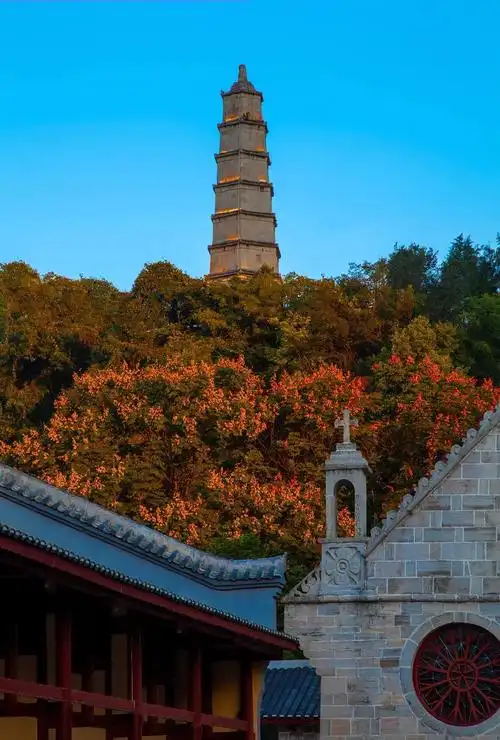 By the time the Mongols under Kublai Khan ruled all of China, Europe was deep in the late Middle Ages—Dante was composing the Divine Comedy, Giotto was revolutionizing painting, and Edward III was about to claim the French throne. It was in 1326, during this Yuan Dynasty moment, that local officials in what is now Anshun erected the hexagonal White Pagoda on a hill that had long served as the area's landmark. The pagoda stands as one of Guizhou's rarest surviving Yuan-era stone structures, placing Xixiu Mountain at the very edge of a global medieval moment when trade routes, dynastic ambitions, and artistic innovation crisscrossed Eurasia.
The White Pagoda itself rises about ten meters in unadorned elegance, built of local bluestone in a tapering hexagonal form. Its clean lines and solid mass showcase the structural confidence of Yuan-era stonework—a discipline contemporaries might compare to the masonry of medieval European bell towers, though expressed through the distinctive aesthetic of Chinese Buddhist tradition. Above and around it, the layered halls of Yuantong Temple cling to the hillside, their upturned eaves and timber-frame construction embodying the typical architectural vocabulary of Ming and Qing-era temple building in central Guizhou. Stone steps and modest boardwalks weave through the complex, inviting visitors to explore at a contemplative pace.
Xixiu Mountain has long held pride of place in local lore, traditionally crowned as the leading scenic sight among Anshun's classical "Eight Views"—the so-called "Pen Peak Rising in Green." For generations, the hill has functioned as both a spiritual anchor and a civic landmark, watching over the city as it grew from a frontier outpost into a regional hub. Both the pagoda and the temple carry provincial heritage status, their cultural and artistic value far exceeding what the mountain's modest size might suggest. Locals still treat the summit as a touchstone of community memory, a place where the layered identity of central Guizhou remains tangible.
The site is open around the clock and completely free of charge, with no entrance fee and no compulsory purchases. Yuantong Temple itself typically opens from 9:00 a.m. to 5:00 p.m.; visitors should dress modestly when entering, and incense offerings are left to personal discretion. The climb from Tower Mountain Plaza to the summit takes a gentle 10 to 15 minutes along well-maintained stone steps. Photographers especially prize the early evening, when warm lighting brings out the pagoda's textures against a deepening sky. Aim to arrive after 4:30 p.m. to escape the midday heat while catching both sunset and the illuminated night views.
From the summit, the tiled rooftops of Anshun's old town unfold in every direction—an evocative panorama that captures the rhythm of daily life below. After descending, a ten-minute walk brings you to Gufu Street, where you can sample the city's signature snacks: freshly rolled Anshun wraps, steaming bowls of beef-rice noodles, and sizzling griddle dishes served family-style. Travelers with extra time can extend the experience by pairing Xixiu Mountain with the Confucian Temple, the Martial Temple, and the tranquil shores of Hongshan Lake, weaving together a rich half-day immersion into Anshun's enduring charm.
By the time the Mongols under Kublai Khan ruled all of China, Europe was deep in the late Middle Ages—Dante was composing the Divine Comedy, Giotto was revolutionizing painting, and Edward III was about to claim the French throne. It was in 1326, during this Yuan Dynasty moment, that local officials in what is now Anshun erected the hexagonal White Pagoda on a hill that had long served as the area's landmark. The pagoda stands as one of Guizhou's rarest surviving Yuan-era stone structures, placing Xixiu Mountain at the very edge of a global medieval moment when trade routes, dynastic ambitions, and artistic innovation crisscrossed Eurasia.
The White Pagoda itself rises about ten meters in unadorned elegance, built of local bluestone in a tapering hexagonal form. Its clean lines and solid mass showcase the structural confidence of Yuan-era stonework—a discipline contemporaries might compare to the masonry of medieval European bell towers, though expressed through the distinctive aesthetic of Chinese Buddhist tradition. Above and around it, the layered halls of Yuantong Temple cling to the hillside, their upturned eaves and timber-frame construction embodying the typical architectural vocabulary of Ming and Qing-era temple building in central Guizhou. Stone steps and modest boardwalks weave through the complex, inviting visitors to explore at a contemplative pace.
Xixiu Mountain has long held pride of place in local lore, traditionally crowned as the leading scenic sight among Anshun's classical "Eight Views"—the so-called "Pen Peak Rising in Green." For generations, the hill has functioned as both a spiritual anchor and a civic landmark, watching over the city as it grew from a frontier outpost into a regional hub. Both the pagoda and the temple carry provincial heritage status, their cultural and artistic value far exceeding what the mountain's modest size might suggest. Locals still treat the summit as a touchstone of community memory, a place where the layered identity of central Guizhou remains tangible.
The site is open around the clock and completely free of charge, with no entrance fee and no compulsory purchases. Yuantong Temple itself typically opens from 9:00 a.m. to 5:00 p.m.; visitors should dress modestly when entering, and incense offerings are left to personal discretion. The climb from Tower Mountain Plaza to the summit takes a gentle 10 to 15 minutes along well-maintained stone steps. Photographers especially prize the early evening, when warm lighting brings out the pagoda's textures against a deepening sky. Aim to arrive after 4:30 p.m. to escape the midday heat while catching both sunset and the illuminated night views.
From the summit, the tiled rooftops of Anshun's old town unfold in every direction—an evocative panorama that captures the rhythm of daily life below. After descending, a ten-minute walk brings you to Gufu Street, where you can sample the city's signature snacks: freshly rolled Anshun wraps, steaming bowls of beef-rice noodles, and sizzling griddle dishes served family-style. Travelers with extra time can extend the experience by pairing Xixiu Mountain with the Confucian Temple, the Martial Temple, and the tranquil shores of Hongshan Lake, weaving together a rich half-day immersion into Anshun's enduring charm.