Guandong Culture Museum
⭐ 3.00
No. 25, Luxun Road, Zhongshan District, Dalian City, Liaoning Province, China
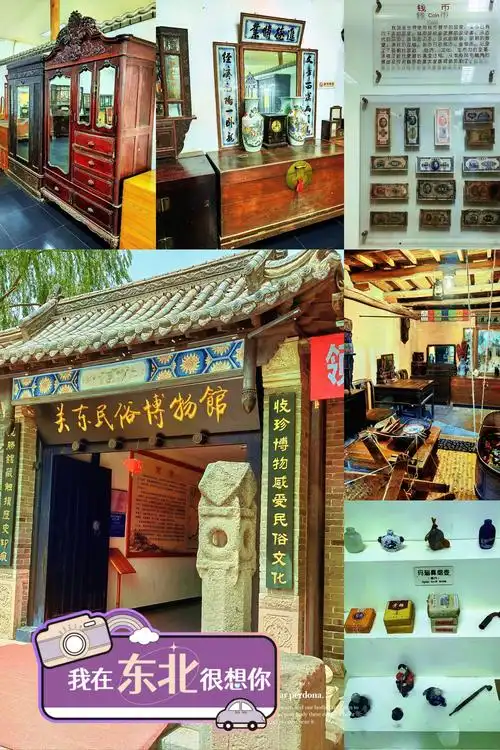 The museum's narrative centers on the great northward exodus that reshaped China's northeast from the 1880s to the 1940s. As famine, poverty, and political upheaval pushed millions from Shandong, Hebei, and Henan, they streamed across the Great Wall into the fertile lands of Manchuria—then known as Guandong. Much like the Irish diaspora to America or the post-1845 European migrations to the New World, this movement transformed a frontier region into thriving commercial centers, blending old-world customs with the raw energy of a new society. Dalian, sitting at the southern tip of Liaodong Peninsula, became one of the most cosmopolitan outposts of this new frontier.
The museum occupies a handsome early-twentieth-century red-brick building, its façade punctuated by tall arched windows that recall the riverside warehouses of London's South Bank, Liverpool's Albert Dock, or Boston's converted wharves. The restoration preserves the original brick coursing and decorative masonry while inserting warm wooden display cases and industrial-style fixtures for a contemporary feel. Wandering the corridors, visitors will notice how the architects kept original brick niches, iron hardware, and timber beams visible—much like a restored Victorian arcade doubling as a gallery. The building is as much a piece of the exhibit as anything behind glass.
Inside, curators have assembled an evocative collection of folk artifacts—brass weighing scales, porcelain medicine jars, embroidered bedding, wooden lacquered trunks—alongside sepia photographs and documentary films tracing the migrants' stories. Several galleries feature life-size recreated scenes: a traditional grocery cluttered with paper-wrapped goods, a tailor's shop draped in bolts of cotton, a cramped brick-bed house where entire families once slept. Multimedia tables allow visitors to flip through period newspapers and watch oral-history testimonies from descendants of the original settlers, lending the experience a thoroughly human texture.
For travelers, the museum offers an unusually accessible window into how Dalian became the layered city it is today. Smaller than Beijing's grand National Museum but far more intimate, it captures something that often gets lost in larger institutions: the texture of ordinary people's lives. Dalian's identity as a port shaped by Russian, Japanese, Chinese, and Korean influences makes sense only once you understand that it was, at heart, a city of newcomers—much like San Francisco, Buenos Aires, or Cape Town—and this museum celebrates that restless, hybrid spirit with quiet confidence.
Plan to spend around two to three hours exploring. The museum sits in the heart of Dalian's Xigang District, easily reached by metro or taxi. After your visit, stroll the surrounding Dongguan Street block, where restored shopfronts now house cafés and craft stores, and sample local snacks from vendors in preserved laneway settings. Time your trip to catch the immersive theater performance "Old Tavern" staged in the district. If energy permits, continue east to Zhongshan Square—a ring of early-1900s European-style banking halls and civic buildings encircling a leafy oval that serves as Dalian's most photogenic reminder of its role as a treaty-port gateway between Asia and the world.
The museum's narrative centers on the great northward exodus that reshaped China's northeast from the 1880s to the 1940s. As famine, poverty, and political upheaval pushed millions from Shandong, Hebei, and Henan, they streamed across the Great Wall into the fertile lands of Manchuria—then known as Guandong. Much like the Irish diaspora to America or the post-1845 European migrations to the New World, this movement transformed a frontier region into thriving commercial centers, blending old-world customs with the raw energy of a new society. Dalian, sitting at the southern tip of Liaodong Peninsula, became one of the most cosmopolitan outposts of this new frontier.
The museum occupies a handsome early-twentieth-century red-brick building, its façade punctuated by tall arched windows that recall the riverside warehouses of London's South Bank, Liverpool's Albert Dock, or Boston's converted wharves. The restoration preserves the original brick coursing and decorative masonry while inserting warm wooden display cases and industrial-style fixtures for a contemporary feel. Wandering the corridors, visitors will notice how the architects kept original brick niches, iron hardware, and timber beams visible—much like a restored Victorian arcade doubling as a gallery. The building is as much a piece of the exhibit as anything behind glass.
Inside, curators have assembled an evocative collection of folk artifacts—brass weighing scales, porcelain medicine jars, embroidered bedding, wooden lacquered trunks—alongside sepia photographs and documentary films tracing the migrants' stories. Several galleries feature life-size recreated scenes: a traditional grocery cluttered with paper-wrapped goods, a tailor's shop draped in bolts of cotton, a cramped brick-bed house where entire families once slept. Multimedia tables allow visitors to flip through period newspapers and watch oral-history testimonies from descendants of the original settlers, lending the experience a thoroughly human texture.
For travelers, the museum offers an unusually accessible window into how Dalian became the layered city it is today. Smaller than Beijing's grand National Museum but far more intimate, it captures something that often gets lost in larger institutions: the texture of ordinary people's lives. Dalian's identity as a port shaped by Russian, Japanese, Chinese, and Korean influences makes sense only once you understand that it was, at heart, a city of newcomers—much like San Francisco, Buenos Aires, or Cape Town—and this museum celebrates that restless, hybrid spirit with quiet confidence.
Plan to spend around two to three hours exploring. The museum sits in the heart of Dalian's Xigang District, easily reached by metro or taxi. After your visit, stroll the surrounding Dongguan Street block, where restored shopfronts now house cafés and craft stores, and sample local snacks from vendors in preserved laneway settings. Time your trip to catch the immersive theater performance "Old Tavern" staged in the district. If energy permits, continue east to Zhongshan Square—a ring of early-1900s European-style banking halls and civic buildings encircling a leafy oval that serves as Dalian's most photogenic reminder of its role as a treaty-port gateway between Asia and the world.