Fujiazhuang Park
⭐ 4.20
Fujiazhuang Park, Shahekou District, Dalian City, Liaoning Province, China
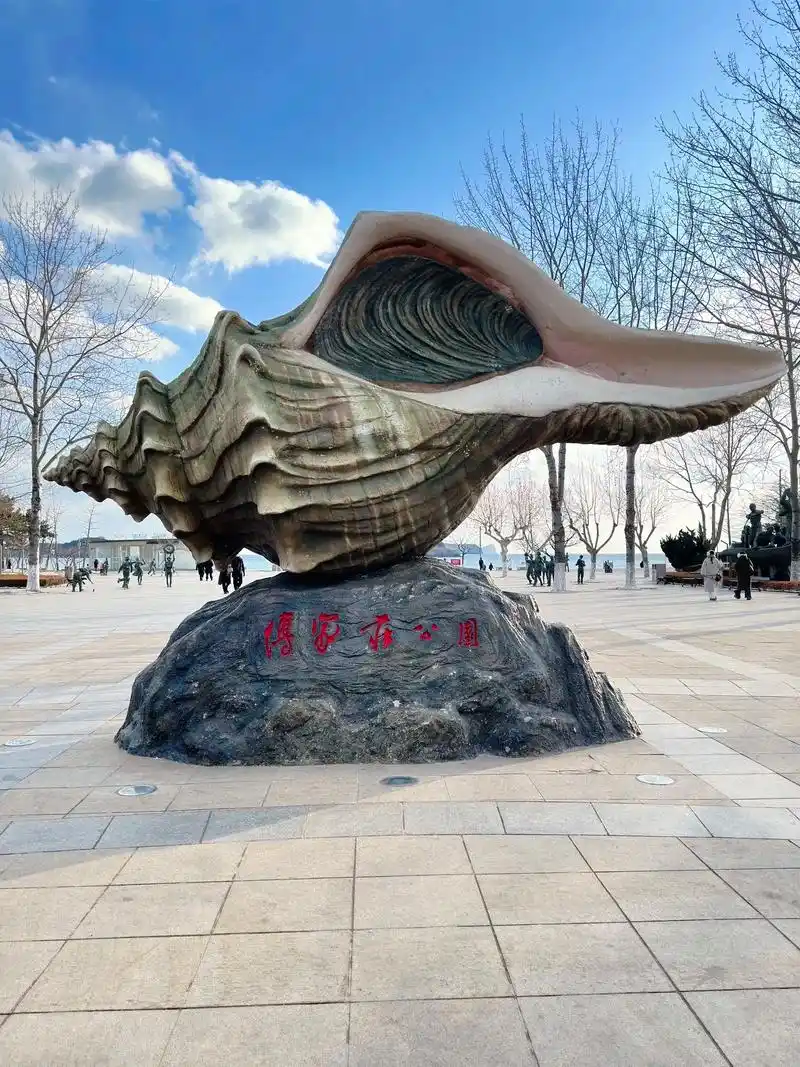 Strung along the southern edge of Liaoning Peninsula, Dalian has long served as China's gateway to the Yellow Sea and, historically, the Pacific. The city's broad, European-influenced boulevards reflect its early-twentieth-century role as a Russian and Japanese port—much like Qingdao's German colonial past or San Francisco's Spanish mission legacy. Fujiazhuang Park sits at the heart of this maritime heritage zone, midway between the clifftop Yanwo Ridge and the pine-shaded Baiyun Villa. Today it functions as Dalian's democratic seaside: a free, unfenced beach where locals and international visitors swim side by side, in the same egalitarian spirit that once drew sailors, traders, and diplomats to this stretch of coast.
The park's landscape reads almost like a classical Chinese scroll painting come to life. Low hills shelter the beach to the north, while offshore the East and West Dalian Islands punctuate the horizon like stone sentinels. At dawn mist clings to the rocks, by midday the sea glitters cobalt, and at sunset the sky turns molten gold—photographers often compare the vistas to Cornwall's coastline or the Amalfi headlands, though without the crowds or fees. A wooden boardwalk traces the shore westward toward Yanwo Ridge's cliffs and eastward toward Silver Beach, offering an easy three-kilometer coastal walk entirely free of vehicle traffic.
Visitors will find the facilities unexpectedly polished for a free public beach. Watchtowers staffed by professional lifeguards monitor the swimming zone, marked by floating lines and equipped with rapid rescue channels. Changing rooms, hot showers, restrooms, and a free foot-wash station keep the experience comfortable. A "Lei Feng Service Station"—named after China's celebrated soldier of the people—offers first aid, umbrellas, and even wheelchair loans, while multilingual signage and announcements in English, Japanese, Korean, and Russian reflect Dalian's long-standing role as a destination for Russian and Northeast Asian travelers.
Practical timing makes a real difference here. Locals arrive between 17:00 and 19:30 in summer to dodge midday sun and catch the sunset over the islands—prime hours for photographers. Public buses 5, 501, 541, and 702 all stop at Fujiazhuang, and drivers should note weekend parking fills by mid-morning. August brings jellyfish; swimmers who are stung should rinse with seawater, never rub the area, and seek medical help. The park enforces a strict no-alcohol rule for swimmers and clearly marked non-swimming zones—precautions echoed at beaches from Bondi to Brighton.
Beyond the peak July-to-September bathing season, the park rewards quieter visits. Spring and autumn bring crisp winds ideal for coastal walks, while winter draws hardy cold-water swimmers who treat the Bohai Sea much as Russian polar plungers treat Lake Baikal or Scandinavians the fjords. Families spread picnic blankets on the surrounding lawns year-round, and couples wander the boardwalk at any hour. Few major-city beaches in Asia combine this level of natural scenery, public safety, and zero admission cost—making Fujiazhuang an essential stop for any traveler curious about Dalian's relaxed, sea-breezed character.
Strung along the southern edge of Liaoning Peninsula, Dalian has long served as China's gateway to the Yellow Sea and, historically, the Pacific. The city's broad, European-influenced boulevards reflect its early-twentieth-century role as a Russian and Japanese port—much like Qingdao's German colonial past or San Francisco's Spanish mission legacy. Fujiazhuang Park sits at the heart of this maritime heritage zone, midway between the clifftop Yanwo Ridge and the pine-shaded Baiyun Villa. Today it functions as Dalian's democratic seaside: a free, unfenced beach where locals and international visitors swim side by side, in the same egalitarian spirit that once drew sailors, traders, and diplomats to this stretch of coast.
The park's landscape reads almost like a classical Chinese scroll painting come to life. Low hills shelter the beach to the north, while offshore the East and West Dalian Islands punctuate the horizon like stone sentinels. At dawn mist clings to the rocks, by midday the sea glitters cobalt, and at sunset the sky turns molten gold—photographers often compare the vistas to Cornwall's coastline or the Amalfi headlands, though without the crowds or fees. A wooden boardwalk traces the shore westward toward Yanwo Ridge's cliffs and eastward toward Silver Beach, offering an easy three-kilometer coastal walk entirely free of vehicle traffic.
Visitors will find the facilities unexpectedly polished for a free public beach. Watchtowers staffed by professional lifeguards monitor the swimming zone, marked by floating lines and equipped with rapid rescue channels. Changing rooms, hot showers, restrooms, and a free foot-wash station keep the experience comfortable. A "Lei Feng Service Station"—named after China's celebrated soldier of the people—offers first aid, umbrellas, and even wheelchair loans, while multilingual signage and announcements in English, Japanese, Korean, and Russian reflect Dalian's long-standing role as a destination for Russian and Northeast Asian travelers.
Practical timing makes a real difference here. Locals arrive between 17:00 and 19:30 in summer to dodge midday sun and catch the sunset over the islands—prime hours for photographers. Public buses 5, 501, 541, and 702 all stop at Fujiazhuang, and drivers should note weekend parking fills by mid-morning. August brings jellyfish; swimmers who are stung should rinse with seawater, never rub the area, and seek medical help. The park enforces a strict no-alcohol rule for swimmers and clearly marked non-swimming zones—precautions echoed at beaches from Bondi to Brighton.
Beyond the peak July-to-September bathing season, the park rewards quieter visits. Spring and autumn bring crisp winds ideal for coastal walks, while winter draws hardy cold-water swimmers who treat the Bohai Sea much as Russian polar plungers treat Lake Baikal or Scandinavians the fjords. Families spread picnic blankets on the surrounding lawns year-round, and couples wander the boardwalk at any hour. Few major-city beaches in Asia combine this level of natural scenery, public safety, and zero admission cost—making Fujiazhuang an essential stop for any traveler curious about Dalian's relaxed, sea-breezed character.