Lüshun Russo-Japanese Prison Site
⭐ 4.80
Lüshun Russo-Japanese Prison Site Museum
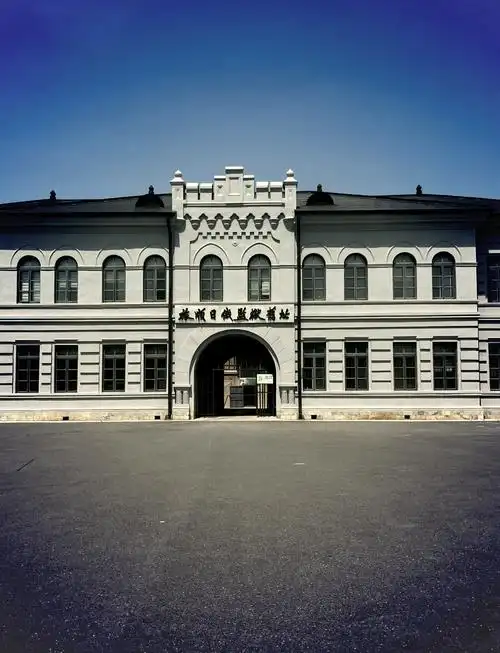 Built during the same era as the Boxer Rebellion and the great scramble for concessions in China, the prison emerged from the violent struggle for control of the Liaodong Peninsula. Tsarist Russia leased the area in 1898, then lost it to Japan after the Russo-Japanese War of 1904–05—a conflict that, as the London Times then remarked, marked the first time in modern history a European power was defeated by an Asian nation. Japan expanded the facility exponentially, holding Chinese resistance fighters, Korean patriot An Jung-geun, Soviet intelligence operatives, and even Japanese anti-war dissidents. At its peak, nearly 2,000 inmates were crammed inside.
The compound's layout is unusually striking for China: a radial hub-and-spoke design closely echoing Jeremy Bentham's 18th-century panopticon concept pioneered in European reformatories. From a central watchtower, corridors fan outward in a sunburst pattern, allowing guards to monitor every cell simultaneously. Of the 275 cramped cells, the most chilling are the 2.4-square-meter windowless "dark cells" and the subterranean interrogation rooms where original shackles and straitjackets remain on display—silent, visceral reminders of the cruelty inflicted within these walls.
Several themed exhibitions deepen the historical narrative, including a gallery on An Jung-geun, the Korean independence hero who wrote calligraphy here before his 1910 execution after assassinating Japan's Prime Minister Itō Hirobumi. Displays on international anti-fascist fighters and the post-war Japanese war criminal rehabilitation program position the site as a crossroads of global decolonization history—comparable in scope to Robben Island or Hoa Lo Prison in Hanoi, though uniquely anchored in East Asia's turbulent past.
Entry is free, but visitors must book a personal ID-required slot through the official WeChat mini-program up to seven days ahead. Summer hours run 9:00–16:30, with extended evening openings until 20:00 on weekend summer days; winter hours shorten to 16:00. The site closes Mondays. Allow 1.5 to 2 hours, and join one of the free Mandarin guided tours—typically at 9:30, 10:30, 13:30, and 14:30—as the museum's emotional weight is difficult to absorb without contextual narration.
Dress respectfully and observe silence throughout. Photography and video are prohibited in all areas. Given the grim subject matter—torture implements and execution scenes—elderly visitors, young children, and the psychologically sensitive should consider carefully before going. Many travelers pair the prison with the nearby Lüshun Naval Port and the Sun Valley Colonial Architecture District for a half-day "modern history" theme route. From central Dalian, take Metro Line 12 to Lüshun Station, then a 10-minute taxi ride brings you to the site.
Built during the same era as the Boxer Rebellion and the great scramble for concessions in China, the prison emerged from the violent struggle for control of the Liaodong Peninsula. Tsarist Russia leased the area in 1898, then lost it to Japan after the Russo-Japanese War of 1904–05—a conflict that, as the London Times then remarked, marked the first time in modern history a European power was defeated by an Asian nation. Japan expanded the facility exponentially, holding Chinese resistance fighters, Korean patriot An Jung-geun, Soviet intelligence operatives, and even Japanese anti-war dissidents. At its peak, nearly 2,000 inmates were crammed inside.
The compound's layout is unusually striking for China: a radial hub-and-spoke design closely echoing Jeremy Bentham's 18th-century panopticon concept pioneered in European reformatories. From a central watchtower, corridors fan outward in a sunburst pattern, allowing guards to monitor every cell simultaneously. Of the 275 cramped cells, the most chilling are the 2.4-square-meter windowless "dark cells" and the subterranean interrogation rooms where original shackles and straitjackets remain on display—silent, visceral reminders of the cruelty inflicted within these walls.
Several themed exhibitions deepen the historical narrative, including a gallery on An Jung-geun, the Korean independence hero who wrote calligraphy here before his 1910 execution after assassinating Japan's Prime Minister Itō Hirobumi. Displays on international anti-fascist fighters and the post-war Japanese war criminal rehabilitation program position the site as a crossroads of global decolonization history—comparable in scope to Robben Island or Hoa Lo Prison in Hanoi, though uniquely anchored in East Asia's turbulent past.
Entry is free, but visitors must book a personal ID-required slot through the official WeChat mini-program up to seven days ahead. Summer hours run 9:00–16:30, with extended evening openings until 20:00 on weekend summer days; winter hours shorten to 16:00. The site closes Mondays. Allow 1.5 to 2 hours, and join one of the free Mandarin guided tours—typically at 9:30, 10:30, 13:30, and 14:30—as the museum's emotional weight is difficult to absorb without contextual narration.
Dress respectfully and observe silence throughout. Photography and video are prohibited in all areas. Given the grim subject matter—torture implements and execution scenes—elderly visitors, young children, and the psychologically sensitive should consider carefully before going. Many travelers pair the prison with the nearby Lüshun Naval Port and the Sun Valley Colonial Architecture District for a half-day "modern history" theme route. From central Dalian, take Metro Line 12 to Lüshun Station, then a 10-minute taxi ride brings you to the site.