Gantong Temple
⭐ 4.20
Gantong Temple, Dali City, Dali Bai Autonomous Prefecture, Yunnan Province, China
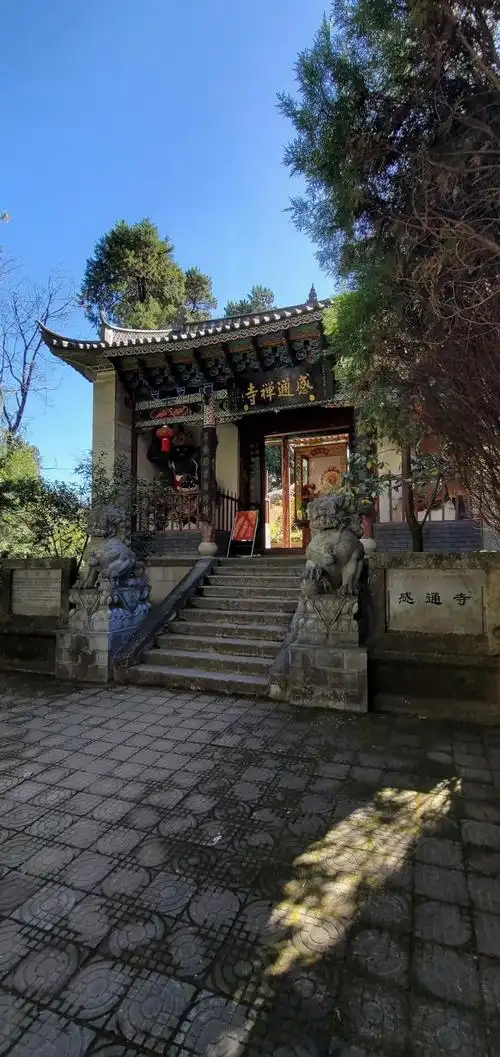 Founded during the Han dynasty—roughly contemporary with the Roman Empire's final centuries—and once known as Dangshan Temple in the early Tang era, Gantong reached its golden age during the Ming dynasty, when it boasted an extraordinary complex of thirty-six separate monastic courtyards. The temple's enduring fame rests largely on the extraordinary convergence of literary and spiritual luminaries who gathered there. The Ming-dynasty Grand Secretary Yang Shen (styled Sheng'an), a figure comparable to Erasmus in his humanist learning, retreated to the temple and composed verses in what is now called the Xieyun Pavilion. The revered poet-monk Dandang is also interred here, his memorial pagoda still standing as a site of pilgrimage. The great Ming-era travel writer Xu Xiake, often called China's Ibn Battuta, documented his visit in detailed travel records that remain invaluable historical sources.
While the present structures were largely rebuilt during the Qing dynasty's Guangxu reign and later periods, the temple retains an authentic atmosphere through its Ming-era stone steles, classical couplets, and venerable trees. The Great Hall (Daxiong Baodian) and Xieyun Hall preserve the original spatial layout, and the courtyard's centerpiece—a magnificent tea tree over six centuries old—still flourishes, regarded as the living ancestor of the celebrated Gantong tea tradition. The temple is dedicated to the Zen principle of "chayi yiwei," the unity of tea and meditation, a philosophy reminiscent of Japan's matcha ceremony but rooted in earlier Chinese Buddhist practice.
Culturally, Gantong occupies a vital place in southwestern China's Buddhist and literary heritage. The temple continues a centuries-old tradition of offering complimentary tea to all visitors, embodying the Buddhist spirit of boundless generosity. Visitors are welcome to sit quietly in the temple halls, sipping tea beneath ancient camphor trees while contemplating the relationship between Cangshan's nineteen peaks and the mirror-like expanse of Erhai Lake below. This unbroken continuity of tea cultivation and spiritual practice makes Gantong a living museum of southwestern Chinese religious culture.
The temple is freely accessible to visitors, with no entrance fee, and welcomes guests daily from approximately 8:30 AM to 5:00 PM. A taxi ride from Dali Old Town takes only about fifteen minutes, and the lower station of the Gantong Cable Car sits conveniently beside the temple gate, making it an effortless addition to any Dali itinerary. A simple vegetarian lunch is served around 11:30 AM to 12:30 PM, available to visitors who make a small voluntary donation. Visitors should observe proper temple etiquette by maintaining silence inside the halls and refraining from photographing the main Buddha statues.
The optimal time to arrive is before 9:00 AM, when the morning light filters beautifully through the ancient trees and the temple remains blissfully uncrowded. Travelers can easily extend their visit with a short walk to the nearby Jizhao Nunnery, famous for its Instagram-worthy succulent gardens and refined vegetarian cuisine, or ride the cable car up Cangshan Mountain for panoramic vistas over Erhai Lake. Though modest in scale compared to China's grand imperial monasteries, Gantong's understated elegance, ancient tea heritage, and profound sense of tranquility make it the most rewarding cultural gem among Cangshan's eighteen peaks—a perfect place to slow down and absorb the spiritual heartbeat of Dali.
Founded during the Han dynasty—roughly contemporary with the Roman Empire's final centuries—and once known as Dangshan Temple in the early Tang era, Gantong reached its golden age during the Ming dynasty, when it boasted an extraordinary complex of thirty-six separate monastic courtyards. The temple's enduring fame rests largely on the extraordinary convergence of literary and spiritual luminaries who gathered there. The Ming-dynasty Grand Secretary Yang Shen (styled Sheng'an), a figure comparable to Erasmus in his humanist learning, retreated to the temple and composed verses in what is now called the Xieyun Pavilion. The revered poet-monk Dandang is also interred here, his memorial pagoda still standing as a site of pilgrimage. The great Ming-era travel writer Xu Xiake, often called China's Ibn Battuta, documented his visit in detailed travel records that remain invaluable historical sources.
While the present structures were largely rebuilt during the Qing dynasty's Guangxu reign and later periods, the temple retains an authentic atmosphere through its Ming-era stone steles, classical couplets, and venerable trees. The Great Hall (Daxiong Baodian) and Xieyun Hall preserve the original spatial layout, and the courtyard's centerpiece—a magnificent tea tree over six centuries old—still flourishes, regarded as the living ancestor of the celebrated Gantong tea tradition. The temple is dedicated to the Zen principle of "chayi yiwei," the unity of tea and meditation, a philosophy reminiscent of Japan's matcha ceremony but rooted in earlier Chinese Buddhist practice.
Culturally, Gantong occupies a vital place in southwestern China's Buddhist and literary heritage. The temple continues a centuries-old tradition of offering complimentary tea to all visitors, embodying the Buddhist spirit of boundless generosity. Visitors are welcome to sit quietly in the temple halls, sipping tea beneath ancient camphor trees while contemplating the relationship between Cangshan's nineteen peaks and the mirror-like expanse of Erhai Lake below. This unbroken continuity of tea cultivation and spiritual practice makes Gantong a living museum of southwestern Chinese religious culture.
The temple is freely accessible to visitors, with no entrance fee, and welcomes guests daily from approximately 8:30 AM to 5:00 PM. A taxi ride from Dali Old Town takes only about fifteen minutes, and the lower station of the Gantong Cable Car sits conveniently beside the temple gate, making it an effortless addition to any Dali itinerary. A simple vegetarian lunch is served around 11:30 AM to 12:30 PM, available to visitors who make a small voluntary donation. Visitors should observe proper temple etiquette by maintaining silence inside the halls and refraining from photographing the main Buddha statues.
The optimal time to arrive is before 9:00 AM, when the morning light filters beautifully through the ancient trees and the temple remains blissfully uncrowded. Travelers can easily extend their visit with a short walk to the nearby Jizhao Nunnery, famous for its Instagram-worthy succulent gardens and refined vegetarian cuisine, or ride the cable car up Cangshan Mountain for panoramic vistas over Erhai Lake. Though modest in scale compared to China's grand imperial monasteries, Gantong's understated elegance, ancient tea heritage, and profound sense of tranquility make it the most rewarding cultural gem among Cangshan's eighteen peaks—a perfect place to slow down and absorb the spiritual heartbeat of Dali.