798 Art District

⭐ 4.00

798 Art District, Jiuxianqiao Street, Chaoyang District, Beijing, China
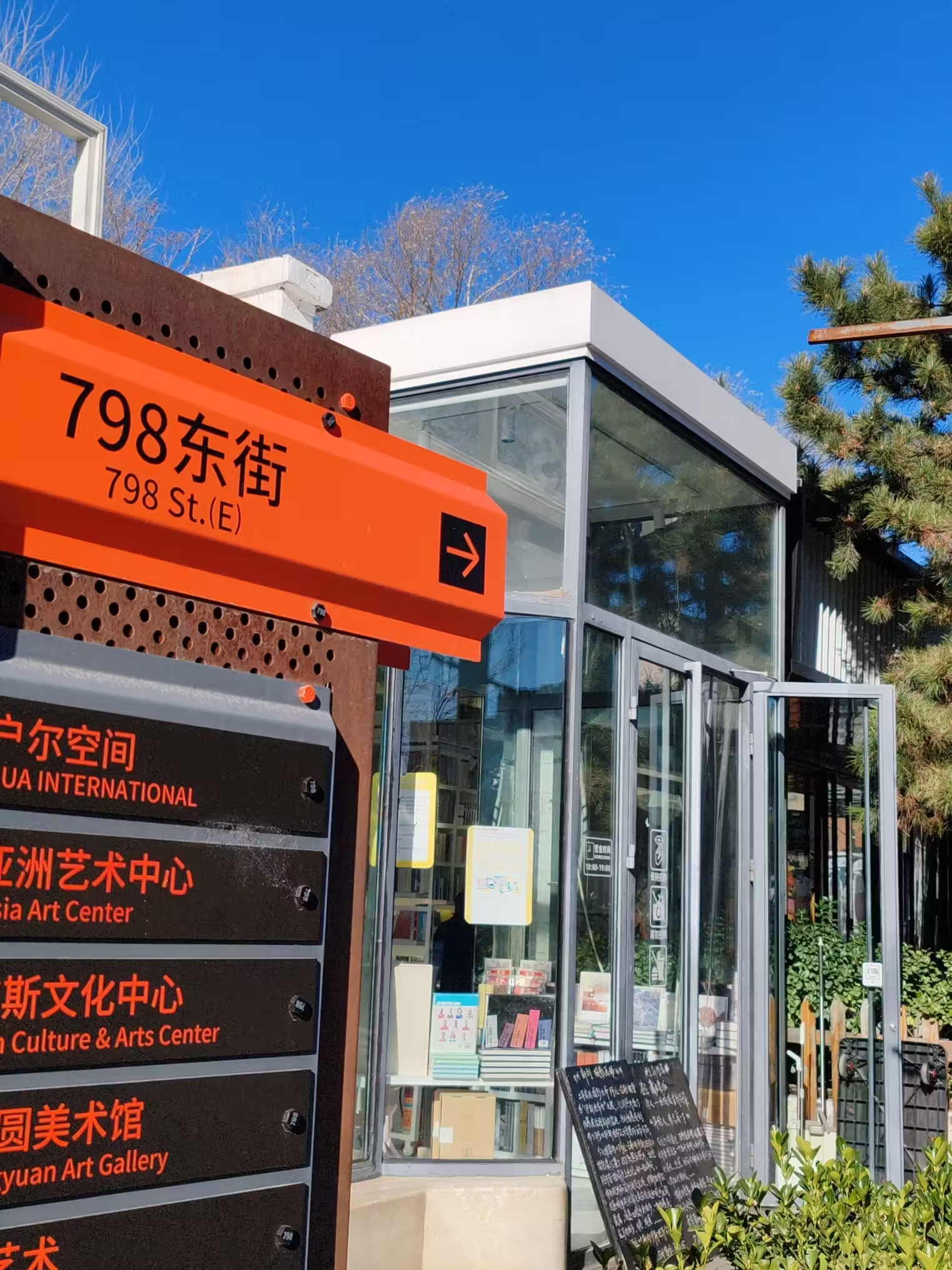
798 Art District
**A Cold War Relic Reimagined** 798's story begins in the 1950s, when East German engineers helped design the "718 Joint Factory" as part of socialist-bloc industrial cooperation—a fascinating footnote to Cold War history when Beijing and East Berlin built factories together. After decades of electronics production, artists began squatting in the abandoned workshops around 2000, repurposing cavernous factory floors into studios. Today, it stands as China's most successful example of post-industrial regeneration, much like how Berlin's Mitte district reinvented its own abandoned buildings after reunification, though on a uniquely Chinese scale. **Bauhaus in Beijing** The complex retains exceptional examples of Bauhaus-inspired industrial architecture, recalling Walter Gropius's Dessau School in Germany. Massive sawtooth roofs, exposed steel trusses, weathered red-brick walls, and towering chimneys create a raw, photogenic environment where geometric functionality meets industrial archaeology. Sunlight filtering through factory skylights and steam pipes snakes across gallery walls—visitors often feel they've wandered into a giant, working sculpture rather than a former electronics plant. **China's Contemporary Art Capital** Spanning roughly 25 hectares, 798 now hosts over 400 galleries, artist studios, design shops, and cultural institutions. Anchored by UCCA Ullens Center for Contemporary Art and the Meet You Museum, the district stages thousands of exhibitions yearly, regularly bringing international heavyweights to Beijing. For art-curious travelers, it offers a window into Chinese contemporary practice without the formality of the National Museum—a more approachable, walkable alternative to Manhattan's Chelsea galleries. **Practical Information** The district is free to enter and open daily with no gates or tickets required. Individual galleries and museums typically operate 10:00–18:00, with last entry around 17:00, and most close on Mondays. Take Metro Line 14 to Wangjing South (望京南) or Jiangtai (将台) station, then walk 10–15 minutes to the main entrance. Special exhibitions at major venues like UCCA usually cost ¥30–80, with blockbuster shows requiring advance online booking. **How to Visit Well** Plan three to four hours for a satisfying visit. A classic route threads from the Hyundai Motorstudio graffiti wall through UCCA, the iconic Bauhaus Plaza red-brick landmark, the green vintage locomotive at Train Square, and onward to the Meet You Museum, before wandering side streets to discover independent galleries. Weekdays offer quieter viewing; weekends buzz with energy. Late afternoon light—around 4 pm—bathes the brick facades beautifully, ideal for photography.

Traveler reviews

Half a year ago, I didn't really have any impression of 798 Art District. I only knew there were lots of galleries, studios, and art institutions here. But after going once, I started coming back often. The artistic atmosphere in 798 is great, with exhibitions showing in various galleries and all kinds of styles and schools of paintings. It's a place where artists display their work and interact with peers or regular visitors. P...
⭐ 5 · Alex Morgan Expand
798 Art District is a great example of successfully blending industrial heritage, contemporary art, and commercial consumption into one cohesive space. It might have lost some of its early raw, pioneering edge, but in return it's become a more open, inclusive, and fully fun...
⭐ 4 · Skyler Moon Expand