Zhoucheng Tie-Dye
⭐ 4.50
Zhoucheng Bai Tie-Dye Ancient Town, Dali City, Dali Bai Autonomous Prefecture, Yunnan Province, China
 Tie-dye in Zhoucheng traces back to the Qin and Han dynasties (roughly 200 BCE–200 CE) and flourished during the Tang and Song periods, when Dali served as a key stop on the ancient Southern Silk Road. The technique, known as jiaxie (knotted-resist), is a close cousin of Japan's shibori—the word itself shares the same etymological root—and bears philosophical kinship with Indonesian batik and the indigo traditions of Provence. Recognized in 2006 as a National Intangible Cultural Heritage item, Zhoucheng preserves what industrialization erased elsewhere: a complete chain of knowledge, from cultivating indigo plants to finishing hand-stitched cloth.
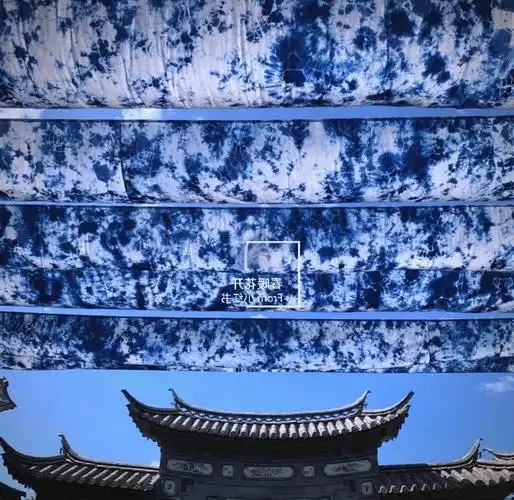
Set at the foot of Cangshan Mountain with Erhai Lake shimmering beyond, Zhoucheng is Yunnan's largest natural Bai village, a maze of whitewashed courtyards interspersed with drying racks of indigo cloth and earthen dye vats. Over 200 family workshops dot the lanes; the most significant is the Puzhen Bai Tie-Dye Museum, operated by the Duan Yinkai family of inheritors. Walking through, you'll see blue textiles fluttering between traditional Bai architecture—gray-tiled roofs, carved wooden screens, painted murals—creating a visual rhythm reminiscent of a Tuscan hill town where craft and daily life remain inseparably woven.
The craft's soul lies in its single dye: fermented indigo extracted from Isatis tinctoria, the same plant family that once colored European workwear and Japanese kimonos. Each piece begins with hand-sketched patterns—bees, plum blossoms, ice-crack motifs—then is bound with thread before being dunked into oxidation vats, where cloth magically shifts from yellow-green to deep cobalt. The Bai consider blue-and-white purity a metaphor for moral clarity ("qingqing baibai"). Every scarf or tote emerges unique, its mottled gradients impossible to replicate by machine, making each purchase a one-of-a-kind artifact.
Allow two to three hours for a meaningful workshop. The Puzhen Museum offers systematic demonstrations tracing the entire craft lineage, while smaller studios like Lanxu and Mo Ran Fang provide intimate, hands-on sessions. Prices run roughly ¥30–50 for a square scarf and ¥100–200 for clothing—no purchase obligation. Workshops operate best between 10 a.m. and 4 p.m., when natural light reveals the dye's oxidation process most vividly. The village sits just 20 minutes by car from Dali Old Town and pairs naturally with Xizhou Old Town next door for a fuller Bai cultural experience.
This is one of China's rare places where craft tourism hasn't tipped into theater. Grandma-artisans gossip and stitch in sunlit courtyards, vats glint olive-green, and the air carries the herbaceous scent of fresh indigo. Critical tip: wear dark or old clothing—plant dye stains permanently—and the moment of unpacking your finished piece is a small, joyful surprise. To verify authenticity, look for vats with yellowish-green liquid and that earthy aroma; mass-produced imitations use chemical dyes. Zhoucheng offers something increasingly precious: a craft tradition still breathing.
Tie-dye in Zhoucheng traces back to the Qin and Han dynasties (roughly 200 BCE–200 CE) and flourished during the Tang and Song periods, when Dali served as a key stop on the ancient Southern Silk Road. The technique, known as jiaxie (knotted-resist), is a close cousin of Japan's shibori—the word itself shares the same etymological root—and bears philosophical kinship with Indonesian batik and the indigo traditions of Provence. Recognized in 2006 as a National Intangible Cultural Heritage item, Zhoucheng preserves what industrialization erased elsewhere: a complete chain of knowledge, from cultivating indigo plants to finishing hand-stitched cloth.
Set at the foot of Cangshan Mountain with Erhai Lake shimmering beyond, Zhoucheng is Yunnan's largest natural Bai village, a maze of whitewashed courtyards interspersed with drying racks of indigo cloth and earthen dye vats. Over 200 family workshops dot the lanes; the most significant is the Puzhen Bai Tie-Dye Museum, operated by the Duan Yinkai family of inheritors. Walking through, you'll see blue textiles fluttering between traditional Bai architecture—gray-tiled roofs, carved wooden screens, painted murals—creating a visual rhythm reminiscent of a Tuscan hill town where craft and daily life remain inseparably woven.
The craft's soul lies in its single dye: fermented indigo extracted from Isatis tinctoria, the same plant family that once colored European workwear and Japanese kimonos. Each piece begins with hand-sketched patterns—bees, plum blossoms, ice-crack motifs—then is bound with thread before being dunked into oxidation vats, where cloth magically shifts from yellow-green to deep cobalt. The Bai consider blue-and-white purity a metaphor for moral clarity ("qingqing baibai"). Every scarf or tote emerges unique, its mottled gradients impossible to replicate by machine, making each purchase a one-of-a-kind artifact.
Allow two to three hours for a meaningful workshop. The Puzhen Museum offers systematic demonstrations tracing the entire craft lineage, while smaller studios like Lanxu and Mo Ran Fang provide intimate, hands-on sessions. Prices run roughly ¥30–50 for a square scarf and ¥100–200 for clothing—no purchase obligation. Workshops operate best between 10 a.m. and 4 p.m., when natural light reveals the dye's oxidation process most vividly. The village sits just 20 minutes by car from Dali Old Town and pairs naturally with Xizhou Old Town next door for a fuller Bai cultural experience.
This is one of China's rare places where craft tourism hasn't tipped into theater. Grandma-artisans gossip and stitch in sunlit courtyards, vats glint olive-green, and the air carries the herbaceous scent of fresh indigo. Critical tip: wear dark or old clothing—plant dye stains permanently—and the moment of unpacking your finished piece is a small, joyful surprise. To verify authenticity, look for vats with yellowish-green liquid and that earthy aroma; mass-produced imitations use chemical dyes. Zhoucheng offers something increasingly precious: a craft tradition still breathing.