Cangshan Mountain
⭐ 4.60
Cangshan Scenic Area, Eryuan County, Dali City, Dali Bai Autonomous Prefecture, Yunnan Province, China
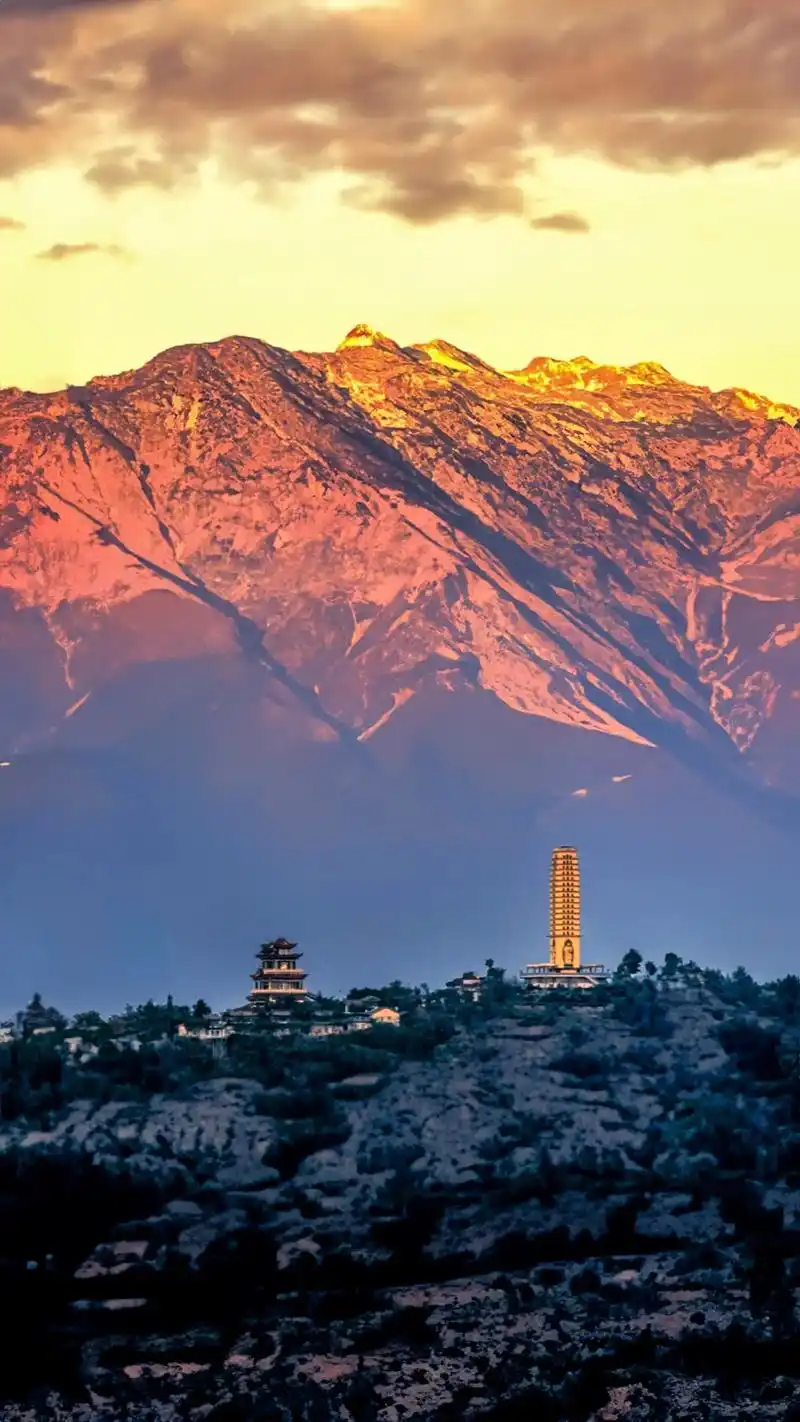 Cangshan forms the southern spur of the Yunling Range along the southeastern edge of the Tibetan Plateau. Hundreds of millions of years of tectonic compression and glacial sculpting have carved its signature profile: 19 peaks above 3,500 meters separated by 18 valleys, each drained by a stream cascading toward Erhai Lake below. This high-mountain-meets-great-lake pairing recalls classic Alpine combinations such as Lake Lucerne beneath Mount Pilatus. Designated a national nature reserve in 1994 and a UNESCO World Geopark in 2014, the range is both a scientific treasure and a scenic masterpiece, with exposed rock faces studied as a textbook example of continental collision zones.
Three cableways access Cangshan, each with a distinct personality. The Ximalatan Gondola climbs dramatically to a 3,966-meter viewing platform — high enough to feel genuinely alpine — where rhododendrons transform the slopes into a sea of pink and white from May to June, rivaling the wildflower displays of the Italian Dolomites. The gentler Gantong Cableway delivers hikers onto the Yudaiyun Trail and onward to Jizhao Nunnery. Adventurous travelers favor the open-air Zhonghe Chairlift, often using it as the descent leg of a classic "up Gantong, down Zhonghe" traverse.
The Yudaiyun Trail, meaning "Jade Belt Cloud Path," is the highlight of any Cangshan visit. This contouring footpath stretches roughly 18 kilometers between Xiaocen Peak in the north and Shengying Peak in the south, holding a near-constant elevation of about 2,600 meters. Unlike the demanding summit ascents of the Alps, this nearly level route welcomes families and casual walkers, threading through mossy cedar forest where squirrels dart between roots. Sections grow slick with moisture and moss, so sturdy non-slip footwear is essential. On clear mornings, the trail appears suspended between two layers of cloud, evoking the ethereal quality of high ridges in the Scottish Highlands.
Near the upper Gantong terminus sits Jizhao Nunnery, a small Buddhist temple that has quietly become one of Yunnan's most photographed sites. Its courtyards overflow with thousands of succulents, creating a contemplative yet playful atmosphere reminiscent of alpine monastic gardens in Switzerland. Visitors are warmly welcomed to share a simple vegetarian lunch priced at around 20 yuan per person, served in a quiet refectory overlooking the mountains. The temple embodies the seamless blend of natural beauty and spiritual refuge that defines Dali, where Bai minority culture, Mahayana Buddhism, and dramatic geology have coexisted for centuries.
Cangshan's vertical climate demands respect. The summit zone is frequently shrouded in mist and battered by wind; summer nights at altitude can drop below 10°C, while winter brings lasting snow. The Ximalatan Gondola typically requires booking three to five days ahead in peak season, and all cableways may suspend operations in storms or high winds — always check status before departing. For the summit, pack a windproof jacket, water, calorie-dense snacks, and move slowly at nearly 4,000 meters. Early morning departures offer the clearest skies, the softest photographic light, and the best chance to see Cangshan before afternoon clouds gather.
What sets Cangshan apart from other Chinese high-altitude parks is the remarkable concentration of experiences within a single mountain: glacier-carved cirques, alpine lakes, ancient pilgrim paths, cloud seas, and even a succulent-filled nunnery all coexist within a few hours' walking distance. First-time visitors should try the relaxed half-day route: Gantong Cableway up, a leisurely stroll along the Yudaiyun Trail, vegetarian lunch at Jizhao Nunnery, then descend. Photographers and fit hikers can extend the day with the Ximalatan summit line, chasing late-spring rhododendrons or winter snowscapes. With modest preparation, Cangshan delivers the sublime tranquility that has drawn travelers to Dali for centuries.
Cangshan forms the southern spur of the Yunling Range along the southeastern edge of the Tibetan Plateau. Hundreds of millions of years of tectonic compression and glacial sculpting have carved its signature profile: 19 peaks above 3,500 meters separated by 18 valleys, each drained by a stream cascading toward Erhai Lake below. This high-mountain-meets-great-lake pairing recalls classic Alpine combinations such as Lake Lucerne beneath Mount Pilatus. Designated a national nature reserve in 1994 and a UNESCO World Geopark in 2014, the range is both a scientific treasure and a scenic masterpiece, with exposed rock faces studied as a textbook example of continental collision zones.
Three cableways access Cangshan, each with a distinct personality. The Ximalatan Gondola climbs dramatically to a 3,966-meter viewing platform — high enough to feel genuinely alpine — where rhododendrons transform the slopes into a sea of pink and white from May to June, rivaling the wildflower displays of the Italian Dolomites. The gentler Gantong Cableway delivers hikers onto the Yudaiyun Trail and onward to Jizhao Nunnery. Adventurous travelers favor the open-air Zhonghe Chairlift, often using it as the descent leg of a classic "up Gantong, down Zhonghe" traverse.
The Yudaiyun Trail, meaning "Jade Belt Cloud Path," is the highlight of any Cangshan visit. This contouring footpath stretches roughly 18 kilometers between Xiaocen Peak in the north and Shengying Peak in the south, holding a near-constant elevation of about 2,600 meters. Unlike the demanding summit ascents of the Alps, this nearly level route welcomes families and casual walkers, threading through mossy cedar forest where squirrels dart between roots. Sections grow slick with moisture and moss, so sturdy non-slip footwear is essential. On clear mornings, the trail appears suspended between two layers of cloud, evoking the ethereal quality of high ridges in the Scottish Highlands.
Near the upper Gantong terminus sits Jizhao Nunnery, a small Buddhist temple that has quietly become one of Yunnan's most photographed sites. Its courtyards overflow with thousands of succulents, creating a contemplative yet playful atmosphere reminiscent of alpine monastic gardens in Switzerland. Visitors are warmly welcomed to share a simple vegetarian lunch priced at around 20 yuan per person, served in a quiet refectory overlooking the mountains. The temple embodies the seamless blend of natural beauty and spiritual refuge that defines Dali, where Bai minority culture, Mahayana Buddhism, and dramatic geology have coexisted for centuries.
Cangshan's vertical climate demands respect. The summit zone is frequently shrouded in mist and battered by wind; summer nights at altitude can drop below 10°C, while winter brings lasting snow. The Ximalatan Gondola typically requires booking three to five days ahead in peak season, and all cableways may suspend operations in storms or high winds — always check status before departing. For the summit, pack a windproof jacket, water, calorie-dense snacks, and move slowly at nearly 4,000 meters. Early morning departures offer the clearest skies, the softest photographic light, and the best chance to see Cangshan before afternoon clouds gather.
What sets Cangshan apart from other Chinese high-altitude parks is the remarkable concentration of experiences within a single mountain: glacier-carved cirques, alpine lakes, ancient pilgrim paths, cloud seas, and even a succulent-filled nunnery all coexist within a few hours' walking distance. First-time visitors should try the relaxed half-day route: Gantong Cableway up, a leisurely stroll along the Yudaiyun Trail, vegetarian lunch at Jizhao Nunnery, then descend. Photographers and fit hikers can extend the day with the Ximalatan summit line, chasing late-spring rhododendrons or winter snowscapes. With modest preparation, Cangshan delivers the sublime tranquility that has drawn travelers to Dali for centuries.