Erhai Lake
⭐ 4.70
Erhai Scenic Area, Dali City, Dali Bai Autonomous Prefecture, Yunnan Province, China
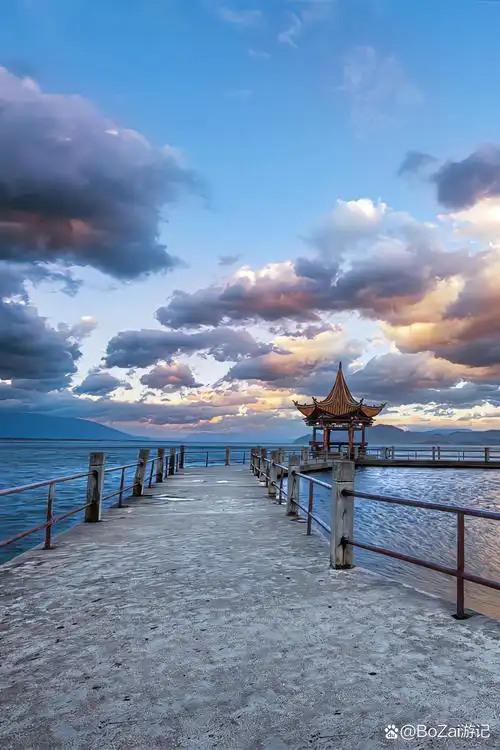 Forged by tectonic rifting and glacial sculpting millions of years ago, Erhai occupies a fault basin that echoes the geological drama of Italy's Lake Como or Switzerland's Lake Lucerne, though it sits roughly 1,000 meters higher in altitude. By the eighth century, the lake had become the cradle of the Nanzhao Kingdom (738–902 CE), a Tang-era power that rivaled Tibet and stood as the "Tuscany of the Southwest." Its successor states of Dali persisted into the thirteenth century, leaving behind pagoda-studded shorelines and a distinct Bai civilization. The lake even trained a royal navy—a curiosity in landlocked Yunnan—before becoming the cultural heart of the western highlands.
Stretching 250 square kilometers with a 130-kilometer shoreline, Erhai reads like a miniature inland sea. Its waters keep a Class II national purity rating and glow deep turquoise from November through March, when black-headed gulls migrate south from Siberian ice floes to share the dawn with photographers. The west bank is a flat tapestry of rice paddies and wetlands best explored along the new 46-kilometer ecological corridor, a car-free ribbon ideal for cyclists. The east bank, by contrast, rises into sheer cliffs where mountain meets water, echoing the steep fjord-like drama of Norway's western coast.
The Bai, one of China's oldest ethnic minorities, treat Erhai as their "Mother Lake," and their villages still ring its shores like pearls on a string. Xizhou Ancient Town preserves a hundred Ming- and Qing-era courtyard houses, their whitewashed walls and painted wooden screens evoking a smaller, sunnier version of rural Provence. Visitors can watch artisans stretch indigo dye into batik, sample the famous sour-spicy Erhai fish, and sip three-course Bai tea in tiled courtyards. The architecture, cuisine, and crafts connect travelers to traditions far older than China's imperial capitals.
Erhai's public shoreline and ecological corridor are free to enter year-round; only boat trips and Nanzhao Custom Island carry modest admission fees, roughly ¥50–¥120. A recommended two-day plan loops the lake clockwise: ride west through Longkan Dock at sunrise, photograph the iconic Panxi S-bend, and pause in Xizhou for breakfast, then hire a car the next day for the eastern leg through Shuanglang, Wenbi Village's rainbow road, and the sunset vantage of Ideal Land. Bikes and e-bikes rent for ¥80–¥150 per day in Dali Old Town, the natural base for at least three nights.
Travelers come to Erhai not for blockbuster monuments but for the choreography of light on water, the flapping of gulls over a fisherman's wake, and the slow reveal of villages behind hedges of bougainvillea. August closes the rainy season with the lake's most crystalline water, though visitors should pack SPF 50+ sunscreen, a light rain jacket, and a fleece for cool 10–15°C evenings. At 2,000 meters the altitude is mild but worth acclimating gently. Few places in Asia deliver such an unhurried encounter between landscape, heritage, and sky.
Forged by tectonic rifting and glacial sculpting millions of years ago, Erhai occupies a fault basin that echoes the geological drama of Italy's Lake Como or Switzerland's Lake Lucerne, though it sits roughly 1,000 meters higher in altitude. By the eighth century, the lake had become the cradle of the Nanzhao Kingdom (738–902 CE), a Tang-era power that rivaled Tibet and stood as the "Tuscany of the Southwest." Its successor states of Dali persisted into the thirteenth century, leaving behind pagoda-studded shorelines and a distinct Bai civilization. The lake even trained a royal navy—a curiosity in landlocked Yunnan—before becoming the cultural heart of the western highlands.
Stretching 250 square kilometers with a 130-kilometer shoreline, Erhai reads like a miniature inland sea. Its waters keep a Class II national purity rating and glow deep turquoise from November through March, when black-headed gulls migrate south from Siberian ice floes to share the dawn with photographers. The west bank is a flat tapestry of rice paddies and wetlands best explored along the new 46-kilometer ecological corridor, a car-free ribbon ideal for cyclists. The east bank, by contrast, rises into sheer cliffs where mountain meets water, echoing the steep fjord-like drama of Norway's western coast.
The Bai, one of China's oldest ethnic minorities, treat Erhai as their "Mother Lake," and their villages still ring its shores like pearls on a string. Xizhou Ancient Town preserves a hundred Ming- and Qing-era courtyard houses, their whitewashed walls and painted wooden screens evoking a smaller, sunnier version of rural Provence. Visitors can watch artisans stretch indigo dye into batik, sample the famous sour-spicy Erhai fish, and sip three-course Bai tea in tiled courtyards. The architecture, cuisine, and crafts connect travelers to traditions far older than China's imperial capitals.
Erhai's public shoreline and ecological corridor are free to enter year-round; only boat trips and Nanzhao Custom Island carry modest admission fees, roughly ¥50–¥120. A recommended two-day plan loops the lake clockwise: ride west through Longkan Dock at sunrise, photograph the iconic Panxi S-bend, and pause in Xizhou for breakfast, then hire a car the next day for the eastern leg through Shuanglang, Wenbi Village's rainbow road, and the sunset vantage of Ideal Land. Bikes and e-bikes rent for ¥80–¥150 per day in Dali Old Town, the natural base for at least three nights.
Travelers come to Erhai not for blockbuster monuments but for the choreography of light on water, the flapping of gulls over a fisherman's wake, and the slow reveal of villages behind hedges of bougainvillea. August closes the rainy season with the lake's most crystalline water, though visitors should pack SPF 50+ sunscreen, a light rain jacket, and a fleece for cool 10–15°C evenings. At 2,000 meters the altitude is mild but worth acclimating gently. Few places in Asia deliver such an unhurried encounter between landscape, heritage, and sky.