Yuhe Square
⭐ 3.20
Yuhe Square, Pingcheng District, Datong City, Shanxi Province, China
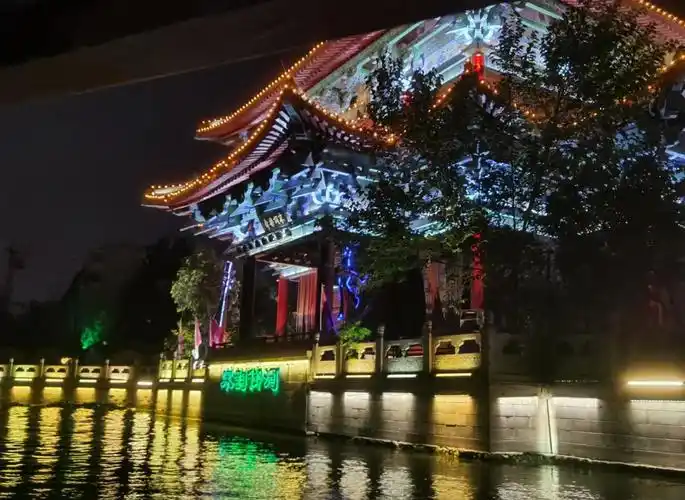 Datong served as the capital of the Northern Wei dynasty (386–534 AD) under the Sinification-minded Emperor Xiaowen, and later as a strategic frontier garrison during the Ming dynasty, when the imposing brick walls that still encircle the old town were raised in the 1370s. Comparable in scale and silhouette to Carcassonne or Ávila, these ramparts stand shoulder-to-shoulder with modern China. Yuhe Ecological Park was conceived in 2004 to bridge the historic core with the new city, transforming a neglected urban riverbank into a continuous 5.5-kilometer greenway that softens the jarring contrast between ancient bastions and glass-and-steel districts.
The park follows a "water-meets-green" master plan, weaving wetlands, lawns, and pedestrian paths along both riverbanks. Two signature crossings — the Qixing ("Seven Stars") and Jiuqu ("Nine Curves") bridges — were completed in 2019, finally stitching the two sides into a single walking-and-cycling loop. Eight functional zones divide the length into dedicated spaces for children's play, sports, and quiet contemplation, while wooden boardwalks threading through reed beds allow visitors to sample a riparian ecosystem once common across the Shanxi plains.
A rotating floral calendar — cherry and plum in spring, peonies and roses in early summer, lotus blossoms in July, fiery maples through October — keeps regulars returning. The eastern reed marsh is the park's wildest corner, where white egrets and grey herons stalk the shallows year-round, echoing the wetlands that drew Silk Road travellers centuries ago. Photographers favour the bridges and elevated boardwalks at sunset, when the low light gilds both water and city wall in warm amber.
From the ramparts of Heyangmen Gate, the park unfurls to the east like a green moat, offering one of China's most striking "ancient-meets-modern" panoramas — a view reminiscent of Kyoto's Philosopher's Path winding toward Heian-era temples. Locals treat the corridor as an outdoor living room, practising tai chi at dawn and flying kites at dusk, while out-of-town travellers find here a quieter, more reflective chapter of Datong's story, balancing the grandeur of the Yungang Grottoes and Huayan Temple with simple riverside pleasures.
Entry is free and the park never closes. Buses 3, 12, 16, 27, 35 and 604 stop at Yuhe Wetland or Ecological Garden stations; drivers can navigate to the South Gate or North Gate, where free parking is available. There are no on-site cafés or vendors, so bring water and snacks. Mornings between 8 and 10 a.m. and the golden late afternoon after 4 p.m. bring the softest light and coolest temperatures. Mosquito repellent is advisable in summer, especially near the reed beds.
With flat terrain and gentle gradients, the full one-way stroll takes just 90 minutes to two hours, making it ideal for families with children and older travellers. For the best experience, plan it as the sunset finale to a heritage day that includes the Ming walls, Heyangmen Gate, and Huayan Temple. This unhurried riverside walk is the most rewarding way to appreciate how a former frontier capital — once a gateway between Mongolia and the Central Plains — is reinventing itself as a greener, more livable city.
Datong served as the capital of the Northern Wei dynasty (386–534 AD) under the Sinification-minded Emperor Xiaowen, and later as a strategic frontier garrison during the Ming dynasty, when the imposing brick walls that still encircle the old town were raised in the 1370s. Comparable in scale and silhouette to Carcassonne or Ávila, these ramparts stand shoulder-to-shoulder with modern China. Yuhe Ecological Park was conceived in 2004 to bridge the historic core with the new city, transforming a neglected urban riverbank into a continuous 5.5-kilometer greenway that softens the jarring contrast between ancient bastions and glass-and-steel districts.
The park follows a "water-meets-green" master plan, weaving wetlands, lawns, and pedestrian paths along both riverbanks. Two signature crossings — the Qixing ("Seven Stars") and Jiuqu ("Nine Curves") bridges — were completed in 2019, finally stitching the two sides into a single walking-and-cycling loop. Eight functional zones divide the length into dedicated spaces for children's play, sports, and quiet contemplation, while wooden boardwalks threading through reed beds allow visitors to sample a riparian ecosystem once common across the Shanxi plains.
A rotating floral calendar — cherry and plum in spring, peonies and roses in early summer, lotus blossoms in July, fiery maples through October — keeps regulars returning. The eastern reed marsh is the park's wildest corner, where white egrets and grey herons stalk the shallows year-round, echoing the wetlands that drew Silk Road travellers centuries ago. Photographers favour the bridges and elevated boardwalks at sunset, when the low light gilds both water and city wall in warm amber.
From the ramparts of Heyangmen Gate, the park unfurls to the east like a green moat, offering one of China's most striking "ancient-meets-modern" panoramas — a view reminiscent of Kyoto's Philosopher's Path winding toward Heian-era temples. Locals treat the corridor as an outdoor living room, practising tai chi at dawn and flying kites at dusk, while out-of-town travellers find here a quieter, more reflective chapter of Datong's story, balancing the grandeur of the Yungang Grottoes and Huayan Temple with simple riverside pleasures.
Entry is free and the park never closes. Buses 3, 12, 16, 27, 35 and 604 stop at Yuhe Wetland or Ecological Garden stations; drivers can navigate to the South Gate or North Gate, where free parking is available. There are no on-site cafés or vendors, so bring water and snacks. Mornings between 8 and 10 a.m. and the golden late afternoon after 4 p.m. bring the softest light and coolest temperatures. Mosquito repellent is advisable in summer, especially near the reed beds.
With flat terrain and gentle gradients, the full one-way stroll takes just 90 minutes to two hours, making it ideal for families with children and older travellers. For the best experience, plan it as the sunset finale to a heritage day that includes the Ming walls, Heyangmen Gate, and Huayan Temple. This unhurried riverside walk is the most rewarding way to appreciate how a former frontier capital — once a gateway between Mongolia and the Central Plains — is reinventing itself as a greener, more livable city.