Mount Heng
⭐ 4.20
Mount Heng Scenic Area, Hunyuan County, Datong City, Shanxi Province, China
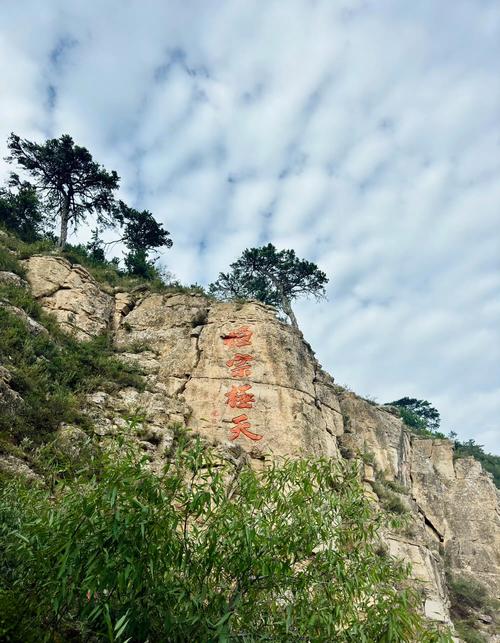 Hengshan has been venerated as the Northern Sacred Mountain since the legendary Emperor Shun designated the Five Sacred Peaks more than four millennia ago—a sacred recognition predating the founding of Rome itself. Throughout the imperial era, emperors journeyed here from across the realm to perform elaborate state rituals honoring the Northern Deity, cementing its role as a cornerstone of Chinese cosmology, where mountains corresponded to cardinal directions and cosmic harmony. Few Western landscapes carry such continuous state-sanctioned reverence across so many centuries.
The Hanging Temple, constructed in 491 AD during the Northern Wei dynasty—a contemporary of the fall of the Western Roman Empire—is the world's only surviving cliffside structure uniting three religions within a single building. Imagine a timber monastery resembling a Norwegian stave church yet impossibly wedged into a vertical rock face, suspended roughly 50 meters above a gorge. Its ingenious engineering employs hidden wooden crossbeams slotted into carved stone sockets, distributing weight so cleverly that the structure has withstood fifteen centuries of earthquakes and weathering.
The temple's three stacked levels house a rare Confucian hall, a Buddhist shrine, and a Taoist sanctuary beneath one roof—a religious syncretism virtually unimaginable within medieval Western Christianity, where doctrinal boundaries remained fiercely guarded. Inside, more than 80 statues cast in bronze, iron, clay, and stone depict deities from all three philosophies, earning the temple recognition as one of the world's "ten most precarious architectural wonders." Travelers have likened its layered spiritual atmosphere to the candlelit chapels of Europe's oldest pilgrimage churches.
Beyond the Hanging Temple, Hengshan serves as a vital sanctuary of the Quanzhen, or Complete Reality, school of Taoism, scattered with Ming and Qing dynasty temple complexes. The grouping known as "Three Temples, Four Shrines, and Nine Pavilions" clusters along scenic ridges, while eighteen named viewpoints—including the dramatic Tiger Wind Pass and Guolao Ridge—reward hikers with vistas drawn from Chinese folklore. From Tianfengling summit, panoramic views sweep across the Hunyuan Basin toward distant Great Wall ramparts, evoking Alpine panoramas with an unmistakably Chinese sweep.
Entrance to Hengshan Scenic Area costs 45 yuan; the Hanging Temple requires an additional 15 yuan admission plus a 100 yuan climbing fee, with advance reservation mandatory and daily limits capped at 300 visitors. A shuttle bus runs between the visitor center and trailhead for 20 yuan round-trip, while the one-way cable car costs 70 yuan. Plan four to six hours for the full experience—visit the Hanging Temple in soft morning light, then ascend in the afternoon. The best season runs April through October, with cool summers and brilliant autumn foliage.
Datong lies 62 kilometers from the site, with no direct public transit—rental cars or hired drivers are essential, with navigation set to "Hengshan Visitor Center." Unlike the steeper peaks of the other Sacred Mountains, Hengshan's trails are moderate and family-friendly, accessible to visitors of average fitness. We strongly recommend combining both the temple and the mountain into a single visit; either alone tells only half the story. Few places on earth so perfectly unite natural grandeur, ancient engineering brilliance, and living spiritual heritage.
Hengshan has been venerated as the Northern Sacred Mountain since the legendary Emperor Shun designated the Five Sacred Peaks more than four millennia ago—a sacred recognition predating the founding of Rome itself. Throughout the imperial era, emperors journeyed here from across the realm to perform elaborate state rituals honoring the Northern Deity, cementing its role as a cornerstone of Chinese cosmology, where mountains corresponded to cardinal directions and cosmic harmony. Few Western landscapes carry such continuous state-sanctioned reverence across so many centuries.
The Hanging Temple, constructed in 491 AD during the Northern Wei dynasty—a contemporary of the fall of the Western Roman Empire—is the world's only surviving cliffside structure uniting three religions within a single building. Imagine a timber monastery resembling a Norwegian stave church yet impossibly wedged into a vertical rock face, suspended roughly 50 meters above a gorge. Its ingenious engineering employs hidden wooden crossbeams slotted into carved stone sockets, distributing weight so cleverly that the structure has withstood fifteen centuries of earthquakes and weathering.
The temple's three stacked levels house a rare Confucian hall, a Buddhist shrine, and a Taoist sanctuary beneath one roof—a religious syncretism virtually unimaginable within medieval Western Christianity, where doctrinal boundaries remained fiercely guarded. Inside, more than 80 statues cast in bronze, iron, clay, and stone depict deities from all three philosophies, earning the temple recognition as one of the world's "ten most precarious architectural wonders." Travelers have likened its layered spiritual atmosphere to the candlelit chapels of Europe's oldest pilgrimage churches.
Beyond the Hanging Temple, Hengshan serves as a vital sanctuary of the Quanzhen, or Complete Reality, school of Taoism, scattered with Ming and Qing dynasty temple complexes. The grouping known as "Three Temples, Four Shrines, and Nine Pavilions" clusters along scenic ridges, while eighteen named viewpoints—including the dramatic Tiger Wind Pass and Guolao Ridge—reward hikers with vistas drawn from Chinese folklore. From Tianfengling summit, panoramic views sweep across the Hunyuan Basin toward distant Great Wall ramparts, evoking Alpine panoramas with an unmistakably Chinese sweep.
Entrance to Hengshan Scenic Area costs 45 yuan; the Hanging Temple requires an additional 15 yuan admission plus a 100 yuan climbing fee, with advance reservation mandatory and daily limits capped at 300 visitors. A shuttle bus runs between the visitor center and trailhead for 20 yuan round-trip, while the one-way cable car costs 70 yuan. Plan four to six hours for the full experience—visit the Hanging Temple in soft morning light, then ascend in the afternoon. The best season runs April through October, with cool summers and brilliant autumn foliage.
Datong lies 62 kilometers from the site, with no direct public transit—rental cars or hired drivers are essential, with navigation set to "Hengshan Visitor Center." Unlike the steeper peaks of the other Sacred Mountains, Hengshan's trails are moderate and family-friendly, accessible to visitors of average fitness. We strongly recommend combining both the temple and the mountain into a single visit; either alone tells only half the story. Few places on earth so perfectly unite natural grandeur, ancient engineering brilliance, and living spiritual heritage.