Yungang Grottoes
⭐ 4.80
Yungang Grottoes Scenic Area, Yungang District, Datong, Shanxi, China
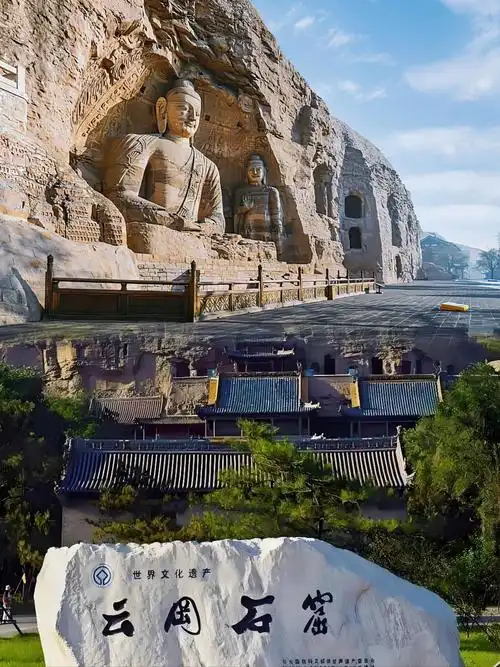 Carved during the reign of Emperor Wencheng of the Northern Wei, the Yungang Grottoes were initiated in 460 CE—just six years after the emperor restored Buddhism as the state religion. The monk Tanyao oversaw the first phase, and work continued for more than sixty years. Northern Wei, ruled by the Tuoba people from the steppes, had recently moved its capital to Datong (then Pingcheng), making Yungang a royal statement on par with contemporary monuments like the Hagia Sophia (begun 537 CE) or the rock-cut churches of Lalibela. The site offers rare insight into how a nomadic dynasty translated Buddhist devotion into monumental stone, blending foreign influences with emerging Chinese aesthetics. UNESCO recognized its global significance in 2001.
The caves are divided into three artistic phases. The early period's "Five Tanyao Caves" (Caves 16–20) are the most imposing, where colossal Buddha figures double as imperial portraits—the 13.7-meter seated Buddha of Cave 20, now open to the sky after centuries of collapse, is the site's icon. The middle phase (Caves 1–13) represents the artistic peak: Cave 6 features exquisite reliefs illustrating the life of Buddha, while Cave 12, the famous "Music Cave," depicts 14 ancient instruments from China, India, and Central Asia. The late phase shows a shift toward slender, elegant "Han-style" figures reminiscent of Tang dynasty aesthetics yet to come.
Yungang is often called the Silk Road carved in stone, and the description is apt. Sculptures, decorative motifs, and architectural elements bear the fingerprints of Gandharan India, Sassanian Persia, and Central Asian oasis cultures, all filtered through Chinese craftsmanship. The site is a physical archive of 5th–6th century Eurasian exchange, comparable in importance to how Ravenna's mosaics document Byzantine-Byzantine western artistic exchange. Unlike many Chinese museums, most caves remain free of glass barriers, allowing visitors to stand within arm's reach of masterpieces—a visceral experience that amplifies their impact.
Practical planning is straightforward. The site lies about 30 minutes by taxi or Bus 3 from downtown Datong in Yungang District. Entry is 120 RMB in peak season (April–October) and 100 RMB off-peak, with advance real-name booking required via the official mini-program. Allow three to four hours, including the on-site museum. Cave interiors remain a cool 12–15°C year-round, so bring layers regardless of season. The complex holds a national AAAAA rating, China's highest tourism designation.
Photography flash is prohibited, and several caves rotate closures for conservation—check the official site before visiting. Hiring an official guide (around 200 RMB per group) or renting an audio device is strongly recommended; without context, the iconography and symbolism can feel overwhelming. Early morning at opening (8 am) or late afternoon after 4 pm offers the softest light for photography and the smallest crowds. Wear flat, non-slip shoes—the stone floors are uneven—and dress for sun protection in summer or warmth in winter. Few sites in China reward the effort so generously as Yungang, where two thousand years of devotion, empire, and cultural exchange remain etched in living rock.
Carved during the reign of Emperor Wencheng of the Northern Wei, the Yungang Grottoes were initiated in 460 CE—just six years after the emperor restored Buddhism as the state religion. The monk Tanyao oversaw the first phase, and work continued for more than sixty years. Northern Wei, ruled by the Tuoba people from the steppes, had recently moved its capital to Datong (then Pingcheng), making Yungang a royal statement on par with contemporary monuments like the Hagia Sophia (begun 537 CE) or the rock-cut churches of Lalibela. The site offers rare insight into how a nomadic dynasty translated Buddhist devotion into monumental stone, blending foreign influences with emerging Chinese aesthetics. UNESCO recognized its global significance in 2001.
The caves are divided into three artistic phases. The early period's "Five Tanyao Caves" (Caves 16–20) are the most imposing, where colossal Buddha figures double as imperial portraits—the 13.7-meter seated Buddha of Cave 20, now open to the sky after centuries of collapse, is the site's icon. The middle phase (Caves 1–13) represents the artistic peak: Cave 6 features exquisite reliefs illustrating the life of Buddha, while Cave 12, the famous "Music Cave," depicts 14 ancient instruments from China, India, and Central Asia. The late phase shows a shift toward slender, elegant "Han-style" figures reminiscent of Tang dynasty aesthetics yet to come.
Yungang is often called the Silk Road carved in stone, and the description is apt. Sculptures, decorative motifs, and architectural elements bear the fingerprints of Gandharan India, Sassanian Persia, and Central Asian oasis cultures, all filtered through Chinese craftsmanship. The site is a physical archive of 5th–6th century Eurasian exchange, comparable in importance to how Ravenna's mosaics document Byzantine-Byzantine western artistic exchange. Unlike many Chinese museums, most caves remain free of glass barriers, allowing visitors to stand within arm's reach of masterpieces—a visceral experience that amplifies their impact.
Practical planning is straightforward. The site lies about 30 minutes by taxi or Bus 3 from downtown Datong in Yungang District. Entry is 120 RMB in peak season (April–October) and 100 RMB off-peak, with advance real-name booking required via the official mini-program. Allow three to four hours, including the on-site museum. Cave interiors remain a cool 12–15°C year-round, so bring layers regardless of season. The complex holds a national AAAAA rating, China's highest tourism designation.
Photography flash is prohibited, and several caves rotate closures for conservation—check the official site before visiting. Hiring an official guide (around 200 RMB per group) or renting an audio device is strongly recommended; without context, the iconography and symbolism can feel overwhelming. Early morning at opening (8 am) or late afternoon after 4 pm offers the softest light for photography and the smallest crowds. Wear flat, non-slip shoes—the stone floors are uneven—and dress for sun protection in summer or warmth in winter. Few sites in China reward the effort so generously as Yungang, where two thousand years of devotion, empire, and cultural exchange remain etched in living rock.