Jingshan Park

⭐ 4.20

No. 44, Jingshan West Street, Xicheng District, Beijing, China
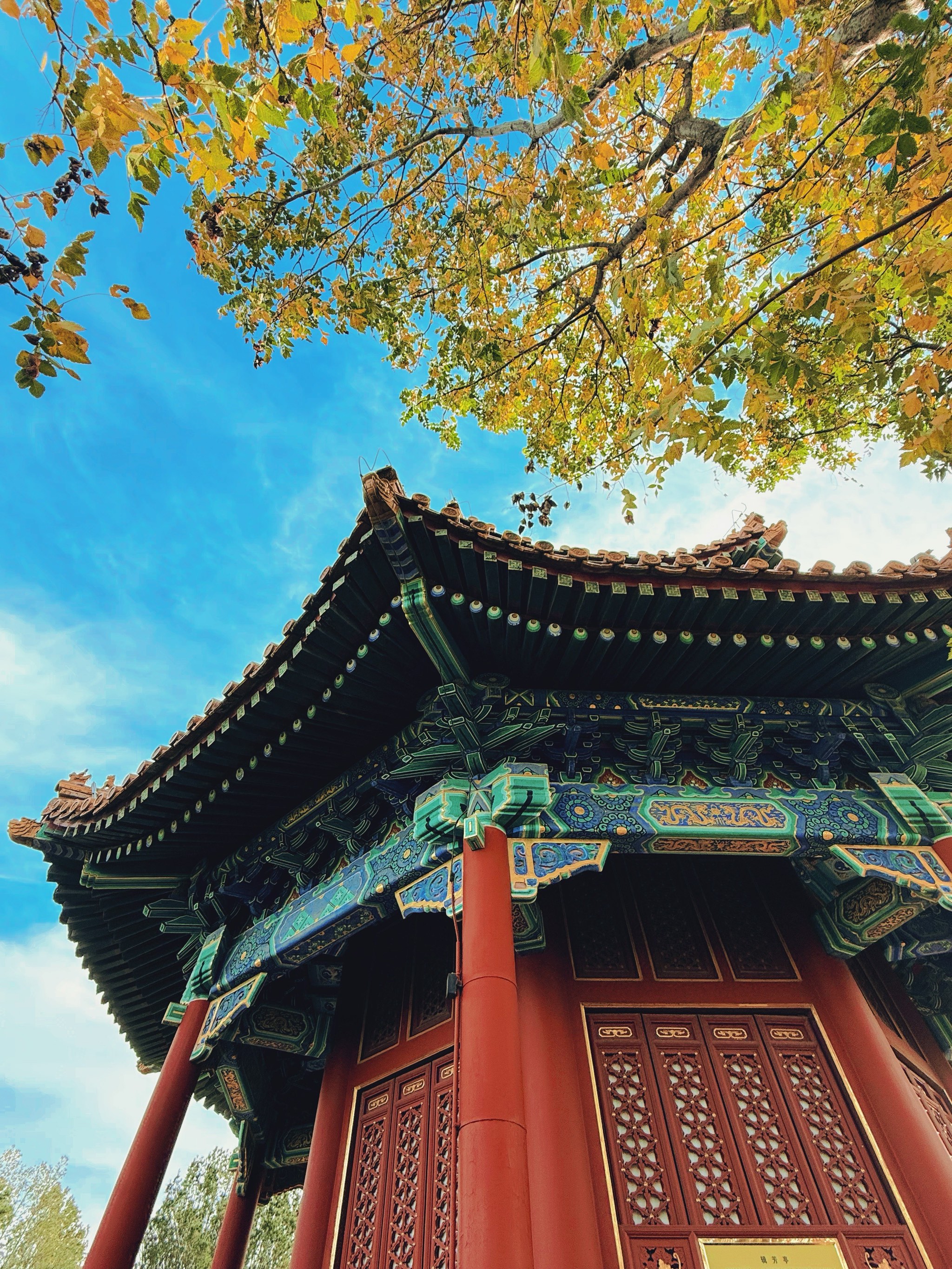
Jingshan Park
Rising roughly forty-three meters above the surrounding streets, Jingshan (literally "Scenery Hill") is no natural feature but an artificial mound heaped from the earth excavated during the 15th-century construction of the Forbidden City's moat under the Yongle Emperor. Comparable in spirit to Rome's Pincian Hill overlooking the Vatican or the elevated terraces of Versailles, this man-made peak has functioned as Beijing's imperial viewing platform since the Yuan dynasty (1271–1368). For over seven hundred years, rulers have ascended it to gaze southward down the sacred axis that organises the entire capital, a sightline still completely intact today. At the summit stands Wanchun Pavilion (Eternal Spring Pavilion), the park's signature landmark and the undisputed champion's-view seat of the capital. Climbing its stairs delivers an unobstructed 360-degree sweep: the gilded sea of Forbidden City rooftops to the south, the white dagoba of Beihai Park to the west, the drum and bell towers to the north, and the modern CBD skyline shimmering in the distance. Insiders recommend arriving about an hour before sunset, when the slanting light gilds the imperial tiles in copper and amber, producing the most cinematic photographs possible in Beijing, on a par with the sunset spectacle from Sacré-Cœur in Paris. Beyond its view, the park holds significant cultural weight. The Shouhuang Hall complex on the eastern slope, rebuilt in 1750 during the Qianlong Emperor's reign, served as the Qing dynasty's principal ancestral shrine where imperial portraits and spirit tablets were venerated each spring. Its vermilion walls and imperial-yellow tiles preserve the formal ritual architecture of the Qing court. Tucked along the eastern hillside, a more sombre monument marks the spot where the last Ming emperor, the Chongzhen Emperor, took his own life in 1644 as rebel forces stormed the capital, a moment that ended more than two and a half centuries of Ming rule and reshaped East Asian history. Practical details make Jingshan remarkably accessible. The standard entrance fee is just two yuan, rising to ten yuan only during the spring peony festival. Foreign visitors must phone (010) 64038098 at least one day in advance to reserve, then purchase tickets at the south gate's main service window using their passport. Opening hours run 6:00–21:00 from April through October and 6:30–20:00 in winter. The hill is short but stepped, so sturdy flat shoes with good grip are wise, along with sun protection in summer and an extra layer in winter when the summit is famously wind-blasted. The smartest way to experience Jingshan is to enter through the south or east gate, climb the central axis path directly to Wanchun Pavilion for the panoramic reward, then descend eastward to wander through the Shouhuang Hall complex at a more contemplative pace. Allow roughly 90 to 120 minutes for the full circuit. Pairing the visit with the Forbidden City in one day makes natural sense, exit the Palace through Shenwu Gate and you are immediately at Jingshan's foot, while a stroll across to Beihai Park afterward extends the imperial theme beautifully.

Traveler reviews

Communication was smooth — Teacher Yu reached out via text and call in advance to share the meeting point and tour schedule. The explanations were thorough, respectful of the historical facts but with appropriate expansions, striking a nice balance between histo...
⭐ 5 · River Adams Expand
Jingshan Park is absolutely stunning at this time of year — the peonies and paeonies here are way more impressive than the ones in the Imperial Garden. Tickets for the cultural festival are 10 yuan, with a kids' discount ticket at...
⭐ 5 · Jamie Cole Expand