Eluanbi Cape
⭐ 4.60
Eluanbi Scenic Area, Hengchun Township, Pingtung County, Taiwan Province
 **Historical Context**
Eluanbi's lighthouse was raised in 1883 as a direct consequence of the "Rover Incident," a 1867 shipwreck and subsequent conflict in which Paiwan indigenous people clashed with American sailors—an episode that shook the Qing court and hastened its belated modernization of coastal defenses. Compare this to the wave of European lighthouse-building that followed the Napoleonic Wars: Britain, France, and Spain were simultaneously fortifying their most exposed capes, from the Pointe de la Coubre to Eddystone. Eluanbi fits that same global pattern of imperial maritime anxiety, though with a distinctly East Asian twist—fortifications fused Qing-era military engineering with imported Western optics.
**Architecture**
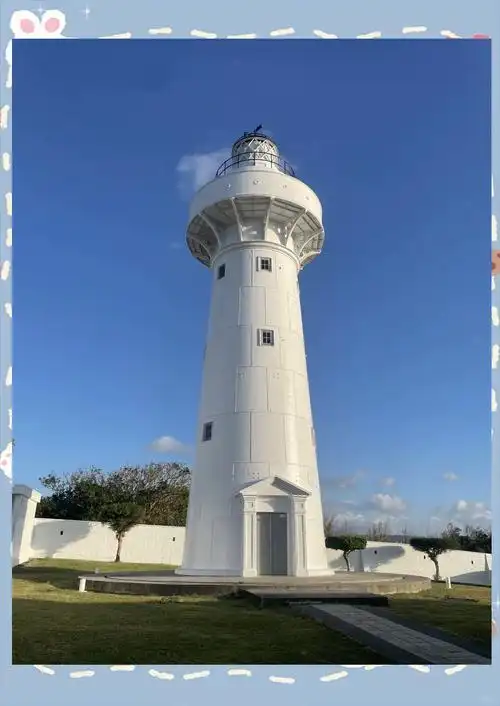
The tower is the only lighthouse in the world still equipped with original gunports and a defensive parapet, making it as much a fort as a beacon. After suffering war damage in WWII, it was rebuilt at 24.1 meters and now projects a beam of 1.8 million candela—earning the nickname "Light of East Asia." Visually, its immaculate white cylinder reads almost like a Mediterranean campanile transplanted onto a Pacific reef, set against the most saturated blue backdrops in Taiwan.
**Cultural Significance**
The cape sits within traditional Paiwan territory, and the surrounding parkland contains prehistoric shell middens and stone tool sites that predate Han Chinese settlement by thousands of years. Culturally, the lighthouse functions as a metaphor for Taiwan itself: a small island straining its gaze across a vast ocean, historically both gateway and border. The "Southernmost Point of Taiwan" marker, painted with tropical pastel stripes, has become an obligatory pilgrimage stop, similar in spirit to the signage at Norway's North Cape—though here the climate is decidedly subtropical.
**Practical Visit Info**
Eluanbi Park lies at No. 301 Eluan Road, Hengchun Township, Pingtung County. Adult entry is just NT$40 (about US$1.30). The park is open 6:30–18:30 from April through October and 7:00–17:30 from November to March; the lighthouse interior is closed on Mondays, though visitors can photograph the exterior all week. Allow 1.5–2 hours to walk the full circuit. Bring cash—vendors inside do not accept cards. From Kaohsiung, the Kenting Express bus 9188 takes roughly 2.5 hours, or self-drive south along Highway 26.
**Travel Tips and Why Visit**
Arrive mid-morning to catch soft light on the white tower and beat the afternoon bus crowds—then loop the coastal path past the Southernmost Point marker and the photogenic coral sea stacks. Shade is scarce and summer UV is punishing, so pack reef-safe sunscreen, a hat, long sleeves, insect repellent, and at least a liter of water. Reef surfaces are slick and swimming is prohibited in the cape's protected waters. With extra time, continue south to the striking wave-cut rock of Chuanfan ("Sail Rock") or pre-book a guided slot at the Longkeng Ecological Reserve. For travelers charting Asia's coastal wonders, Eluanbi delivers what many European cape experiences do—history, dramatic geology, and a tangible sense of standing at the edge of the map—only with palms, coral, and equatorial sun.
**Historical Context**
Eluanbi's lighthouse was raised in 1883 as a direct consequence of the "Rover Incident," a 1867 shipwreck and subsequent conflict in which Paiwan indigenous people clashed with American sailors—an episode that shook the Qing court and hastened its belated modernization of coastal defenses. Compare this to the wave of European lighthouse-building that followed the Napoleonic Wars: Britain, France, and Spain were simultaneously fortifying their most exposed capes, from the Pointe de la Coubre to Eddystone. Eluanbi fits that same global pattern of imperial maritime anxiety, though with a distinctly East Asian twist—fortifications fused Qing-era military engineering with imported Western optics.
**Architecture**
The tower is the only lighthouse in the world still equipped with original gunports and a defensive parapet, making it as much a fort as a beacon. After suffering war damage in WWII, it was rebuilt at 24.1 meters and now projects a beam of 1.8 million candela—earning the nickname "Light of East Asia." Visually, its immaculate white cylinder reads almost like a Mediterranean campanile transplanted onto a Pacific reef, set against the most saturated blue backdrops in Taiwan.
**Cultural Significance**
The cape sits within traditional Paiwan territory, and the surrounding parkland contains prehistoric shell middens and stone tool sites that predate Han Chinese settlement by thousands of years. Culturally, the lighthouse functions as a metaphor for Taiwan itself: a small island straining its gaze across a vast ocean, historically both gateway and border. The "Southernmost Point of Taiwan" marker, painted with tropical pastel stripes, has become an obligatory pilgrimage stop, similar in spirit to the signage at Norway's North Cape—though here the climate is decidedly subtropical.
**Practical Visit Info**
Eluanbi Park lies at No. 301 Eluan Road, Hengchun Township, Pingtung County. Adult entry is just NT$40 (about US$1.30). The park is open 6:30–18:30 from April through October and 7:00–17:30 from November to March; the lighthouse interior is closed on Mondays, though visitors can photograph the exterior all week. Allow 1.5–2 hours to walk the full circuit. Bring cash—vendors inside do not accept cards. From Kaohsiung, the Kenting Express bus 9188 takes roughly 2.5 hours, or self-drive south along Highway 26.
**Travel Tips and Why Visit**
Arrive mid-morning to catch soft light on the white tower and beat the afternoon bus crowds—then loop the coastal path past the Southernmost Point marker and the photogenic coral sea stacks. Shade is scarce and summer UV is punishing, so pack reef-safe sunscreen, a hat, long sleeves, insect repellent, and at least a liter of water. Reef surfaces are slick and swimming is prohibited in the cape's protected waters. With extra time, continue south to the striking wave-cut rock of Chuanfan ("Sail Rock") or pre-book a guided slot at the Longkeng Ecological Reserve. For travelers charting Asia's coastal wonders, Eluanbi delivers what many European cape experiences do—history, dramatic geology, and a tangible sense of standing at the edge of the map—only with palms, coral, and equatorial sun.