Maobitou
⭐ 3.20
Maobitou, Hengchun Township, Pingtung County, Taiwan Province
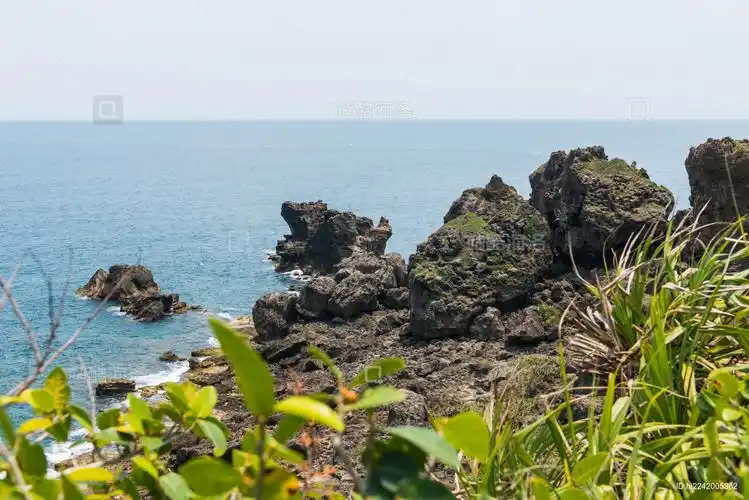 Jutting from the southernmost tip of the Hengchun Peninsula, Cape Maobitou forms the geological twin of Eluanbi to the south—together they cradle Taiwan much as Capo Colonna and Punta Campanella embrace Italy's Tyrrhenian coast, or as Cape Sounion once watched over ancient Athenian shipping. Here, uplifted coral limestone has been carved by millions of years of typhoon-driven surf into plunging cliffs, honeycomb sea caves, and freestanding pillars. Walking the clifftop paths, visitors read ten thousand years of Pacific coastal evolution in a single afternoon—a natural archive that draws geology students from across East Asia and rewards casual travelers with dramatic vistas comparable to Portugal's Cabo da Roca.
The cape is essentially an open-air laboratory of marine erosion. Stepped wave-cut platforms tumble seaward in terraced ledges, dotted with hexagonal tidal pools concealing darting tropical fish, neon sea anemones, and fragments of living coral. From the clifftop lookout pavilion, the cobalt depths of the Bashi Channel stretch toward the Philippine archipelago—an unspoiled seascape rivaling Ireland's Slea Head in pure drama. Scattered along the shore are photogenic curiosities: the Lovers' Rocks, eternally paired; the rectangular Long Square Stone; and the namesake Cat Rock itself, a weathered coral outcrop that, from the right angle, perfectly captures a feline hunched in contemplation.
The crouching cat that gives the cape its name has been celebrated in Chinese verse since at least the Qing dynasty. The view, known as "The Cat Standing Watch Over the Sea," was singled out as one of the Eight Scenic Views of Hengchun, joining a classical canon that echoes the famous Eight Views of Xiaoxiang and similar landscape traditions across East Asia. In an age before photography, scholars posted to this remote southern outpost sketched the scene in ink; today it remains one of Taiwan's most evocative natural landmarks, where geology, folklore, and pure visual poetry converge at the very edge of the continent.
The park welcomes visitors year-round. Summer hours (April through October) run 8:30 a.m. to 6:30 p.m.; winter hours (November through March) 8:30 a.m. to 5:00 p.m. Admission is free; only a small parking fee of roughly NT$40 applies. Allow 30 to 45 minutes for the main scenic loop. Wear non-slip shoes—reef limestone becomes treacherous when wet—and never climb the crumbling cliff edges or enter restricted caves. The address is No. 100, Xiaquan Road, Hengchun Township, Pingtung County. Aim for late afternoon: the heat softens, the crowds thin, and the famous sunset gilds the cat-shaped rock in molten gold.
From Kaohsiung, a rental car is the easiest option—set your navigation to "Maobitou Park Parking Lot" and allow roughly two to two-and-a-half hours along the scenic coastal highway. Public-transport travelers should first reach Hengchun Township by high-speed rail and connecting bus, then transfer to Kaohsiung Bus toward Dingbaisha, alighting at Shangshuiquan for a 30-minute walk. On weekends and holidays, the Kenting Shuttle blue line serves the park directly. Pair Maobitou with nearby Eluanbi Lighthouse, White Sand Bay, Longkeng, and the Century-Plant Exhibition Area for a half-day coastal journey that feels a world removed from Taipei.
Jutting from the southernmost tip of the Hengchun Peninsula, Cape Maobitou forms the geological twin of Eluanbi to the south—together they cradle Taiwan much as Capo Colonna and Punta Campanella embrace Italy's Tyrrhenian coast, or as Cape Sounion once watched over ancient Athenian shipping. Here, uplifted coral limestone has been carved by millions of years of typhoon-driven surf into plunging cliffs, honeycomb sea caves, and freestanding pillars. Walking the clifftop paths, visitors read ten thousand years of Pacific coastal evolution in a single afternoon—a natural archive that draws geology students from across East Asia and rewards casual travelers with dramatic vistas comparable to Portugal's Cabo da Roca.
The cape is essentially an open-air laboratory of marine erosion. Stepped wave-cut platforms tumble seaward in terraced ledges, dotted with hexagonal tidal pools concealing darting tropical fish, neon sea anemones, and fragments of living coral. From the clifftop lookout pavilion, the cobalt depths of the Bashi Channel stretch toward the Philippine archipelago—an unspoiled seascape rivaling Ireland's Slea Head in pure drama. Scattered along the shore are photogenic curiosities: the Lovers' Rocks, eternally paired; the rectangular Long Square Stone; and the namesake Cat Rock itself, a weathered coral outcrop that, from the right angle, perfectly captures a feline hunched in contemplation.
The crouching cat that gives the cape its name has been celebrated in Chinese verse since at least the Qing dynasty. The view, known as "The Cat Standing Watch Over the Sea," was singled out as one of the Eight Scenic Views of Hengchun, joining a classical canon that echoes the famous Eight Views of Xiaoxiang and similar landscape traditions across East Asia. In an age before photography, scholars posted to this remote southern outpost sketched the scene in ink; today it remains one of Taiwan's most evocative natural landmarks, where geology, folklore, and pure visual poetry converge at the very edge of the continent.
The park welcomes visitors year-round. Summer hours (April through October) run 8:30 a.m. to 6:30 p.m.; winter hours (November through March) 8:30 a.m. to 5:00 p.m. Admission is free; only a small parking fee of roughly NT$40 applies. Allow 30 to 45 minutes for the main scenic loop. Wear non-slip shoes—reef limestone becomes treacherous when wet—and never climb the crumbling cliff edges or enter restricted caves. The address is No. 100, Xiaquan Road, Hengchun Township, Pingtung County. Aim for late afternoon: the heat softens, the crowds thin, and the famous sunset gilds the cat-shaped rock in molten gold.
From Kaohsiung, a rental car is the easiest option—set your navigation to "Maobitou Park Parking Lot" and allow roughly two to two-and-a-half hours along the scenic coastal highway. Public-transport travelers should first reach Hengchun Township by high-speed rail and connecting bus, then transfer to Kaohsiung Bus toward Dingbaisha, alighting at Shangshuiquan for a 30-minute walk. On weekends and holidays, the Kenting Shuttle blue line serves the park directly. Pair Maobitou with nearby Eluanbi Lighthouse, White Sand Bay, Longkeng, and the Century-Plant Exhibition Area for a half-day coastal journey that feels a world removed from Taipei.