Sanzhan Bridge
⭐ 3.50
Sanzhan Bridge, Hengchun Township, Pingtung County, Taiwan Province, China
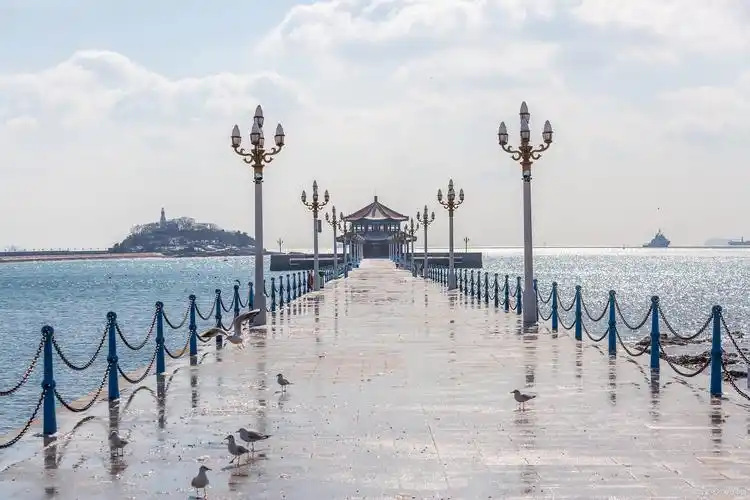 Kaohsiung's harborfront bears witness to over a century of Pacific trade and colonial ambition. During the Japanese era (1895–1945), the port — then known as Takao — was expanded into one of the empire's most important southern naval and commercial bases, rivaling Yokohama and Kobe in strategic reach. After 1945, massive U.S.-backed infrastructure projects transformed it into one of the world's busiest container ports, ranking alongside Rotterdam and Singapore by the late twentieth century. Today, the same waterfront where cargo ships once dominated now invites strollers and cyclists, its weathered warehouses repurposed into galleries and cafés — a transition echoing the post-industrial reinventions seen in London's Docklands and Liverpool's Albert Dock.
The corridor showcases an eclectic architectural dialogue between colonial infrastructure and contemporary design. In Cijin, the Star Tunnel — originally a wartime air-raid shelter — now glows with immersive LED installations that turn concrete into cosmos. At Sizihwan, the sweeping curved breakwater recalls the marine engineering of Naples' seaside boulevards, its concrete arcs framing postcard views across the Taiwan Strait. The Pier-2 Art Center anchors the route with its cluster of repurposed 1970s warehouses, where raw industrial steel and exposed brick have become canvases for murals and large-scale sculpture — Taiwan's answer to Berlin's raw warehouse-gallery aesthetic.
More than a tourist route, Sanzan Bridge embodies Kaohsiung's cultural renaissance as southern Taiwan's creative capital. Cijin preserves the rhythms of a traditional fishing island, with its temples, seafood stalls, and breezy beaches just a short ferry ride across the harbor. The hillside behind Sizihwan holds the 1879 British Consulate at Shoushan, a tangible reminder of Kaohsiung's role in nineteenth-century European imperial trade, much like Hong Kong's Victoria Peak. Together with Pier-2's cutting-edge contemporary art scene, these linked districts form a living museum where maritime heritage, colonial memory, and modern Taiwanese creativity converge.
The entire waterfront corridor is free and open to visitors around the clock, with no tickets or reservations required. The most convenient access point is Yanchengpu Station on the Kaohsiung MRT Red Line — from there, Pier-2 Art Center is roughly a ten-minute walk. Travelers with limited time can rent a YouBike or shared e-scooter to glide between attractions, following the dedicated coastal bike lane that connects Sizihwan, the Cijin ferry terminal, and Hamasen. English signage is generally good at major sites, and the area is packed with cafés, bubble tea shops, and seafood restaurants, making a half-day or full-day visit effortless.
For the full experience, plan a leisurely half-day to full-day itinerary. Begin mid-morning at Pier-2 Art Center, exploring its warehouse galleries and whimsical public sculptures. After lunch — perhaps beef noodles or oyster omelets at a nearby eatery — walk west along the waterfront toward Sizihwan, where sunset over the Taiwan Strait typically occurs between 6:00 and 7:00 PM from April through September. Cap the evening with a short ferry crossing to Cijin Island, where the illuminated Star Tunnel and breezy seaside promenades offer a magical after-dark conclusion to the day.
Kaohsiung's harborfront bears witness to over a century of Pacific trade and colonial ambition. During the Japanese era (1895–1945), the port — then known as Takao — was expanded into one of the empire's most important southern naval and commercial bases, rivaling Yokohama and Kobe in strategic reach. After 1945, massive U.S.-backed infrastructure projects transformed it into one of the world's busiest container ports, ranking alongside Rotterdam and Singapore by the late twentieth century. Today, the same waterfront where cargo ships once dominated now invites strollers and cyclists, its weathered warehouses repurposed into galleries and cafés — a transition echoing the post-industrial reinventions seen in London's Docklands and Liverpool's Albert Dock.
The corridor showcases an eclectic architectural dialogue between colonial infrastructure and contemporary design. In Cijin, the Star Tunnel — originally a wartime air-raid shelter — now glows with immersive LED installations that turn concrete into cosmos. At Sizihwan, the sweeping curved breakwater recalls the marine engineering of Naples' seaside boulevards, its concrete arcs framing postcard views across the Taiwan Strait. The Pier-2 Art Center anchors the route with its cluster of repurposed 1970s warehouses, where raw industrial steel and exposed brick have become canvases for murals and large-scale sculpture — Taiwan's answer to Berlin's raw warehouse-gallery aesthetic.
More than a tourist route, Sanzan Bridge embodies Kaohsiung's cultural renaissance as southern Taiwan's creative capital. Cijin preserves the rhythms of a traditional fishing island, with its temples, seafood stalls, and breezy beaches just a short ferry ride across the harbor. The hillside behind Sizihwan holds the 1879 British Consulate at Shoushan, a tangible reminder of Kaohsiung's role in nineteenth-century European imperial trade, much like Hong Kong's Victoria Peak. Together with Pier-2's cutting-edge contemporary art scene, these linked districts form a living museum where maritime heritage, colonial memory, and modern Taiwanese creativity converge.
The entire waterfront corridor is free and open to visitors around the clock, with no tickets or reservations required. The most convenient access point is Yanchengpu Station on the Kaohsiung MRT Red Line — from there, Pier-2 Art Center is roughly a ten-minute walk. Travelers with limited time can rent a YouBike or shared e-scooter to glide between attractions, following the dedicated coastal bike lane that connects Sizihwan, the Cijin ferry terminal, and Hamasen. English signage is generally good at major sites, and the area is packed with cafés, bubble tea shops, and seafood restaurants, making a half-day or full-day visit effortless.
For the full experience, plan a leisurely half-day to full-day itinerary. Begin mid-morning at Pier-2 Art Center, exploring its warehouse galleries and whimsical public sculptures. After lunch — perhaps beef noodles or oyster omelets at a nearby eatery — walk west along the waterfront toward Sizihwan, where sunset over the Taiwan Strait typically occurs between 6:00 and 7:00 PM from April through September. Cap the evening with a short ferry crossing to Cijin Island, where the illuminated Star Tunnel and breezy seaside promenades offer a magical after-dark conclusion to the day.