Hengchun Ancient Town
⭐ 3.50
Hengchun Ancient Town, Hengchun Township, Pingtung County, Taiwan Province
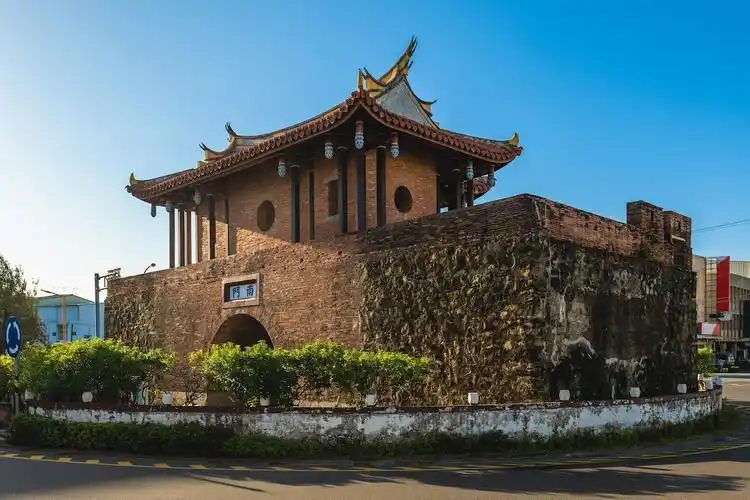 Hengchun Old Town was erected between 1875 and 1879 in response to the 1874 Mudan Incident, when Japanese forces landed on Taiwan's southern coast—history's first overseas Japanese military expedition and a striking prelude to the imperial ambitions Japan would unleash two decades later. The fortress was commissioned by the reformist official Shen Baozhen, who viewed the peninsula as the strategic key to defending the island against foreign encroachment. In the global sweep of late-nineteenth-century coastal defense, Hengchun parallels fortified colonial outposts from Malta's bastions to the ramparted kasbahs of North Africa, all raised by anxious empires to hold distant frontiers.
The roughly square enclosure spans some 2,600 meters of rammed-earth walls—a binding recipe of lime, glutinous rice, and brown sugar that recalls the ancient techniques behind China's Great Wall. Of the four gates, the South Gate retains the finest structural integrity along with the best-preserved battlements and horse-path; the East Gate still mounts a watchtower from which the entire town unfolds below; the West Gate opens directly onto a thriving heritage street; and the North Gate, remarkably, still accommodates passing vehicles—a rare example of a "living" national monument where centuries-old defenses share the road with modern traffic.
Upgraded in recent decades from a county-level heritage site to a full national monument, Hengchun is widely regarded as the finest surviving example of Qing-era fortress construction in Taiwan. Just inside the walls cluster the historic Tianhou Temple (dedicated to the seafaring goddess Mazu), Monkey Mountain Park, and the venerable West Gate Old Street, whose weathered shopfronts exhale centuries of daily commerce. Each year during the seventh lunar month, the town hosts the dramatic "Pole Climbing" ghost festival, a competitive religious rite preserving folk memory that predates even the fortress itself.
Admission is entirely free, with the ramparts and gates open around the clock. From Kaohsiung's Zuoying HSR station, the Kenting Express bus reaches Hengchun in roughly two hours; self-drivers should take Highway 1 south and branch onto Highway 26. Parking inside the old town is extremely limited, so public transport combined with walking is strongly recommended. Allow half a day to a full day, beginning at the West Gate and circling clockwise to take in all four entrances; the complete circuit takes about thirty minutes on foot, leaving generous time for leisurely meals and detours.
Beyond its fortifications, Hengchun is a culinary destination: do not leave without sampling green-bean "garlic dessert," wood-fired mochi, and the signature duck-noodle soup of the West Gate vendors. The town also gained lasting fame as the principal location of director Wei Te-sheng's 2008 romance Cape No. 7, which drew a generation of domestic travelers back to Taiwan's south. Those with extra time can easily combine the visit with Kenting National Park's beaches, the celebrated sunset at Guanshan, or a fresh-seafood lunch at Houbi Lake.
Hengchun enjoys genuinely spring-like weather year-round, though summer brings punishing heat, intense ultraviolet light, and—particularly in August—typhoon disruptions and sudden afternoon thunderstorms. Plan visits for early morning or late afternoon, and carry sun protection plus a light rain layer. On stormy days, retreat inland to the soothing hot springs of Sizhongxi, or browse the air-conditioned exhibits of the Hengchun Town History Park—worth while rain-day alternatives that keep the cultural thread of your journey intact.
Hengchun Old Town was erected between 1875 and 1879 in response to the 1874 Mudan Incident, when Japanese forces landed on Taiwan's southern coast—history's first overseas Japanese military expedition and a striking prelude to the imperial ambitions Japan would unleash two decades later. The fortress was commissioned by the reformist official Shen Baozhen, who viewed the peninsula as the strategic key to defending the island against foreign encroachment. In the global sweep of late-nineteenth-century coastal defense, Hengchun parallels fortified colonial outposts from Malta's bastions to the ramparted kasbahs of North Africa, all raised by anxious empires to hold distant frontiers.
The roughly square enclosure spans some 2,600 meters of rammed-earth walls—a binding recipe of lime, glutinous rice, and brown sugar that recalls the ancient techniques behind China's Great Wall. Of the four gates, the South Gate retains the finest structural integrity along with the best-preserved battlements and horse-path; the East Gate still mounts a watchtower from which the entire town unfolds below; the West Gate opens directly onto a thriving heritage street; and the North Gate, remarkably, still accommodates passing vehicles—a rare example of a "living" national monument where centuries-old defenses share the road with modern traffic.
Upgraded in recent decades from a county-level heritage site to a full national monument, Hengchun is widely regarded as the finest surviving example of Qing-era fortress construction in Taiwan. Just inside the walls cluster the historic Tianhou Temple (dedicated to the seafaring goddess Mazu), Monkey Mountain Park, and the venerable West Gate Old Street, whose weathered shopfronts exhale centuries of daily commerce. Each year during the seventh lunar month, the town hosts the dramatic "Pole Climbing" ghost festival, a competitive religious rite preserving folk memory that predates even the fortress itself.
Admission is entirely free, with the ramparts and gates open around the clock. From Kaohsiung's Zuoying HSR station, the Kenting Express bus reaches Hengchun in roughly two hours; self-drivers should take Highway 1 south and branch onto Highway 26. Parking inside the old town is extremely limited, so public transport combined with walking is strongly recommended. Allow half a day to a full day, beginning at the West Gate and circling clockwise to take in all four entrances; the complete circuit takes about thirty minutes on foot, leaving generous time for leisurely meals and detours.
Beyond its fortifications, Hengchun is a culinary destination: do not leave without sampling green-bean "garlic dessert," wood-fired mochi, and the signature duck-noodle soup of the West Gate vendors. The town also gained lasting fame as the principal location of director Wei Te-sheng's 2008 romance Cape No. 7, which drew a generation of domestic travelers back to Taiwan's south. Those with extra time can easily combine the visit with Kenting National Park's beaches, the celebrated sunset at Guanshan, or a fresh-seafood lunch at Houbi Lake.
Hengchun enjoys genuinely spring-like weather year-round, though summer brings punishing heat, intense ultraviolet light, and—particularly in August—typhoon disruptions and sudden afternoon thunderstorms. Plan visits for early morning or late afternoon, and carry sun protection plus a light rain layer. On stormy days, retreat inland to the soothing hot springs of Sizhongxi, or browse the air-conditioned exhibits of the Hengchun Town History Park—worth while rain-day alternatives that keep the cultural thread of your journey intact.