Haiyuan Earthquake Site
⭐ 3.50
Haiyuan County, Guyuan City, Ningxia Hui Autonomous Region, China
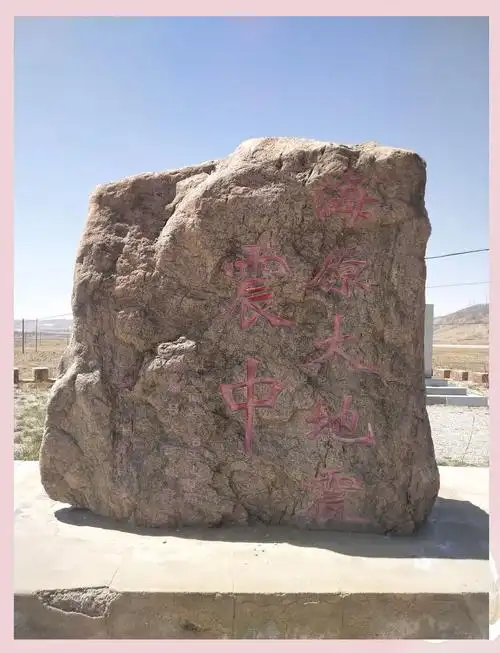 **A Cataclysm That Shook a Continent**
On the evening of 16 December 1920, Haiyan county became the epicentre of one of history's most devastating inland earthquakes. The magnitude 8.5 event released energy comparable to roughly 1,500 Hiroshima-sized atomic bombs and was felt across 17 provinces. To put its death toll in perspective, the 1906 San Francisco earthquake killed around 3,000 people; the catastrophic 1755 Lisbon quake, long considered Europe's worst, killed perhaps 10,000 to 100,000. Haiyuan's losses dwarfed both. The disaster carved a fresh wound into the Loess Plateau and has shaped the region's identity ever since.
**The Geology of Destruction**
The 230-kilometre surface rupture is among the best-preserved active strike-slip faults on Earth. Walk along the fault trace and you can see the earth itself has shifted up to 11 metres laterally, a textbook example of left-lateral movement. The Dangjiajia Lake was born when a massive landslide dammed a river valley, creating a mirror-like body of water framed by shattered ridges. Equally moving is the famous "Earthquake Willow" at Shaomaying, an ancient tree ripped apart by the quake yet still alive after five centuries—a living emblem of survival against the odds.
**A Place of Memory**
At the southwest corner of the county town lies the "Ten-Thousand People's Grave," a sobering memorial where earthquake victims rest. The atmosphere is hushed and respectful, inviting quiet reflection. Nearby, the Haiyuan Earthquake Museum walks visitors through the science of seismology, displays original photographs and artefacts, and recreates moments of the catastrophe. Entry is free, making it accessible to all who wish to learn from this tragedy.
**Practical Visitor Information**
The museum sits on Wenchang Road in Haiyuan county, open Wednesday to Sunday from 9:00 to 17:30, and closed on Mondays. Bring photo ID for registration. The ruins themselves are scattered across the county and surrounding villages, where public transport is scarce—rental cars or hired drivers are strongly recommended, especially after checking local road and weather conditions. All sites are free of charge.
**Why Visit**
Few places on Earth allow visitors to stand directly on an active fault line and read the violence of a century-old earthquake in the landscape itself. For travellers interested in geology, history, or simply in confronting the awesome power of nature, Haiyuan offers an unforgettable and profoundly moving experience—an alternative pilgrimage to the usual cultural sites, and one that lingers long after you leave.
**A Cataclysm That Shook a Continent**
On the evening of 16 December 1920, Haiyan county became the epicentre of one of history's most devastating inland earthquakes. The magnitude 8.5 event released energy comparable to roughly 1,500 Hiroshima-sized atomic bombs and was felt across 17 provinces. To put its death toll in perspective, the 1906 San Francisco earthquake killed around 3,000 people; the catastrophic 1755 Lisbon quake, long considered Europe's worst, killed perhaps 10,000 to 100,000. Haiyuan's losses dwarfed both. The disaster carved a fresh wound into the Loess Plateau and has shaped the region's identity ever since.
**The Geology of Destruction**
The 230-kilometre surface rupture is among the best-preserved active strike-slip faults on Earth. Walk along the fault trace and you can see the earth itself has shifted up to 11 metres laterally, a textbook example of left-lateral movement. The Dangjiajia Lake was born when a massive landslide dammed a river valley, creating a mirror-like body of water framed by shattered ridges. Equally moving is the famous "Earthquake Willow" at Shaomaying, an ancient tree ripped apart by the quake yet still alive after five centuries—a living emblem of survival against the odds.
**A Place of Memory**
At the southwest corner of the county town lies the "Ten-Thousand People's Grave," a sobering memorial where earthquake victims rest. The atmosphere is hushed and respectful, inviting quiet reflection. Nearby, the Haiyuan Earthquake Museum walks visitors through the science of seismology, displays original photographs and artefacts, and recreates moments of the catastrophe. Entry is free, making it accessible to all who wish to learn from this tragedy.
**Practical Visitor Information**
The museum sits on Wenchang Road in Haiyuan county, open Wednesday to Sunday from 9:00 to 17:30, and closed on Mondays. Bring photo ID for registration. The ruins themselves are scattered across the county and surrounding villages, where public transport is scarce—rental cars or hired drivers are strongly recommended, especially after checking local road and weather conditions. All sites are free of charge.
**Why Visit**
Few places on Earth allow visitors to stand directly on an active fault line and read the violence of a century-old earthquake in the landscape itself. For travellers interested in geology, history, or simply in confronting the awesome power of nature, Haiyuan offers an unforgettable and profoundly moving experience—an alternative pilgrimage to the usual cultural sites, and one that lingers long after you leave.