Honghua Temple
⭐ 3.50
Honghua Temple, Yuanzhou District, Guyuan City, Ningxia Hui Autonomous Region, China
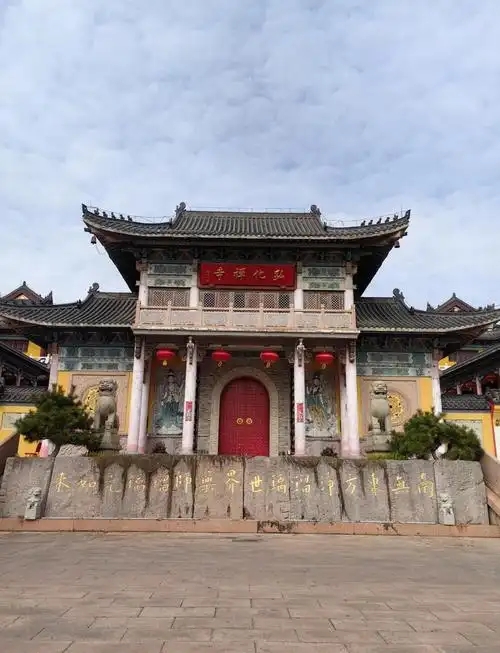 Built under imperial decree in the 15th century, Honghua Temple is a rare surviving monument of the Ming dynasty's "temple-as-diplomacy" policy. While European monarchs of the same era were dispatching caravels across the Indian Ocean, Ming emperors were cultivating ties with Tibetan lamas by founding monasteries along the empire's western frontier. Honghua served Chakyayeshi, the "Great Loving Dharma King," a Gelug patriarch sent from Tibet to the Ming court. His death here around 1434, and the silver reliquary built to house his remains, mark the easternmost high-water mark of early Gelug expansion, comparable in religious-historical terms to Canterbury's role in early English Christianity.
What survives today is intimate rather than grand: a compact assembly hall of three bays flanked by modest monks' quarters, all enclosed within the remnants of a Ming fortified town. Fragments of the original ramparts and a half-ruined barbican still cling to the temple grounds, and visitors can climb the walls to take in the entire layout against the surrounding farmland. The architectural star is the reliquary hall, whose silver-lined stupa for Chakyayeshi shows the distinctive fusion of Chinese timber-frame construction with Tibetan dome-and-stupa aesthetics, the same blended vocabulary that shaped Beijing's Yonghe Temple and the White Dagoba at Beihai Park.
The temple guards a small but remarkable treasury: a Ming-dynasty bed inlaid with mother-of-pearl, imperially bestowed wooden plaques, hand-carved printing blocks for Buddhist scriptures, and subsidiary relic stupas. Each piece alone is a museum-quality artifact; together they document the material culture of a moment when Beijing and Lhasa were drawing closer through ritual exchange. For scholars and curious travelers alike, Honghua is the most direct surviving witness to the policies that gave Tibet a special place inside the Ming imperial order, on the Tibetan Buddhist side akin to a Habsburg court chapel planted at the edge of empire.
Reaching Honghua requires commitment. The temple sits about 66 kilometers southeast of Minhe county town, roughly two hours' drive from either Xining or Lanzhou, and there is no public transit; a rented car or hired driver is essential. The gate is usually closed; in advance, your hotel in Lanzhou or Xining can telephone the abbot, who will come to open the temple for visitors. Photography is strictly forbidden inside the halls, and solemn silence is expected around the monks and any services in progress. Aim to arrive before 9 a.m. or after 4 p.m. to avoid the wind-blown dust of midday, and allow about two hours for the walled perimeter, the reliquary hall and the ancient bodhi tree on the grounds.
Part of the appeal is the journey itself: a drive through loess hills and terraced fields where Qinghai dissolves into Gansu, far from the polished tourist circuits of the Silk Road cities. You come to Honghua not for spectacle but for resonance, a place where the masonry, the silver stupa and the silence still remember a stream of Gelug monks who walked east from Lhasa more than five centuries ago. A 2023 preservation project has stabilised the walls, the relics and the rare manuscripts, ensuring that this little outpost of Sino-Tibetan Buddhist history continues to welcome the rare travelers prepared to make the detour.
Built under imperial decree in the 15th century, Honghua Temple is a rare surviving monument of the Ming dynasty's "temple-as-diplomacy" policy. While European monarchs of the same era were dispatching caravels across the Indian Ocean, Ming emperors were cultivating ties with Tibetan lamas by founding monasteries along the empire's western frontier. Honghua served Chakyayeshi, the "Great Loving Dharma King," a Gelug patriarch sent from Tibet to the Ming court. His death here around 1434, and the silver reliquary built to house his remains, mark the easternmost high-water mark of early Gelug expansion, comparable in religious-historical terms to Canterbury's role in early English Christianity.
What survives today is intimate rather than grand: a compact assembly hall of three bays flanked by modest monks' quarters, all enclosed within the remnants of a Ming fortified town. Fragments of the original ramparts and a half-ruined barbican still cling to the temple grounds, and visitors can climb the walls to take in the entire layout against the surrounding farmland. The architectural star is the reliquary hall, whose silver-lined stupa for Chakyayeshi shows the distinctive fusion of Chinese timber-frame construction with Tibetan dome-and-stupa aesthetics, the same blended vocabulary that shaped Beijing's Yonghe Temple and the White Dagoba at Beihai Park.
The temple guards a small but remarkable treasury: a Ming-dynasty bed inlaid with mother-of-pearl, imperially bestowed wooden plaques, hand-carved printing blocks for Buddhist scriptures, and subsidiary relic stupas. Each piece alone is a museum-quality artifact; together they document the material culture of a moment when Beijing and Lhasa were drawing closer through ritual exchange. For scholars and curious travelers alike, Honghua is the most direct surviving witness to the policies that gave Tibet a special place inside the Ming imperial order, on the Tibetan Buddhist side akin to a Habsburg court chapel planted at the edge of empire.
Reaching Honghua requires commitment. The temple sits about 66 kilometers southeast of Minhe county town, roughly two hours' drive from either Xining or Lanzhou, and there is no public transit; a rented car or hired driver is essential. The gate is usually closed; in advance, your hotel in Lanzhou or Xining can telephone the abbot, who will come to open the temple for visitors. Photography is strictly forbidden inside the halls, and solemn silence is expected around the monks and any services in progress. Aim to arrive before 9 a.m. or after 4 p.m. to avoid the wind-blown dust of midday, and allow about two hours for the walled perimeter, the reliquary hall and the ancient bodhi tree on the grounds.
Part of the appeal is the journey itself: a drive through loess hills and terraced fields where Qinghai dissolves into Gansu, far from the polished tourist circuits of the Silk Road cities. You come to Honghua not for spectacle but for resonance, a place where the masonry, the silver stupa and the silence still remember a stream of Gelug monks who walked east from Lhasa more than five centuries ago. A 2023 preservation project has stabilised the walls, the relics and the rare manuscripts, ensuring that this little outpost of Sino-Tibetan Buddhist history continues to welcome the rare travelers prepared to make the detour.