Guyuan Ancient City Wall
⭐ 3.20
Guyuan Ancient City Wall, Yuanzhou District, Guyuan City, Ningxia Hui Autonomous Region, China
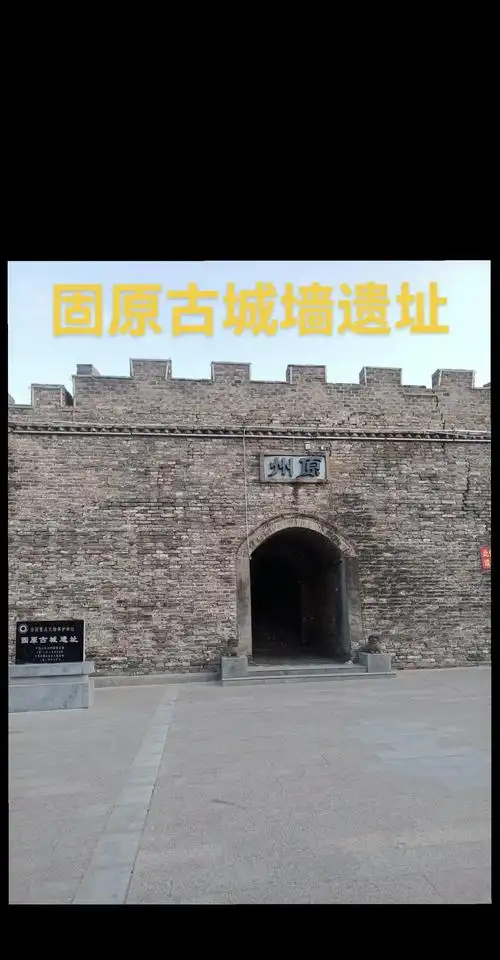 **A Frontier Fortress Older Than the Colosseum**
The Guyuan City Wall traces its origins to 114 BC, when Emperor Wu of Han founded Gaoping City to secure China's northwestern frontier against the Xiongnu nomads—the same era that saw Rome build its Colosseum. For centuries, this fortress guarded a critical junction where the Great Wall met the Silk Road, the caravan route that carried Chinese silks to Venetian markets and Roman senators. The name "Guyuan"—meaning "firm as a fortress, peaceful in the homeland"—was formally adopted in 1451, but the site had already served for nearly 1,600 years as a strategic bulwark where steppe and sown civilizations collided beneath the sacred Liupan Mountains.
**The Rare "Hui"-Shaped Double Rampart**
The wall's most arresting feature is its concentric "hui"-shaped layout—an inner citadel encircled by an outer rampart—creating two interlocking defensive rings. Such nested fortifications are rare among Chinese prefectural cities; the closest European parallel might be Carcassonne's concentric defenses or the layered curtain walls of Constantinople. Ming-era builders packed rammed earth between brick facings, producing walls thick enough to withstand artillery yet economical to construct. Sadly, much original brickwork was stripped in the 1970s to build air-raid shelters, leaving the surviving 500-meter inner wall and 1,000-meter outer wall sections as weathered earthen ghosts—battered yet hauntingly photogenic.
**A Crossroads of Civilizations**
Designated a National Key Cultural Relics Protection Unit in 2013, Guyuan sits at the convergence of three great cultural currents: the agrarian civilization of the Central Plains, the martial frontier culture of the northwest, and the cosmopolitan commerce of the Silk Road. Merchants from Persia, Sogdiana, and Byzantium once paused here to rest their camels before tackling the mountain passes. Adjacent surviving relics, including the Wenlan Pavilion and City God Temple, deepen the scholarly value for anyone studying pre-modern military engineering, urban planning, or cross-cultural exchange. Few sites in China so vividly embody the dialogue between East and West.
**Planning Your Visit**
Access to the ruins is free, with no formal ticket booth and minimal commercial infrastructure. Allow 1 to 1.5 hours to walk the circuit, beginning at the South Gate near West Lake Park, tracing the inner wall remnants to Heping Gate, then continuing eastward along the outer wall toward Jingsuo Gate. Facilities are sparse—there are no convenience stores or cafés nearby—so bring ample drinking water, sun protection, and insect repellent. Mobile phone reception can be unreliable; download offline maps before arriving. Comfortable, non-slip footwear is essential, as the uneven rammed-earth pathways can be treacherous after rain.
**The Magic Hour**
Late afternoon, between 16:00 and 18:30, is the prime visiting window. As the sun lowers, golden light pours through the surviving gate arches, transforming them into luminous frames against silhouetted battlements—an effect reminiscent of the cinematic ruins of Petra at dusk. Photographers will find endless compositions in the interplay of weathered earthen walls, gnarled ancient trees, and distant mountain vistas that still evoke the region's legendary frontier atmosphere. Consider bringing a book on the Silk Road or Guyuan's history to deepen the experience as you trace the footsteps of Han soldiers, Tang pilgrims, and Ming merchants.
**A Deeper Itinerary**
Visitors with a full day should pair Guyuan with two nearby treasures. The Xumi Mountain Grottoes, renowned for their Tang-dynasty Buddhist carvings on a scale comparable to Dunhuang, require separate tickets and advance booking. The Xiaoguan Pass ruins, meanwhile, mark another storied Silk Road gateway whose strategic importance endured from the Warring States period through the Ming. Each site offers a different facet of the region's layered identity—military defense, Buddhist devotion, and transcontinental commerce—painting a comprehensive portrait of this often-overlooked corner of northwest China. Together, they form a deeply rewarding "Frontier Heritage" loop that few Western travelers have yet discovered.
**A Frontier Fortress Older Than the Colosseum**
The Guyuan City Wall traces its origins to 114 BC, when Emperor Wu of Han founded Gaoping City to secure China's northwestern frontier against the Xiongnu nomads—the same era that saw Rome build its Colosseum. For centuries, this fortress guarded a critical junction where the Great Wall met the Silk Road, the caravan route that carried Chinese silks to Venetian markets and Roman senators. The name "Guyuan"—meaning "firm as a fortress, peaceful in the homeland"—was formally adopted in 1451, but the site had already served for nearly 1,600 years as a strategic bulwark where steppe and sown civilizations collided beneath the sacred Liupan Mountains.
**The Rare "Hui"-Shaped Double Rampart**
The wall's most arresting feature is its concentric "hui"-shaped layout—an inner citadel encircled by an outer rampart—creating two interlocking defensive rings. Such nested fortifications are rare among Chinese prefectural cities; the closest European parallel might be Carcassonne's concentric defenses or the layered curtain walls of Constantinople. Ming-era builders packed rammed earth between brick facings, producing walls thick enough to withstand artillery yet economical to construct. Sadly, much original brickwork was stripped in the 1970s to build air-raid shelters, leaving the surviving 500-meter inner wall and 1,000-meter outer wall sections as weathered earthen ghosts—battered yet hauntingly photogenic.
**A Crossroads of Civilizations**
Designated a National Key Cultural Relics Protection Unit in 2013, Guyuan sits at the convergence of three great cultural currents: the agrarian civilization of the Central Plains, the martial frontier culture of the northwest, and the cosmopolitan commerce of the Silk Road. Merchants from Persia, Sogdiana, and Byzantium once paused here to rest their camels before tackling the mountain passes. Adjacent surviving relics, including the Wenlan Pavilion and City God Temple, deepen the scholarly value for anyone studying pre-modern military engineering, urban planning, or cross-cultural exchange. Few sites in China so vividly embody the dialogue between East and West.
**Planning Your Visit**
Access to the ruins is free, with no formal ticket booth and minimal commercial infrastructure. Allow 1 to 1.5 hours to walk the circuit, beginning at the South Gate near West Lake Park, tracing the inner wall remnants to Heping Gate, then continuing eastward along the outer wall toward Jingsuo Gate. Facilities are sparse—there are no convenience stores or cafés nearby—so bring ample drinking water, sun protection, and insect repellent. Mobile phone reception can be unreliable; download offline maps before arriving. Comfortable, non-slip footwear is essential, as the uneven rammed-earth pathways can be treacherous after rain.
**The Magic Hour**
Late afternoon, between 16:00 and 18:30, is the prime visiting window. As the sun lowers, golden light pours through the surviving gate arches, transforming them into luminous frames against silhouetted battlements—an effect reminiscent of the cinematic ruins of Petra at dusk. Photographers will find endless compositions in the interplay of weathered earthen walls, gnarled ancient trees, and distant mountain vistas that still evoke the region's legendary frontier atmosphere. Consider bringing a book on the Silk Road or Guyuan's history to deepen the experience as you trace the footsteps of Han soldiers, Tang pilgrims, and Ming merchants.
**A Deeper Itinerary**
Visitors with a full day should pair Guyuan with two nearby treasures. The Xumi Mountain Grottoes, renowned for their Tang-dynasty Buddhist carvings on a scale comparable to Dunhuang, require separate tickets and advance booking. The Xiaoguan Pass ruins, meanwhile, mark another storied Silk Road gateway whose strategic importance endured from the Warring States period through the Ming. Each site offers a different facet of the region's layered identity—military defense, Buddhist devotion, and transcontinental commerce—painting a comprehensive portrait of this often-overlooked corner of northwest China. Together, they form a deeply rewarding "Frontier Heritage" loop that few Western travelers have yet discovered.