Ningxia Museum
⭐ 4.60
Yuanzhou District, Guyuan City, Ningxia Hui Autonomous Region, China
 Guyuan has occupied a strategic position on the Silk Road since antiquity, controlling the narrow Hexi Corridor gateway where goods, ideas, and religions flowed between China and the Mediterranean world. From the Qin and Han dynasties onward, merchant caravans, envoys, and Buddhist monks passed through, leaving behind a remarkably rich archaeological record. The museum's collections serve as tangible testimony to this two-thousand-year dialogue—comparable in significance, though smaller in scale, to the great Silk Road collections of Turfan or the National Museum of Iran in Tehran.
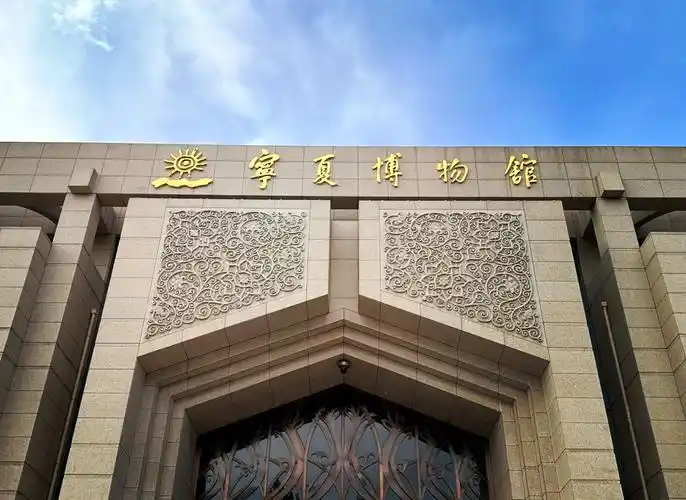
The museum building itself reflects its historical mission. Completed in 1988, its architecture echoes Tang-dynasty style with a distinctive four-sided pyramidal roof that mirrors the monumental halls of the Tang capital Chang'an. Spanning roughly 14,000 square meters, the structure blends traditional aesthetics with modern climate control and lighting, creating ideal conditions for delicate treasures while maintaining visual harmony with the surrounding landscape.
Three national-level treasures anchor the collection and deserve special attention. The Northern Zhou gilt-silver ewer, dating to the 6th century, is believed to be the only surviving Sasanian Persian-style gold and silver vessel in the world—a stunning counterpart to the silverware found in the Hermitage's Silk Road galleries. The studded glass bowl traces the eastward transmission of Sasanian-Hephthalite glassmaking techniques, while the Northern Wei lacquer coffin painting represents one of China's earliest surviving examples of this art form.
Practical information: the museum is located at 133 Xicheng Road, Yuanzhou District, Guyuan. It opens Tuesday through Sunday from 9:00 to 17:00 (last entry at 16:30), with Monday closures. Admission is free, but advance reservation through the official WeChat account is required. Free guided tours in Chinese run daily at 10:00 and 15:00—reserving a spot is strongly recommended for deeper context.
Allow 2.5 to 3 hours for a thorough visit, prioritizing the three signature treasures and the dedicated Silk Road foreign artifacts gallery. Photography is permitted in most areas but flash and tripods are prohibited, and certain masterpieces cannot be photographed at all. With Guyuan sitting at roughly 1,800 meters elevation, indoor air conditioning can feel cool; a light jacket is advisable. Visitors with extra time should also explore the adjacent Ancient Tombs and Stone Carvings galleries to fully appreciate Guyuan's profound historical depth.
Guyuan has occupied a strategic position on the Silk Road since antiquity, controlling the narrow Hexi Corridor gateway where goods, ideas, and religions flowed between China and the Mediterranean world. From the Qin and Han dynasties onward, merchant caravans, envoys, and Buddhist monks passed through, leaving behind a remarkably rich archaeological record. The museum's collections serve as tangible testimony to this two-thousand-year dialogue—comparable in significance, though smaller in scale, to the great Silk Road collections of Turfan or the National Museum of Iran in Tehran.
The museum building itself reflects its historical mission. Completed in 1988, its architecture echoes Tang-dynasty style with a distinctive four-sided pyramidal roof that mirrors the monumental halls of the Tang capital Chang'an. Spanning roughly 14,000 square meters, the structure blends traditional aesthetics with modern climate control and lighting, creating ideal conditions for delicate treasures while maintaining visual harmony with the surrounding landscape.
Three national-level treasures anchor the collection and deserve special attention. The Northern Zhou gilt-silver ewer, dating to the 6th century, is believed to be the only surviving Sasanian Persian-style gold and silver vessel in the world—a stunning counterpart to the silverware found in the Hermitage's Silk Road galleries. The studded glass bowl traces the eastward transmission of Sasanian-Hephthalite glassmaking techniques, while the Northern Wei lacquer coffin painting represents one of China's earliest surviving examples of this art form.
Practical information: the museum is located at 133 Xicheng Road, Yuanzhou District, Guyuan. It opens Tuesday through Sunday from 9:00 to 17:00 (last entry at 16:30), with Monday closures. Admission is free, but advance reservation through the official WeChat account is required. Free guided tours in Chinese run daily at 10:00 and 15:00—reserving a spot is strongly recommended for deeper context.
Allow 2.5 to 3 hours for a thorough visit, prioritizing the three signature treasures and the dedicated Silk Road foreign artifacts gallery. Photography is permitted in most areas but flash and tripods are prohibited, and certain masterpieces cannot be photographed at all. With Guyuan sitting at roughly 1,800 meters elevation, indoor air conditioning can feel cool; a light jacket is advisable. Visitors with extra time should also explore the adjacent Ancient Tombs and Stone Carvings galleries to fully appreciate Guyuan's profound historical depth.