Beijing Olympic Park

⭐ 4.60

No. 15, Beichen East Road, Chaoyang District, Beijing, China
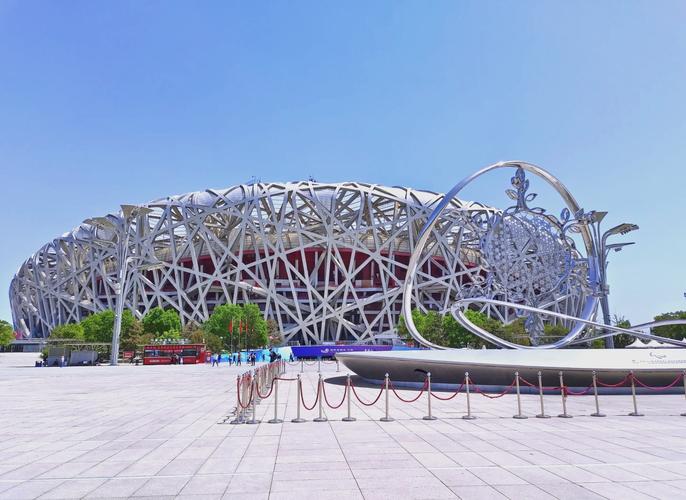
Beijing Olympic Park
When Beijing hosted the 2008 Summer Olympics, it fulfilled a century-old Chinese aspiration to stage the modern Games—a dream first voiced in the early 1900s. The Olympic Park was deliberately designed as the world's first Olympic complex to be permanently converted into a public park after the closing ceremony. Comparable in ambition to Barcelona's Montjuïc complex from the 1992 Games, the site stands as both a sports monument and a marker of Beijing's evolution from imperial capital to global metropolis. Stretching from the North Fourth Ring Road to Anli Road, the park has become a powerful symbol of China's opening to the wider world. The National Stadium, popularly known as the Bird's Nest, ranks among the most recognizable sporting venues on Earth. Its interwoven steel beams evoke both traditional Chinese latticework and the structural expressionism of London's Millennium Dome. Designed by Swiss firm Herzog & de Meuron with Chinese artist Ai Weiwei, the 80,000-seat bowl feels like a giant woven basket at close range. Across the plaza, the National Aquatics Center—the Water Cube—glows like a translucent sapphire at dusk. Its 100,000-square-meter skin of ETFE bubbles, an engineering cousin to Munich's Allianz Arena, transforms the building into a shimmering cube of blue and white light after sunset. Beyond architecture, the park embodies the "Three Olympics" vision promoted by Beijing 2008 organizers: Green, High-Tech, and People-centered. The 246-meter Olympic Tower, with five tapered "trees" symbolizing the Olympic flame passed between civilizations, anchors the northern end of the axis. Scattered bronze sculptures by international and Chinese artists capture the grace and power of athletic movement, while the Linglong Tower's lattice silhouette pays homage to traditional Chinese ornamental design. Together these elements remind visitors that the Olympic ideals of peace, friendship, and fair competition align naturally with the values of an outward-looking China. The park's outdoor spaces are open around the clock and free of charge—rare for a site of this scale anywhere in the world. Interior visits carry modest fees: the Bird's Nest roughly 50 RMB and the Water Cube about 30 RMB, while ascending the Olympic Tower requires a separate ticket. Two metro lines, Line 8 and Line 15, meet at the dedicated Olympic Park Station, placing the main entrance within a five-minute walk. Numerous bus routes also serve the perimeter. Visitors arriving from central Beijing should allow at least half a day, ideally an entire afternoon through evening. The optimal experience begins in late afternoon: golden-hour light bathes the steel of the Bird's Nest, sunset paints the Water Cube in deep blues, and from dusk onward the nightly illumination show animates fountains, towers, and facades in choreographed color. North of the plaza lies the Olympic Forest Park—Beijing's largest artificial green lung within the city proper—offering rubberized paths ideal for jogging and cycling. On-site dining options remain limited and pricier than central Beijing, so carrying water and snacks is wise. Summer visitors should bring sunscreen, hats, and light clothing; winter nights can be bitterly cold, so dress in warm layers if planning to stay for the lights.

Traveler reviews

Olympic Park, full name Beijing Olympic Park, is a national AAAAA-level tourist attraction located in Chaoyang District, Beijing. As of 2023, the park covers a ...
⭐ 5 · Robin Hayes Expand
Beijing Olympic Park, located in Chaoyang District, Beijing, China, was started in 2003 and completed in 2008, covering a total area of 11.59 square kilometers. It's a comprehensive civic activity center for the city and also serves as a Beijing patriotism education base and a Chinese red tourism site. The park sits at the northern end of the city's central axis, right by the North 4th Ring Road at Beichen Bridge. Spanning 1,135 hectares, it's divided into three sections: the 680-hectare Forest Park at the north end, the central zone (Zone B) covering 291 hectares where the main venues and facilities are located, and the southern 114 hectares containing already-built venues and reserved land. The Chinese Ethnic Culture Park is also incorporated within the Olympic Park grounds. Built around the Asian Games venues and supported by solid infrastructure, the area has convenient transport, a concentrated population, good municipal facilities, and well-developed commercial and cultural amenities. The park's planning focuses on the city's long-term development and residents' material and cultural needs,...
⭐ 5 · Jamie Cole Expand