Gobi Desert
⭐ 3.80
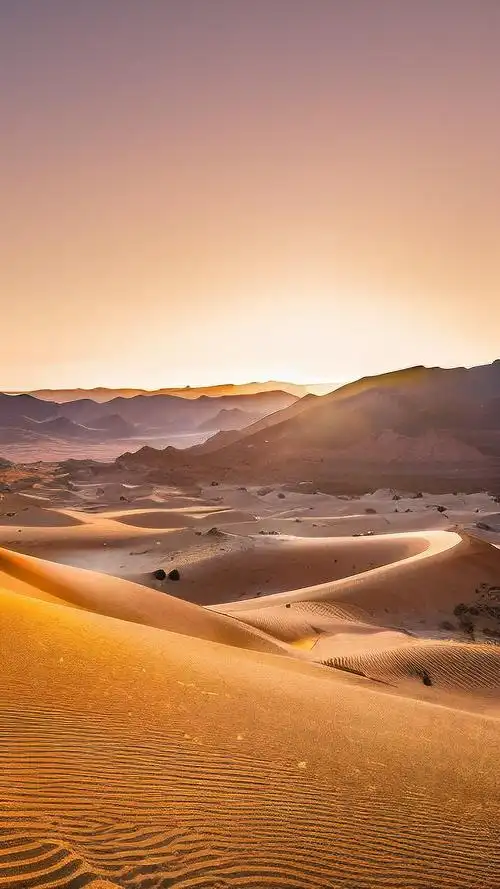
Gobi Desert, Jiayuguan City, Gansu Province, China
 The Hexi Corridor, a narrow 1,000-kilometre gateway between the Tibetan Plateau and the Mongolian steppe, has served as China's artery to Central Asia for more than two millennia. Han dynasty envoys, including the legendary Zhang Qian who opened the Silk Road in the 2nd century BC, marched this route westward, while General Huo Qubing's cavalry thundered through to drive back the Xiongnu nomads. In 1372, Ming general Feng Sheng selected this strategic bottleneck to anchor the western end of the empire's great defensive line, mirroring how the Romans built Hadrian's Wall to mark the edge of their known world centuries earlier.
Jiayuguan Fortress itself is a masterpiece of late-medieval military architecture. Its layered defences—an inner city, outer city, warding walls, and a labyrinthine barbican—enclose arrow towers, watch platforms, and horse lanes that remain remarkably intact. Climb the central tower and the contrast is breathtaking: the white glaciers of the Qilian range rise to the south while an ochre wilderness of pebbles and dust stretches endlessly north. Locals have long called the pass "the Greatest Fortress Under Heaven," a fitting epithet that puts it on par with Europe's most celebrated citadels.
Beyond the main fortress, two satellite sites deepen the experience. The First Pier of the Great Wall is a raw, rammed-earth watchtower perched above the Taolai River canyon, where the Ming frontier finally surrenders to the elements. A short drive away, the Suspended Wall snakes along a knife-edge ridge of Black Mountain, its half-collapsed battlements looking as though they have been pinned to the cliffs by hand. Together with the yardang formations and ochre gorges of the surrounding Gobi, they form a single, sweeping panorama that has inspired Chinese poets and painters for centuries.
Practicalities are straightforward. Each of the three sites charges its own admission, though a combined ticket offers good savings. The fortress lies only about 15 minutes by taxi from Jiayuguan city, while the First Pier and Suspended Wall are best reached by rented car or hired driver. August midday heat can be punishing, so plan visits after 5 pm to enjoy cooler air, golden light, and dramatic shadows. Carry ample water, sun protection, and a windproof layer—summer nights often plunge sharply once the sun drops behind the desert horizon.
This is not a destination for those seeking camel rides, sandboarding, or family-friendly amusements. It rewards travellers drawn to silence, history, and stark beauty—think of it as a kind of Mongol Altai meets the American Southwest, layered with the gravitas of a Roman limes. Fit Jiayuguan into a longer Qinghai–Gansu loop alongside Dunhuang, Zhangye's rainbow mountains, and the grasslands of Qilian, and the full sweep of the old Silk Road finally comes into view.
The Hexi Corridor, a narrow 1,000-kilometre gateway between the Tibetan Plateau and the Mongolian steppe, has served as China's artery to Central Asia for more than two millennia. Han dynasty envoys, including the legendary Zhang Qian who opened the Silk Road in the 2nd century BC, marched this route westward, while General Huo Qubing's cavalry thundered through to drive back the Xiongnu nomads. In 1372, Ming general Feng Sheng selected this strategic bottleneck to anchor the western end of the empire's great defensive line, mirroring how the Romans built Hadrian's Wall to mark the edge of their known world centuries earlier.
Jiayuguan Fortress itself is a masterpiece of late-medieval military architecture. Its layered defences—an inner city, outer city, warding walls, and a labyrinthine barbican—enclose arrow towers, watch platforms, and horse lanes that remain remarkably intact. Climb the central tower and the contrast is breathtaking: the white glaciers of the Qilian range rise to the south while an ochre wilderness of pebbles and dust stretches endlessly north. Locals have long called the pass "the Greatest Fortress Under Heaven," a fitting epithet that puts it on par with Europe's most celebrated citadels.
Beyond the main fortress, two satellite sites deepen the experience. The First Pier of the Great Wall is a raw, rammed-earth watchtower perched above the Taolai River canyon, where the Ming frontier finally surrenders to the elements. A short drive away, the Suspended Wall snakes along a knife-edge ridge of Black Mountain, its half-collapsed battlements looking as though they have been pinned to the cliffs by hand. Together with the yardang formations and ochre gorges of the surrounding Gobi, they form a single, sweeping panorama that has inspired Chinese poets and painters for centuries.
Practicalities are straightforward. Each of the three sites charges its own admission, though a combined ticket offers good savings. The fortress lies only about 15 minutes by taxi from Jiayuguan city, while the First Pier and Suspended Wall are best reached by rented car or hired driver. August midday heat can be punishing, so plan visits after 5 pm to enjoy cooler air, golden light, and dramatic shadows. Carry ample water, sun protection, and a windproof layer—summer nights often plunge sharply once the sun drops behind the desert horizon.
This is not a destination for those seeking camel rides, sandboarding, or family-friendly amusements. It rewards travellers drawn to silence, history, and stark beauty—think of it as a kind of Mongol Altai meets the American Southwest, layered with the gravitas of a Roman limes. Fit Jiayuguan into a longer Qinghai–Gansu loop alongside Dunhuang, Zhangye's rainbow mountains, and the grasslands of Qilian, and the full sweep of the old Silk Road finally comes into view.