Kashgar Old Teahouse
⭐ 4.60
Kashgar Old Teahouse, Kashgar City, Kashgar Prefecture, Xinjiang Uyghur Autonomous Region, China
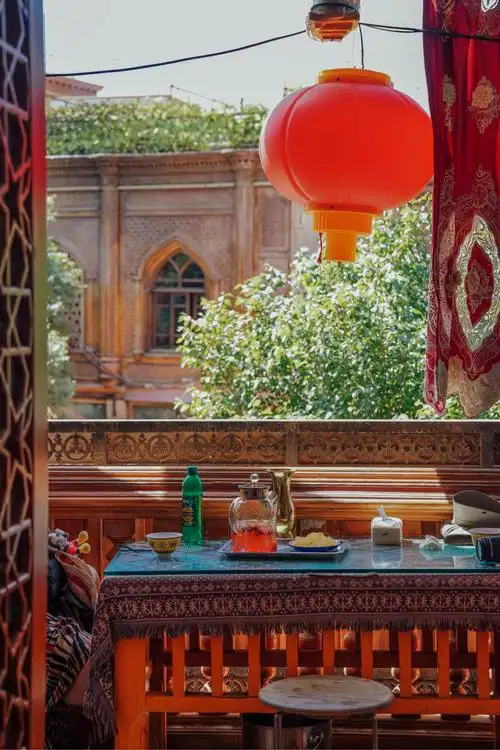 The Kashgar Old Teahouse dates to the late Qing Dynasty, when Kashgar flourished as a vital trading post along the Silk Road—comparable in historical weight to Venice as a medieval mercantile hub or Samarkand as a crossroads of civilizations. Originally a rest stop for camel caravans, the teahouse has passed through three generations of Uyghur families and witnessed the city's transformation from caravan station to modern cultural destination. Today it serves as a filming location for several documentary series, continuing to chronicle the evolution of southern Xinjiang's tea traditions.
Architecturally, the teahouse embodies classic Kashgar vernacular design, much like the earthen kasbahs of Morocco or the mud-brick villages of Yemen's Hadramaut. Its two-story rammed-earth structure features warm ochre walls that blend seamlessly into the surrounding Old City. The interior centers on raised earthen platforms—essentially heated kang benches—where guests sit cross-legged around low tables, a layout that reflects traditional Uyghur hospitality and communal living. The second-floor balcony offers the best vantage point over the labyrinthine lanes below, while the ground floor functions as a small exhibition space rather than a seating area.
What makes this teahouse genuinely exceptional is its status as one of the very few "living" heritage sites in Xinjiang—analogous to London's historic pubs or Vienna's coffee houses, where centuries-old social rituals continue unbroken. Here, local elders converse over tea while musicians strike up impromptu sessions on the rawap lute, dutar long-necked lute, and frame drum. Fragments of the Twelve Muqam, the classical Uyghur musical canon inscribed on UNESCO's Intangible Heritage list, drift through the air between folk songs and spontaneous dancing. Nothing feels staged; this is organic, living culture.
The teahouse sits within the free-to-enter Kashgar Old City scenic area, easily reached on foot from the Id Kah Mosque. Opening hours typically run from 10:00 to 23:00, with the most vibrant atmosphere between 16:00 and 18:00 when folk music performances peak. Budget travelers will appreciate the modest pricing: expect to spend 20 to 50 yuan per person for a full afternoon, with basic fermented brick tea at 5–10 yuan per pot and naan bread just 2–3 yuan. Order the local brick tea rather than fruit teas for authentic flavor and fair pricing.
A respectful visit requires a few courtesies: always ask softly for permission before photographing musicians or elderly patrons, and tipping 10–20 yuan is customary if you request a private performance. Plan to stay 30–60 minutes to absorb the atmosphere fully. For a complete cultural immersion, combine your visit with the Id Kah Mosque and the Old City's artisan workshops—together they form an essential introduction to Kashgar's living Uyghur heritage.
The Kashgar Old Teahouse dates to the late Qing Dynasty, when Kashgar flourished as a vital trading post along the Silk Road—comparable in historical weight to Venice as a medieval mercantile hub or Samarkand as a crossroads of civilizations. Originally a rest stop for camel caravans, the teahouse has passed through three generations of Uyghur families and witnessed the city's transformation from caravan station to modern cultural destination. Today it serves as a filming location for several documentary series, continuing to chronicle the evolution of southern Xinjiang's tea traditions.
Architecturally, the teahouse embodies classic Kashgar vernacular design, much like the earthen kasbahs of Morocco or the mud-brick villages of Yemen's Hadramaut. Its two-story rammed-earth structure features warm ochre walls that blend seamlessly into the surrounding Old City. The interior centers on raised earthen platforms—essentially heated kang benches—where guests sit cross-legged around low tables, a layout that reflects traditional Uyghur hospitality and communal living. The second-floor balcony offers the best vantage point over the labyrinthine lanes below, while the ground floor functions as a small exhibition space rather than a seating area.
What makes this teahouse genuinely exceptional is its status as one of the very few "living" heritage sites in Xinjiang—analogous to London's historic pubs or Vienna's coffee houses, where centuries-old social rituals continue unbroken. Here, local elders converse over tea while musicians strike up impromptu sessions on the rawap lute, dutar long-necked lute, and frame drum. Fragments of the Twelve Muqam, the classical Uyghur musical canon inscribed on UNESCO's Intangible Heritage list, drift through the air between folk songs and spontaneous dancing. Nothing feels staged; this is organic, living culture.
The teahouse sits within the free-to-enter Kashgar Old City scenic area, easily reached on foot from the Id Kah Mosque. Opening hours typically run from 10:00 to 23:00, with the most vibrant atmosphere between 16:00 and 18:00 when folk music performances peak. Budget travelers will appreciate the modest pricing: expect to spend 20 to 50 yuan per person for a full afternoon, with basic fermented brick tea at 5–10 yuan per pot and naan bread just 2–3 yuan. Order the local brick tea rather than fruit teas for authentic flavor and fair pricing.
A respectful visit requires a few courtesies: always ask softly for permission before photographing musicians or elderly patrons, and tipping 10–20 yuan is customary if you request a private performance. Plan to stay 30–60 minutes to absorb the atmosphere fully. For a complete cultural immersion, combine your visit with the Id Kah Mosque and the Old City's artisan workshops—together they form an essential introduction to Kashgar's living Uyghur heritage.