Pamir Scenic Area
⭐ 4.50
Pamir Scenic Area, Taxkorgan County, Kashgar Prefecture, Xinjiang Uyghur Autonomous Region, China
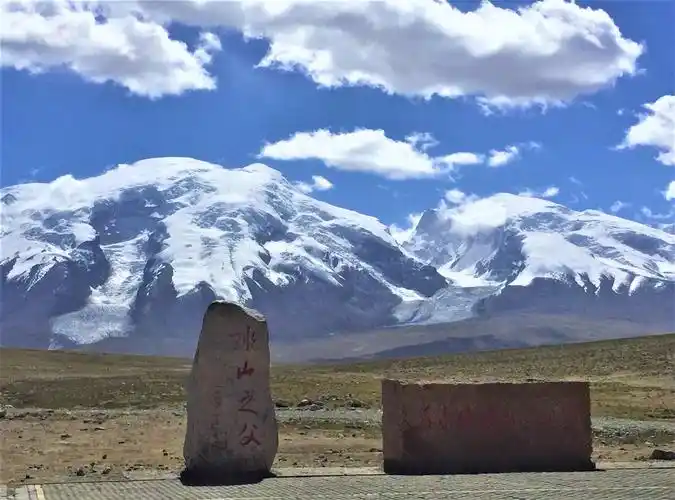 The Stone Fortress (Tang Dynasty, roughly 1,300 years old) once anchored the southern route of the Silk Road—a medieval trade artery as vital to Central Asia as the Hanseatic routes were to the Baltic or the Levantine roads to Venice. Perched above the Taxkorgan River valley, the fort commanded the Pamir crossing used by merchants, missionaries, and diplomats moving between China, Persia, and Byzantium. It served as the garrison of "Congling Shouzhuo," the Chinese outpost that policed this high mountain passage for centuries. Standing on its weathered ramparts today, visitors gaze across the same snowy horizon that Marco Polo's contemporaries traversed in the thirteenth century.
The fortress is a textbook example of Pamiri military engineering: three concentric stone walls—the outer, middle, and inner cities—climb a rocky spur, each tier stronger than the last. Built of granite blocks without mortar, the walls recall dry-stone techniques found from Scotland's Iron Age brochs to the Anatolian citadels of eastern Turkey. Below the ruins stretches the Golden Grassland Wetland, an alpine marsh laced with boardwalks where wildflowers bloom in summer and meadows turn gold in autumn. Across the valley looms Muztagh Ata (7,546 m), a peak as iconic to Central Asia as the Matterhorn is to the Alps.
Taxkorgan is China's only Tajik settlement, home to a people sometimes called "Eagles of the Plateau" for their centuries-old bond with the birds of prey. In the Folk Village (彩云人家, "Colorful Cloud Family"), guests witness the eagle dance and hear the haunting eagle flute—an end-blown bone instrument unique to Pamir culture. Summer brings folk music festivals and bonfire nights; traditional polo matches and the spring Water-Drawing Festival round out the calendar. The warmth of Tajik hospitality here rivals that found in remote communities from Hunza to Ladakh.
Entry is 40 yuan, with shuttle buses 11 yuan one-way or 50.5 yuan round-trip; military personnel and visitors over 65 enter free. Summer hours run 08:30–20:00, winter 10:00–19:00; from May through November, night tours of the fortress and bonfire gatherings run 20:00–24:00. The core scenic zone covers 3.1 square kilometers and needs 3–4 hours to explore. Because the site sits at 3,100 m, rest on your first day: skip strenuous hikes, hot showers, or alcohol, and carry altitude remedies. Layered clothing is essential—summer days can hit 25°C while nights drop below freezing. A border permit must be arranged in advance through your Kashgar operator.
What makes the Pamir Tourism Area irresistible is the rare combination of three experiences in a single morning: scrambling through a 1,300-year-old fortress, walking boardwalks through an alpine wetland, and standing face-to-face with one of the world's most beautiful peaks—all while sharing tea with an eagle-handling Tajik elder. For travelers with a day or two to spare, the area pairs naturally with White Sand Lake, the cobalt waters of Karakul Lake beneath Muztagh Ata, and the dizzying switchbacks of the Panlong Ancient Road. Few places on earth still feel this remote, this ancient, and this welcoming all at once.
The Stone Fortress (Tang Dynasty, roughly 1,300 years old) once anchored the southern route of the Silk Road—a medieval trade artery as vital to Central Asia as the Hanseatic routes were to the Baltic or the Levantine roads to Venice. Perched above the Taxkorgan River valley, the fort commanded the Pamir crossing used by merchants, missionaries, and diplomats moving between China, Persia, and Byzantium. It served as the garrison of "Congling Shouzhuo," the Chinese outpost that policed this high mountain passage for centuries. Standing on its weathered ramparts today, visitors gaze across the same snowy horizon that Marco Polo's contemporaries traversed in the thirteenth century.
The fortress is a textbook example of Pamiri military engineering: three concentric stone walls—the outer, middle, and inner cities—climb a rocky spur, each tier stronger than the last. Built of granite blocks without mortar, the walls recall dry-stone techniques found from Scotland's Iron Age brochs to the Anatolian citadels of eastern Turkey. Below the ruins stretches the Golden Grassland Wetland, an alpine marsh laced with boardwalks where wildflowers bloom in summer and meadows turn gold in autumn. Across the valley looms Muztagh Ata (7,546 m), a peak as iconic to Central Asia as the Matterhorn is to the Alps.
Taxkorgan is China's only Tajik settlement, home to a people sometimes called "Eagles of the Plateau" for their centuries-old bond with the birds of prey. In the Folk Village (彩云人家, "Colorful Cloud Family"), guests witness the eagle dance and hear the haunting eagle flute—an end-blown bone instrument unique to Pamir culture. Summer brings folk music festivals and bonfire nights; traditional polo matches and the spring Water-Drawing Festival round out the calendar. The warmth of Tajik hospitality here rivals that found in remote communities from Hunza to Ladakh.
Entry is 40 yuan, with shuttle buses 11 yuan one-way or 50.5 yuan round-trip; military personnel and visitors over 65 enter free. Summer hours run 08:30–20:00, winter 10:00–19:00; from May through November, night tours of the fortress and bonfire gatherings run 20:00–24:00. The core scenic zone covers 3.1 square kilometers and needs 3–4 hours to explore. Because the site sits at 3,100 m, rest on your first day: skip strenuous hikes, hot showers, or alcohol, and carry altitude remedies. Layered clothing is essential—summer days can hit 25°C while nights drop below freezing. A border permit must be arranged in advance through your Kashgar operator.
What makes the Pamir Tourism Area irresistible is the rare combination of three experiences in a single morning: scrambling through a 1,300-year-old fortress, walking boardwalks through an alpine wetland, and standing face-to-face with one of the world's most beautiful peaks—all while sharing tea with an eagle-handling Tajik elder. For travelers with a day or two to spare, the area pairs naturally with White Sand Lake, the cobalt waters of Karakul Lake beneath Muztagh Ata, and the dizzying switchbacks of the Panlong Ancient Road. Few places on earth still feel this remote, this ancient, and this welcoming all at once.