Ebo Terrace
⭐ 3.60
Ebo Terrace, Suiyang District, Shangqiu City, Henan Province, China
 Long before Stonehenge was raised on Salisbury Plain or the Babylonian ziggurats tracked the movements of Jupiter, a circular rammed-earth platform was being used in central China to chart the heavens. Roughly 4,500 years ago, the legendary Emperor Ku appointed his son Ebo as "Fire Chief"—a position combining astronomer, calendar keeper, and seasonal regulator. From this elevated mound in the ancient Shang region, Ebo observed the stars to mark solstices and instruct farming communities in the rhythm of the year. When he died, locals buried him here and piled earth over the grave, creating the platform itself.
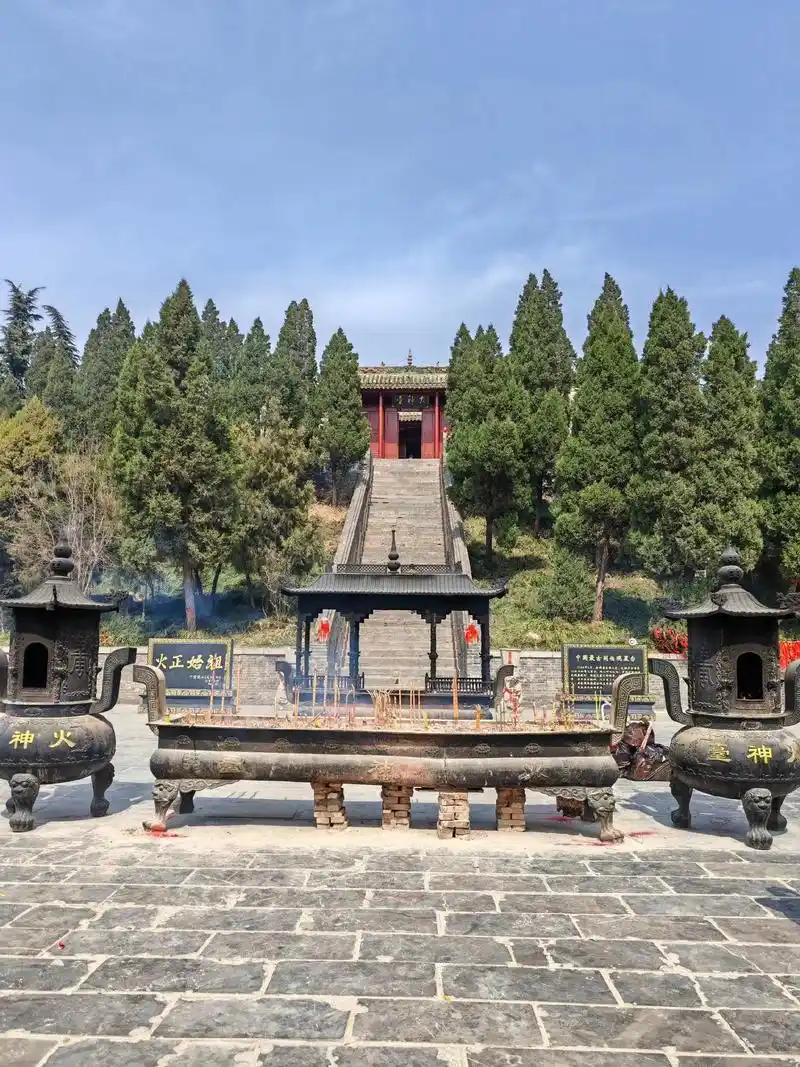
The mound is a striking feat of Neolithic engineering. Originally a circular earthen construction, it now rises between 10 and 35 meters (heights vary across historical accounts), with a circumference of about 270 meters. Visitors ascend 42 stone steps to reach the summit, where a temple complex dedicated to Ebo crowns the site. Originally founded in the Yuan Dynasty (13th–14th century) and repeatedly restored during the Ming and Qing eras, the temple features a grand main hall, side halls, and traditional bell and drum towers, all arranged in solemn, symmetrical fashion against the open sky.
Ebo Platform is more than an architectural curiosity—it represents the cradle of Chinese astronomy and a key site in the rise of Shang civilization, which would dominate the early Chinese Bronze Age. Its star-watching practices laid the conceptual foundation for traditional timekeeping and the agricultural calendar. Today the platform hosts the annual Fire God Temple Fair around the seventh day of the first lunar month, a celebration recognized as National Intangible Cultural Heritage. The fair fills the surrounding area with folk performances, lantern displays, traditional crafts, and lively market stalls.
The site lies in Suiyang District of Shangqiu City, just 1.5 kilometers southwest of the historic Shangqiu Ancient City. Entry is generally free or very inexpensive, though a small fee (around 10 yuan) may apply during festival periods. The grounds are open year-round: 08:00 to 17:30 in summer and until 17:00 in winter. Travelers can reach the platform by taxi or take a pleasant walk from the ancient city's south gate. Hiring an interpretive guide is strongly recommended for visitors eager to grasp the deeper historical context.
For travelers drawn to deep history, Ebo Platform offers an unfiltered encounter with the origins of Chinese civilization—older than many of Egypt's astronomical alignments and contemporaneous with Europe's earliest megalithic monuments. Spring and autumn bring the most comfortable weather for the climb. A suggested route begins at the ornamental gate and theater stage, continues through the Shang Ancestral Hall, and culminates at the temple atop the mound. Pairing this visit with the adjacent Shangqiu Ancient City makes for an enriching half-day journey through mythology, commerce, and the dawn of recorded time.
Long before Stonehenge was raised on Salisbury Plain or the Babylonian ziggurats tracked the movements of Jupiter, a circular rammed-earth platform was being used in central China to chart the heavens. Roughly 4,500 years ago, the legendary Emperor Ku appointed his son Ebo as "Fire Chief"—a position combining astronomer, calendar keeper, and seasonal regulator. From this elevated mound in the ancient Shang region, Ebo observed the stars to mark solstices and instruct farming communities in the rhythm of the year. When he died, locals buried him here and piled earth over the grave, creating the platform itself.
The mound is a striking feat of Neolithic engineering. Originally a circular earthen construction, it now rises between 10 and 35 meters (heights vary across historical accounts), with a circumference of about 270 meters. Visitors ascend 42 stone steps to reach the summit, where a temple complex dedicated to Ebo crowns the site. Originally founded in the Yuan Dynasty (13th–14th century) and repeatedly restored during the Ming and Qing eras, the temple features a grand main hall, side halls, and traditional bell and drum towers, all arranged in solemn, symmetrical fashion against the open sky.
Ebo Platform is more than an architectural curiosity—it represents the cradle of Chinese astronomy and a key site in the rise of Shang civilization, which would dominate the early Chinese Bronze Age. Its star-watching practices laid the conceptual foundation for traditional timekeeping and the agricultural calendar. Today the platform hosts the annual Fire God Temple Fair around the seventh day of the first lunar month, a celebration recognized as National Intangible Cultural Heritage. The fair fills the surrounding area with folk performances, lantern displays, traditional crafts, and lively market stalls.
The site lies in Suiyang District of Shangqiu City, just 1.5 kilometers southwest of the historic Shangqiu Ancient City. Entry is generally free or very inexpensive, though a small fee (around 10 yuan) may apply during festival periods. The grounds are open year-round: 08:00 to 17:30 in summer and until 17:00 in winter. Travelers can reach the platform by taxi or take a pleasant walk from the ancient city's south gate. Hiring an interpretive guide is strongly recommended for visitors eager to grasp the deeper historical context.
For travelers drawn to deep history, Ebo Platform offers an unfiltered encounter with the origins of Chinese civilization—older than many of Egypt's astronomical alignments and contemporaneous with Europe's earliest megalithic monuments. Spring and autumn bring the most comfortable weather for the climb. A suggested route begins at the ornamental gate and theater stage, continues through the Shang Ancestral Hall, and culminates at the temple atop the mound. Pairing this visit with the adjacent Shangqiu Ancient City makes for an enriching half-day journey through mythology, commerce, and the dawn of recorded time.