Yushun Cultural Park
⭐ 2.80
Suiyang District, Shangqiu City, Henan Province, China
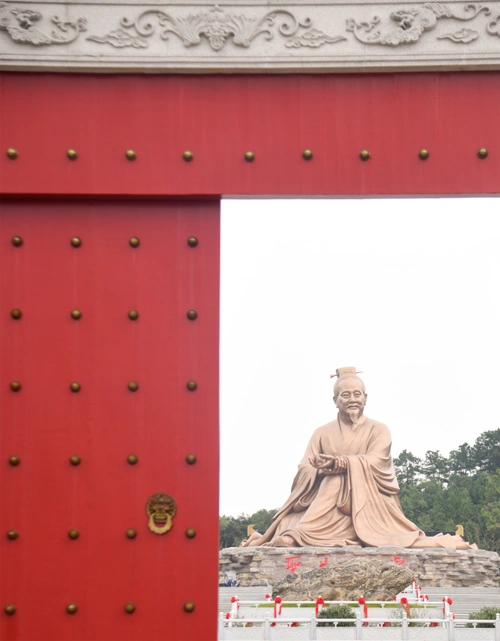 The park draws on one of ancient China's most celebrated political myths: the abdication of Emperor Yao in favor of the virtuous Shun, traditionally dated to around the 23rd century BCE. According to legend, Yao selected Shun not for his bloodline but for his demonstrated wisdom and filial devotion—an ideal that became foundational to Confucian political philosophy, often cited as the original model of government by moral example. Western visitors may notice parallels to Plato's philosopher-kings in the Republic, who rule because of their virtue, or to the Roman story of Cincinnatus, the farmer-dictator who returned willingly to his fields. Both traditions imagine leadership as a moral trust rather than a hereditary right.
The park's structures deliberately echo the architectural vocabulary of the Shang and Zhou dynasties, though nothing here is genuinely ancient. Rammed-earth walls, decorative ceramic urns, and grey-brick pavilions create a reconstructed, archaic atmosphere—closer in spirit to experimental archaeology sites such as Jorvik in York or the reconstructed Iron Age farms of Scandinavia than to preserved monuments like the Parthenon. Named landmarks—Tang Yao Hall, Yu Shun Pavilion, and the Abdication Platform—follow a literal, narrative-driven design, accompanied by stone inscriptions and panels that place each site within the sage-king legends. The visual language is restrained and earthen, allowing the cultural storytelling to carry the experience rather than architectural drama.
What the park lacks in
The park draws on one of ancient China's most celebrated political myths: the abdication of Emperor Yao in favor of the virtuous Shun, traditionally dated to around the 23rd century BCE. According to legend, Yao selected Shun not for his bloodline but for his demonstrated wisdom and filial devotion—an ideal that became foundational to Confucian political philosophy, often cited as the original model of government by moral example. Western visitors may notice parallels to Plato's philosopher-kings in the Republic, who rule because of their virtue, or to the Roman story of Cincinnatus, the farmer-dictator who returned willingly to his fields. Both traditions imagine leadership as a moral trust rather than a hereditary right.
The park's structures deliberately echo the architectural vocabulary of the Shang and Zhou dynasties, though nothing here is genuinely ancient. Rammed-earth walls, decorative ceramic urns, and grey-brick pavilions create a reconstructed, archaic atmosphere—closer in spirit to experimental archaeology sites such as Jorvik in York or the reconstructed Iron Age farms of Scandinavia than to preserved monuments like the Parthenon. Named landmarks—Tang Yao Hall, Yu Shun Pavilion, and the Abdication Platform—follow a literal, narrative-driven design, accompanied by stone inscriptions and panels that place each site within the sage-king legends. The visual language is restrained and earthen, allowing the cultural storytelling to carry the experience rather than architectural drama.
What the park lacks in