Barhu Folk Museum
⭐ 3.50
Old Barhu Banner, Hulunbuir City, Inner Mongolia Autonomous Region, China
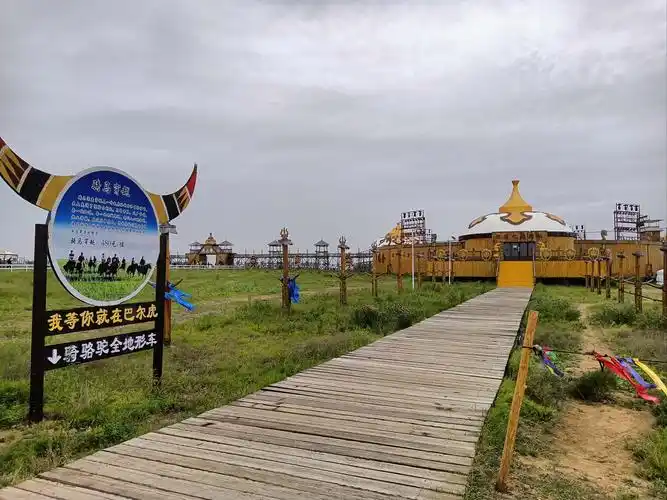 The Barga people are one of the most distinctive branches of the Mongol family tree, descendants of the same nomadic world that produced Genghis Khan in the 12th century. Their name, meaning "red sandy land" in Mongolian, reflects the russet tones of the Hulunbuir grasslands they have inhabited for centuries. The museum, opened in 2004, is the only institution on earth devoted to preserving their story—a distinction akin to finding a museum dedicated solely to the Sámi people in Scandinavia. For Western visitors, it offers a rare window into a culture that once stretched across the Eurasian steppes from the Danube to the Pacific.
The museum's architecture is deliberately understated, echoing the low, functional lines of traditional Mongolian gers and rural outbuildings rather than competing with the grand civic monuments familiar from Beijing or St. Petersburg. Inside, exhibition halls are arranged thematically around tribal origins, costume and household implements, religious practices bridging animist shamanism and Tibetan Buddhism, and the tribe's centuries-long role as border guardians. Like the open-air folk museums of Scandinavia or the ethnographic halls of Vienna's Naturhistorisches Museum, the displays pair genuine artifacts—42 of which are designated as precious relics—with immersive reconstructions that bring abstract history within reach.
The museum's most arresting feature is its suite of high-fidelity wax tableaux: a Barga family migrating with their herds, a shaman in ritual vestments invoking spirits, and a felt-walled ger interior where everyday meals are being prepared. These scenes recall the waxwork traditions of Madame Tussauds and the dioramas of New York's Museum of Natural History, yet they depict a way of life largely invisible to Western audiences. The 270-year frontier history section is equally compelling, documenting how Barga warriors served as a buffer between Qing China, Tsarist Russia, and later the Soviet Union—a geopolitical drama that shaped the modern map of Northeast Asia and culminated in the region's dramatic 20th-century transformations.
Admission is free, though visitors must present a passport or ID card for entry. Opening hours run from 9:00 a.m. to 5:00 p.m. daily, with Monday closures. Touchscreen audio guides are available in Chinese, and signage is primarily in Chinese and Mongolian. Plan to spend 1.5 to 2 hours to absorb the exhibits properly, particularly the wax tableaux and the border-defense gallery, which hold the museum's emotional core.
The museum sits in Altan Emel, the small administrative seat of New Barga Right Banner, a town of fewer than 30,000 residents perched on the edge of one of China's most sparsely populated regions. Public transport is limited, so most travelers arrange a private car or chartered vehicle from Hailar, the regional capital, a drive of roughly 3.5 hours across rolling grasslands. The detour is well worth combining with the nearby Dalai Lake nature reserve and the dramatic border-country scenery where Chinese, Russian, and Mongolian frontiers meet—an itinerary offering the rare combination of cultural depth and sweeping natural grandeur that defines the true Eurasian frontier.
The Barga people are one of the most distinctive branches of the Mongol family tree, descendants of the same nomadic world that produced Genghis Khan in the 12th century. Their name, meaning "red sandy land" in Mongolian, reflects the russet tones of the Hulunbuir grasslands they have inhabited for centuries. The museum, opened in 2004, is the only institution on earth devoted to preserving their story—a distinction akin to finding a museum dedicated solely to the Sámi people in Scandinavia. For Western visitors, it offers a rare window into a culture that once stretched across the Eurasian steppes from the Danube to the Pacific.
The museum's architecture is deliberately understated, echoing the low, functional lines of traditional Mongolian gers and rural outbuildings rather than competing with the grand civic monuments familiar from Beijing or St. Petersburg. Inside, exhibition halls are arranged thematically around tribal origins, costume and household implements, religious practices bridging animist shamanism and Tibetan Buddhism, and the tribe's centuries-long role as border guardians. Like the open-air folk museums of Scandinavia or the ethnographic halls of Vienna's Naturhistorisches Museum, the displays pair genuine artifacts—42 of which are designated as precious relics—with immersive reconstructions that bring abstract history within reach.
The museum's most arresting feature is its suite of high-fidelity wax tableaux: a Barga family migrating with their herds, a shaman in ritual vestments invoking spirits, and a felt-walled ger interior where everyday meals are being prepared. These scenes recall the waxwork traditions of Madame Tussauds and the dioramas of New York's Museum of Natural History, yet they depict a way of life largely invisible to Western audiences. The 270-year frontier history section is equally compelling, documenting how Barga warriors served as a buffer between Qing China, Tsarist Russia, and later the Soviet Union—a geopolitical drama that shaped the modern map of Northeast Asia and culminated in the region's dramatic 20th-century transformations.
Admission is free, though visitors must present a passport or ID card for entry. Opening hours run from 9:00 a.m. to 5:00 p.m. daily, with Monday closures. Touchscreen audio guides are available in Chinese, and signage is primarily in Chinese and Mongolian. Plan to spend 1.5 to 2 hours to absorb the exhibits properly, particularly the wax tableaux and the border-defense gallery, which hold the museum's emotional core.
The museum sits in Altan Emel, the small administrative seat of New Barga Right Banner, a town of fewer than 30,000 residents perched on the edge of one of China's most sparsely populated regions. Public transport is limited, so most travelers arrange a private car or chartered vehicle from Hailar, the regional capital, a drive of roughly 3.5 hours across rolling grasslands. The detour is well worth combining with the nearby Dalai Lake nature reserve and the dramatic border-country scenery where Chinese, Russian, and Mongolian frontiers meet—an itinerary offering the rare combination of cultural depth and sweeping natural grandeur that defines the true Eurasian frontier.