Ulan Butong Ancient Battlefield
⭐ 4.20
Ulan Butong Sumu, New Barag Left Banner, Hulunbuir City, Inner Mongolia Autonomous Region, China
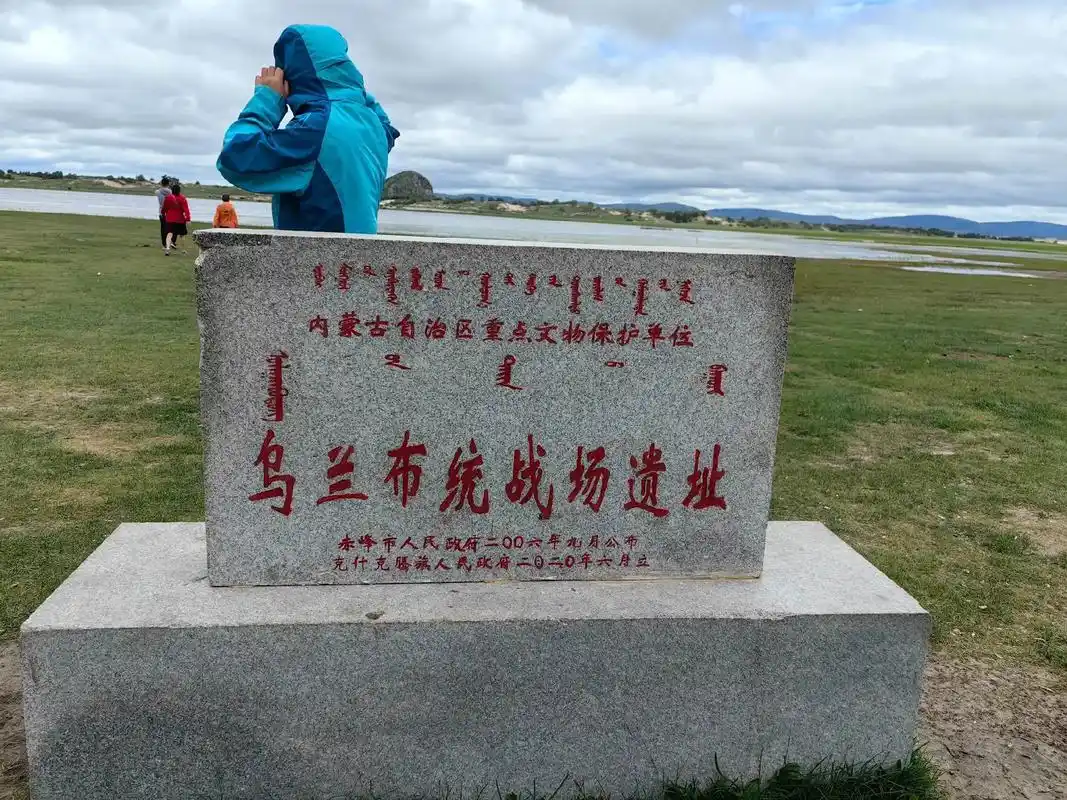 In 1690, the Kangxi Emperor—then just 36 years old—led an army north to confront Galdan Boshugtu Khan of the Dzungar Mongols, a nomadic empire whose reach rivaled the Qing's own. The resulting Battle of Ulan Butong became a turning point in imperial Chinese history, comparable to the frontier campaigns of the Roman legions or the Battle of the Boyne in Ireland, which was fought the very same year. Qing general Tong Guogang fell in the fighting, and his memory is honored at the still waters of General Paozi (the General's Pool). The victory cemented Qing control over the steppe and reshaped the geopolitics of Central Asia for the next two centuries.
The battlefield's surviving sites blend quietly into the pastoral scenery. General Paozi, a tranquil lake said to have formed from the general's blood and tears, anchors the eastern end of the site. Twelve ancient encampment mounds still trace the Qing army's defensive layout, while the Commander's Platform, a natural rise, served as Kangxi's observation post. The solemn Tomb of General Tong provides a contemplative counterpoint to the sweeping vistas. Walking among these modest earthworks invites reflection on how landscape itself can carry the weight of empire.
The terrain combines gentle hills, silver birch forests, sand dunes, and wetland lakes in a mosaic that has charmed Chinese travelers for its startling resemblance to the European countryside—particularly the rolling countryside of Tuscany or the Scottish Borders. More than a hundred television productions have filmed here, including martial-arts classics like "The Legend of the Condor Heroes" and empires-spanning dramas like "Kangxi Dynasty," giving the region its nickname as a "natural film studio." The famous Five-Color Mountain erupts in red, gold, and amber each autumn, drawing photographers from across Asia.
Summer (July–August) brings mild 15–25°C days, wildflowers carpeting the meadows, and grass at its lush green peak—the ideal time for long horseback rides across the open steppe. Autumn, from late September to early October, is widely considered the photographic golden window, when birch forests and larches ignite in fiery reds, golds, and ambers. Winter transforms the prairie into a stark, snow-blanketed wilderness popular with off-road enthusiasts and landscape photographers chasing minimalist compositions. Each season offers a distinctly different mood, and few visitors leave disappointed.
A three-day pass costs around 120 RMB per person and covers most core scenic spots. The area is best reached by car from Chifeng, Chengde, or Beijing, with a 2–3 day stay recommended. On-site activities—horseback riding, ATV tours, and Mongolian-themed photography sessions—are charged separately and should be confirmed in advance. Hiring a local guide adds tremendous depth to the historical experience. Be sure to pack windproof layers, sun protection, and respect for Mongolian customs—always walk around ovoo cairns clockwise.
A classic three-day itinerary might begin with the battlefield memorials and General Paozi, move on to Princess Lake and Five-Color Mountain for the iconic "European landscape" shots, and finish with lesser-known gems such as Toad Hill and the winding Dragon Canyon. Few destinations combine such accessible wilderness with such a layered human story—equal parts history lesson, cinematic pilgrimage, and outdoor escape.
In 1690, the Kangxi Emperor—then just 36 years old—led an army north to confront Galdan Boshugtu Khan of the Dzungar Mongols, a nomadic empire whose reach rivaled the Qing's own. The resulting Battle of Ulan Butong became a turning point in imperial Chinese history, comparable to the frontier campaigns of the Roman legions or the Battle of the Boyne in Ireland, which was fought the very same year. Qing general Tong Guogang fell in the fighting, and his memory is honored at the still waters of General Paozi (the General's Pool). The victory cemented Qing control over the steppe and reshaped the geopolitics of Central Asia for the next two centuries.
The battlefield's surviving sites blend quietly into the pastoral scenery. General Paozi, a tranquil lake said to have formed from the general's blood and tears, anchors the eastern end of the site. Twelve ancient encampment mounds still trace the Qing army's defensive layout, while the Commander's Platform, a natural rise, served as Kangxi's observation post. The solemn Tomb of General Tong provides a contemplative counterpoint to the sweeping vistas. Walking among these modest earthworks invites reflection on how landscape itself can carry the weight of empire.
The terrain combines gentle hills, silver birch forests, sand dunes, and wetland lakes in a mosaic that has charmed Chinese travelers for its startling resemblance to the European countryside—particularly the rolling countryside of Tuscany or the Scottish Borders. More than a hundred television productions have filmed here, including martial-arts classics like "The Legend of the Condor Heroes" and empires-spanning dramas like "Kangxi Dynasty," giving the region its nickname as a "natural film studio." The famous Five-Color Mountain erupts in red, gold, and amber each autumn, drawing photographers from across Asia.
Summer (July–August) brings mild 15–25°C days, wildflowers carpeting the meadows, and grass at its lush green peak—the ideal time for long horseback rides across the open steppe. Autumn, from late September to early October, is widely considered the photographic golden window, when birch forests and larches ignite in fiery reds, golds, and ambers. Winter transforms the prairie into a stark, snow-blanketed wilderness popular with off-road enthusiasts and landscape photographers chasing minimalist compositions. Each season offers a distinctly different mood, and few visitors leave disappointed.
A three-day pass costs around 120 RMB per person and covers most core scenic spots. The area is best reached by car from Chifeng, Chengde, or Beijing, with a 2–3 day stay recommended. On-site activities—horseback riding, ATV tours, and Mongolian-themed photography sessions—are charged separately and should be confirmed in advance. Hiring a local guide adds tremendous depth to the historical experience. Be sure to pack windproof layers, sun protection, and respect for Mongolian customs—always walk around ovoo cairns clockwise.
A classic three-day itinerary might begin with the battlefield memorials and General Paozi, move on to Princess Lake and Five-Color Mountain for the iconic "European landscape" shots, and finish with lesser-known gems such as Toad Hill and the winding Dragon Canyon. Few destinations combine such accessible wilderness with such a layered human story—equal parts history lesson, cinematic pilgrimage, and outdoor escape.