Arxan National Forest Park
⭐ 4.60
Arxan National Forest Park, Arxan City, Hulunbuir, Inner Mongolia Autonomous Region, China
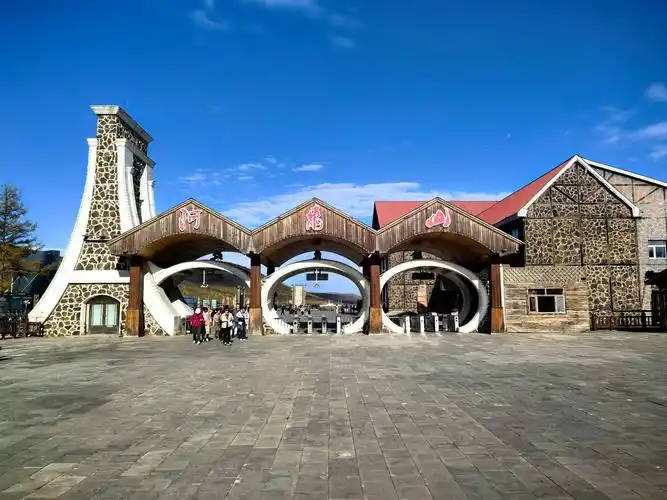 Spanning more than 100,000 hectares, Aershan represents one of Asia's largest volcanic basalt plateaus. The park preserves over 50 volcanic cones and the most intact Quaternary-era basalt formations on the continent—a landscape often likened to Iceland's Lakagigar fields or Italy's Phlegraean Fields. The Shitanglin (Stone Pool Forest) area showcases jagged basalt columns intertwined with primeval larch and birch, illustrating volcanic forces that shaped the region during the Pleistocene epoch, roughly 2.6 million to 12,000 years ago. For travelers familiar with Yellowstone's geothermal wonders or New Zealand's Taupo Volcanic Zone, Aershan offers an equally dramatic yet far less-visited counterpoint, where Ice Age fire meets boreal silence.
The park's eight "Heavenly Lakes" rank among China's most celebrated natural wonders. Tuofengling Crater Lake, the scenic crown jewel, resembles a giant left footprint when viewed from above and rewards visitors who climb its 500-plus stone steps with sweeping vistas of surrounding primeval forest—a panorama comparable to gazing into Norway's glacial fjords or the misty lochs of the Scottish Highlands. The lava-dammed Azalea Lake glows beneath summer wildflowers, while its mirrored surface at dusk evokes the Romantic-era landscapes of Caspar David Friedrich. Together with nine other tectonic pools, these waters form a network that defines the park's ethereal character.
Beyond its geology, Aershan occupies a meaningful place in Mongolian cultural heritage. The park lies within Hulunbuir, traditionally home to nomadic herders whose seasonal migrations shaped Inner Mongolia's pastoral identity for centuries. Local cuisine reflects this heritage: hand-held mutton, ice-boiled lamb, willow catfish, and wild mushrooms offer visitors an authentic taste of steppe and forest traditions. Mongolian yurt-style guesthouses in nearby Tianshan Town provide cultural immersion, while the region's exceptionally dark skies echo the stargazing traditions of Inner Asian nomads who once navigated these vast taigas by starlight.
Tickets cost 285 RMB (free for visitors over 60) and include mandatory shuttle service, valid for 48 hours—a sensible policy given the park's vast scale. Private vehicles are prohibited inside the reserve. Travelers departing from Aershan city should allow 1.5 hours each way, ideally hiring a private car or taking the dedicated tourist shuttle. A well-paced two-day itinerary covers the essentials: Day 1 follows the eastern route through Tuofengling Crater Lake and the dramatic Grand Canyon; Day 2 explores Shitanglin's basalt labyrinth, the tranquil Santan Gorge, Azalea Lake, and the mysteriously ice-free Bu Dong River, whose waters remain unfrozen year-round despite frigid winters.
Summer temperatures average a refreshing 22°C (72°F), making Aershan a popular escape from China's sweltering lowland cities, while mid-to-late September delivers the autumn foliage season when larch, birch, and mountain ash ignite in gold, crimson, and amber—a spectacle comparable to New England's fall colors or Switzerland's Engadin Valley. Even in summer, mornings and evenings can be surprisingly cool, so a light jacket is essential. Visitors should also bring DEET-based insect repellent, as forest mosquitoes are aggressive, and download offline maps since cellular signals weaken in remote areas. Strict fire regulations apply throughout this protected reserve, so campers must use designated facilities only.
Spanning more than 100,000 hectares, Aershan represents one of Asia's largest volcanic basalt plateaus. The park preserves over 50 volcanic cones and the most intact Quaternary-era basalt formations on the continent—a landscape often likened to Iceland's Lakagigar fields or Italy's Phlegraean Fields. The Shitanglin (Stone Pool Forest) area showcases jagged basalt columns intertwined with primeval larch and birch, illustrating volcanic forces that shaped the region during the Pleistocene epoch, roughly 2.6 million to 12,000 years ago. For travelers familiar with Yellowstone's geothermal wonders or New Zealand's Taupo Volcanic Zone, Aershan offers an equally dramatic yet far less-visited counterpoint, where Ice Age fire meets boreal silence.
The park's eight "Heavenly Lakes" rank among China's most celebrated natural wonders. Tuofengling Crater Lake, the scenic crown jewel, resembles a giant left footprint when viewed from above and rewards visitors who climb its 500-plus stone steps with sweeping vistas of surrounding primeval forest—a panorama comparable to gazing into Norway's glacial fjords or the misty lochs of the Scottish Highlands. The lava-dammed Azalea Lake glows beneath summer wildflowers, while its mirrored surface at dusk evokes the Romantic-era landscapes of Caspar David Friedrich. Together with nine other tectonic pools, these waters form a network that defines the park's ethereal character.
Beyond its geology, Aershan occupies a meaningful place in Mongolian cultural heritage. The park lies within Hulunbuir, traditionally home to nomadic herders whose seasonal migrations shaped Inner Mongolia's pastoral identity for centuries. Local cuisine reflects this heritage: hand-held mutton, ice-boiled lamb, willow catfish, and wild mushrooms offer visitors an authentic taste of steppe and forest traditions. Mongolian yurt-style guesthouses in nearby Tianshan Town provide cultural immersion, while the region's exceptionally dark skies echo the stargazing traditions of Inner Asian nomads who once navigated these vast taigas by starlight.
Tickets cost 285 RMB (free for visitors over 60) and include mandatory shuttle service, valid for 48 hours—a sensible policy given the park's vast scale. Private vehicles are prohibited inside the reserve. Travelers departing from Aershan city should allow 1.5 hours each way, ideally hiring a private car or taking the dedicated tourist shuttle. A well-paced two-day itinerary covers the essentials: Day 1 follows the eastern route through Tuofengling Crater Lake and the dramatic Grand Canyon; Day 2 explores Shitanglin's basalt labyrinth, the tranquil Santan Gorge, Azalea Lake, and the mysteriously ice-free Bu Dong River, whose waters remain unfrozen year-round despite frigid winters.
Summer temperatures average a refreshing 22°C (72°F), making Aershan a popular escape from China's sweltering lowland cities, while mid-to-late September delivers the autumn foliage season when larch, birch, and mountain ash ignite in gold, crimson, and amber—a spectacle comparable to New England's fall colors or Switzerland's Engadin Valley. Even in summer, mornings and evenings can be surprisingly cool, so a light jacket is essential. Visitors should also bring DEET-based insect repellent, as forest mosquitoes are aggressive, and download offline maps since cellular signals weaken in remote areas. Strict fire regulations apply throughout this protected reserve, so campers must use designated facilities only.