Morin Dawa Banner Folk Village
⭐ 4.50
Morin Dawa Banner Folk Village, Morin Dawa Daur Autonomous Banner, Hulunbuir City, Inner Mongolia Autonomous Region, China
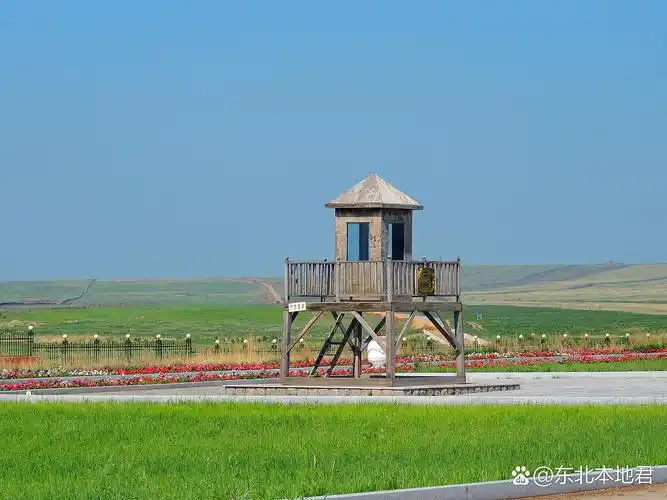 The Daur are among the oldest continuous communities in Northeast Asia, with ancestral ties to the Khitan people who ruled the Liao Dynasty (907–1125 CE) across what is now Mongolia, Manchuria, and parts of Siberia. After the dynasty's collapse, groups migrated south to the Nenjiang River valley—then the Qing Empire's northeastern frontier (a region Westerners know as Manchuria). Tengke Village, founded during this late-Qing resettlement, has remained a self-contained Daur enclave for over a century. Think of it as a Normandy of China's far north—a place where folk language, rituals, and crafts survive intact.
The village's 19 traditional L-shaped log houses (mukelenge) echo the building traditions of northern Russia and Scandinavia—sturdy wooden cabins with notched corners and shingled roofs, designed to withstand brutal winters. Inside, raised clay kang sleeping platforms radiate warmth from a central stove, with the stove's opening directed according to specific spiritual taboos. It's a layout that will feel familiar to travelers who have explored Finnish farmhouses or Russian dachas, yet every detail carries distinct Daur symbolism. The whole complex covers roughly 76,000 square meters, preserving the original street grid.
This is one of China's officially designated "ethnic minority characteristic villages," and for good reason: it concentrates the Daur's intangible heritage in one place. In the village's folk museum and crafts center, inheritors teach Hanika paper-cut art (a stylized paper-doll tradition akin to Scandinavian paper-cutting or Mexican papel picado) and demonstrate birch-bark boat-making, a craft shared with Siberian and indigenous peoples of the Amur basin. Visitors can join Luji Gele circle dances and try their hand at beikuzhi, the Daur stick-and-ball game that some historians link to the Mongol-era origins of modern field hockey.
The village lies roughly two hours by car from Hailar Airport, with no public transit—rental car or private charter is essential. On-site accommodation sleeps about 300 across a reception center and themed homestays; reservations should be made one to two weeks ahead, longer in peak July–August. Major craft experiences require advance booking. Pack mosquito repellent, an offline translation app (English is rare), and always ask before photographing residents—a small courtesy that opens doors to warm hospitality.
June through September brings cool, dry weather perfect for hiking, foraging, and the legendary stargazing—the area's zero light pollution has earned it a place on China's most-beautiful-skies lists. Winter opens a different world: ice hockey on frozen ponds, dog-sledding, and steaming iron-pot tea beside the stove. Whether you come for the warm months of folk festivals or the silent white wonderland of December, this is genuine cultural immersion in a region few Western travelers add to their China itinerary—and that, more than any checklist, is its true draw.
The Daur are among the oldest continuous communities in Northeast Asia, with ancestral ties to the Khitan people who ruled the Liao Dynasty (907–1125 CE) across what is now Mongolia, Manchuria, and parts of Siberia. After the dynasty's collapse, groups migrated south to the Nenjiang River valley—then the Qing Empire's northeastern frontier (a region Westerners know as Manchuria). Tengke Village, founded during this late-Qing resettlement, has remained a self-contained Daur enclave for over a century. Think of it as a Normandy of China's far north—a place where folk language, rituals, and crafts survive intact.
The village's 19 traditional L-shaped log houses (mukelenge) echo the building traditions of northern Russia and Scandinavia—sturdy wooden cabins with notched corners and shingled roofs, designed to withstand brutal winters. Inside, raised clay kang sleeping platforms radiate warmth from a central stove, with the stove's opening directed according to specific spiritual taboos. It's a layout that will feel familiar to travelers who have explored Finnish farmhouses or Russian dachas, yet every detail carries distinct Daur symbolism. The whole complex covers roughly 76,000 square meters, preserving the original street grid.
This is one of China's officially designated "ethnic minority characteristic villages," and for good reason: it concentrates the Daur's intangible heritage in one place. In the village's folk museum and crafts center, inheritors teach Hanika paper-cut art (a stylized paper-doll tradition akin to Scandinavian paper-cutting or Mexican papel picado) and demonstrate birch-bark boat-making, a craft shared with Siberian and indigenous peoples of the Amur basin. Visitors can join Luji Gele circle dances and try their hand at beikuzhi, the Daur stick-and-ball game that some historians link to the Mongol-era origins of modern field hockey.
The village lies roughly two hours by car from Hailar Airport, with no public transit—rental car or private charter is essential. On-site accommodation sleeps about 300 across a reception center and themed homestays; reservations should be made one to two weeks ahead, longer in peak July–August. Major craft experiences require advance booking. Pack mosquito repellent, an offline translation app (English is rare), and always ask before photographing residents—a small courtesy that opens doors to warm hospitality.
June through September brings cool, dry weather perfect for hiking, foraging, and the legendary stargazing—the area's zero light pollution has earned it a place on China's most-beautiful-skies lists. Winter opens a different world: ice hockey on frozen ponds, dog-sledding, and steaming iron-pot tea beside the stove. Whether you come for the warm months of folk festivals or the silent white wonderland of December, this is genuine cultural immersion in a region few Western travelers add to their China itinerary—and that, more than any checklist, is its true draw.