Mausoleum of Genghis Khan
⭐ 4.30
Ordos City, Inner Mongolia, China
 **Historical Context**
Long before the Ming Dynasty built the Forbidden City or the Renaissance bloomed in Florence, Genghis Khan united the Mongol tribes in 1206 and forged the largest contiguous land empire in human history—stretching from Korea to Hungary. Often compared to Alexander the Great or Julius Caesar in terms of strategic genius, his conquests reshaped global trade, diplomacy, and warfare. After his death in 1227, his followers established the "Eight White Palaces" tradition to honor his spirit, an unbroken ritual lineage that has endured for 800 years and continues to draw scholars, diplomats, and history enthusiasts from around the world.
**Architecture**
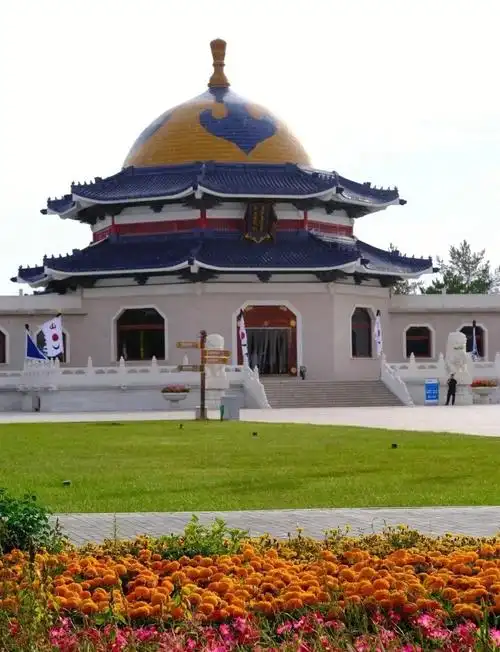
The mausoleum complex, completed in its current form in 1954 and expanded since, presents a striking architectural statement on the otherwise flat grasslands. Three interconnected halls soar 24 to 26 meters high, their gilded onion-shaped domes evoking both traditional Mongolian gers (yurts) and the imperial temples of Central Asia. The design resembles a great golden eagle in mid-flight, Mongolia's most sacred national symbol. Visitors climb 99 steps—a number considered supremely auspicious in Mongol cosmology—before entering halls adorned with vivid murals depicting the conquests of Kublai Khan and the daily life of the steppe empires.
**Cultural Significance**
The Genghis Khan worship ritual has been recognized as a national-level intangible cultural heritage, preserved primarily through the Darkhad tribe, hereditary custodians who have tended this sacred site since the 13th century—much like the hereditary guardians of the Vatican or Japan's imperial shrines. Four major ceremonies are held annually, with the grand spring Naadam-style ritual, known as Tsagaan Sülde, featuring traditional offerings, horse racing, and wrestling. Sacred elements including the Sülde (a banner symbolizing the Khan's spirit) and ovoo cairns connect visitors to centuries of nomadic spiritual practice that survived Soviet suppression and modern upheaval.
**Practical Information**
The site lies roughly 30 kilometers east of Ordos city, accessible most conveniently by private car or hired driver, as public buses are infrequent and transfers are complicated. Admission starts at 90 yuan, with peak-season hours from 7:30 to 18:30 (August). The 10-square-kilometer scenic area includes 34 points of interest. Important etiquette: photography is strictly forbidden inside the halls, hats must be removed, voices lowered, and thresholds never stepped upon. When walking around any altar, always move clockwise—a practice mirrored in Tibetan Buddhist pilgrimages across Asia.
**Why Visit**
For travelers who found themselves captivated by the Mongol-themed exhibitions at London's British Museum or the Silk Road galleries of New York's Met, this site offers something no museum can replicate: a living, breathing connection to an empire that once ruled half the known world. History enthusiasts will find depth here that surpasses even the more famous Terracotta Warriors in cultural intimacy, while photographers will be rewarded by the dramatic interplay of golden domes against infinite grassland horizons. Arrive at opening time to avoid the midday heat and increase your chances of witnessing a traditional blessing ceremony—a memory that, like the Khan's legacy, will endure long after you leave.
**Historical Context**
Long before the Ming Dynasty built the Forbidden City or the Renaissance bloomed in Florence, Genghis Khan united the Mongol tribes in 1206 and forged the largest contiguous land empire in human history—stretching from Korea to Hungary. Often compared to Alexander the Great or Julius Caesar in terms of strategic genius, his conquests reshaped global trade, diplomacy, and warfare. After his death in 1227, his followers established the "Eight White Palaces" tradition to honor his spirit, an unbroken ritual lineage that has endured for 800 years and continues to draw scholars, diplomats, and history enthusiasts from around the world.
**Architecture**
The mausoleum complex, completed in its current form in 1954 and expanded since, presents a striking architectural statement on the otherwise flat grasslands. Three interconnected halls soar 24 to 26 meters high, their gilded onion-shaped domes evoking both traditional Mongolian gers (yurts) and the imperial temples of Central Asia. The design resembles a great golden eagle in mid-flight, Mongolia's most sacred national symbol. Visitors climb 99 steps—a number considered supremely auspicious in Mongol cosmology—before entering halls adorned with vivid murals depicting the conquests of Kublai Khan and the daily life of the steppe empires.
**Cultural Significance**
The Genghis Khan worship ritual has been recognized as a national-level intangible cultural heritage, preserved primarily through the Darkhad tribe, hereditary custodians who have tended this sacred site since the 13th century—much like the hereditary guardians of the Vatican or Japan's imperial shrines. Four major ceremonies are held annually, with the grand spring Naadam-style ritual, known as Tsagaan Sülde, featuring traditional offerings, horse racing, and wrestling. Sacred elements including the Sülde (a banner symbolizing the Khan's spirit) and ovoo cairns connect visitors to centuries of nomadic spiritual practice that survived Soviet suppression and modern upheaval.
**Practical Information**
The site lies roughly 30 kilometers east of Ordos city, accessible most conveniently by private car or hired driver, as public buses are infrequent and transfers are complicated. Admission starts at 90 yuan, with peak-season hours from 7:30 to 18:30 (August). The 10-square-kilometer scenic area includes 34 points of interest. Important etiquette: photography is strictly forbidden inside the halls, hats must be removed, voices lowered, and thresholds never stepped upon. When walking around any altar, always move clockwise—a practice mirrored in Tibetan Buddhist pilgrimages across Asia.
**Why Visit**
For travelers who found themselves captivated by the Mongol-themed exhibitions at London's British Museum or the Silk Road galleries of New York's Met, this site offers something no museum can replicate: a living, breathing connection to an empire that once ruled half the known world. History enthusiasts will find depth here that surpasses even the more famous Terracotta Warriors in cultural intimacy, while photographers will be rewarded by the dramatic interplay of golden domes against infinite grassland horizons. Arrive at opening time to avoid the midday heat and increase your chances of witnessing a traditional blessing ceremony—a memory that, like the Khan's legacy, will endure long after you leave.