Aiding Lake
⭐ 3.20
Aiding Lake Scenic Area, Gaochang District, Turpan City, Xinjiang Uygur Autonomous Region, China
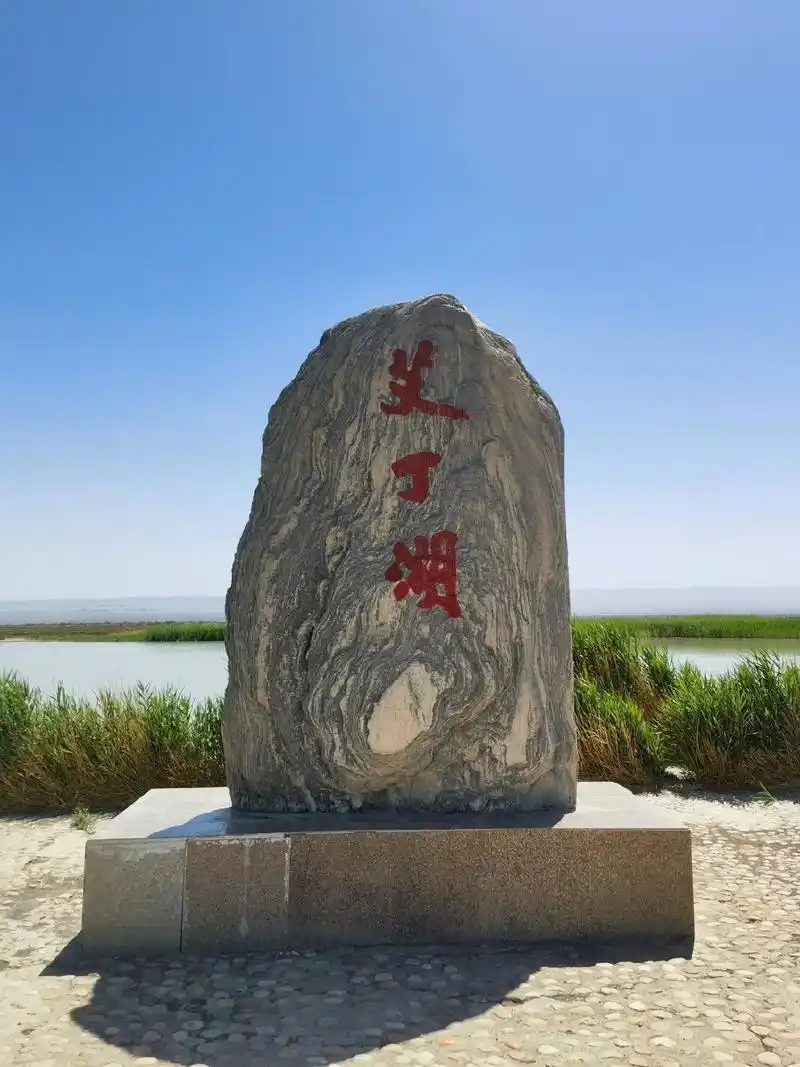 Aiding Lake owes its extraordinary depth to the same tectonic forces that lifted the Himalayas. When the continental crust rifted and subsided, a basin was gouged more than 150 meters below sea level, framed today by the soaring Bogda and Karawucheng ranges. The lake once served as the terminal sump for snowmelt laden with salts and sulfates, making it one of China's most mineral-rich bodies of water. The natural comparison is the Dead Sea, its geographical cousin on the other side of Asia, while geologists also liken it to the great rift valleys of East Africa—landscapes where the splitting of continents leaves depressions far beneath the oceans.
Where water once stretched to the horizon, there is now a brittle crust of pure white that crunches underfoot and glows pearl-pink at sunset. Geologists call the site a natural classroom, where evaporite formations, salt polygons, and wind-sculpted yardangs reveal a 200-million-year story of climate and chemistry. Photographers compare the gleaming expanse to Bolivia's Salar de Uyuni, though here the backdrop is rugged desert peaks rather than high-altitude plateau, lending the scene a sharper, more theatrical edge.
Human history clings stubbornly to the saline soil. On the south shore lie the remains of Aiding Lake Ancient Village, the only known settlement ever built below sea level, where sunken foundations and pottery shards hint at how communities survived in this punishing basin. Flanking the lake stand China's lowest beacon towers, squat mudbrick sentinels that once relayed signals along the Silk Road—rough contemporaries of Rome's desert frontier forts along the Syrian limes or the beacon chains that guarded Hadrian's Wall, each a reminder of empire reaching into wilderness.
Recent ecological work under a national wetland park pilot scheme has begun to breathe life back into the dust. By 2024, roughly 500,000 square meters of shallow pools had returned, fringed by hardy saxaul and saltbush, while passing bar-headed geese and the occasional wild hare prove that life persists against the odds. In winter, thin sheets of water mirror the sky and animate the silent plain with surprising delicacy.
Aiding Lake lies about 50 kilometers south of Turpan, an hour's drive through vineyards and past the Flaming Mountains corridor—charter a car or self-drive, since public transport is limited. Admission runs roughly 30 yuan, covering both the lake and the ancient village. Wooden boardwalks lead across fragile salt crusts to the official "Lowest Point in China" marker, where standing in the so-called "navel of the earth" offers an irresistible photo moment and the wry boast that every subsequent step in life is uphill.
Visit between October and April; in summer, ground temperatures routinely top 50 °C (122 °F) and midday excursions become genuinely dangerous. Pack ample water, sunscreen, sunglasses, and sturdy non-slip shoes for the crystalline terrain. Soft evening light, when the salt flats turn silver and rose, is the golden hour for photography. The site pairs naturally with nearby Flaming Mountains and Grape Valley for a memorable half-day loop out of Turpan, blending geology, history, and stark Central Asian beauty into a single striking excursion.
Aiding Lake owes its extraordinary depth to the same tectonic forces that lifted the Himalayas. When the continental crust rifted and subsided, a basin was gouged more than 150 meters below sea level, framed today by the soaring Bogda and Karawucheng ranges. The lake once served as the terminal sump for snowmelt laden with salts and sulfates, making it one of China's most mineral-rich bodies of water. The natural comparison is the Dead Sea, its geographical cousin on the other side of Asia, while geologists also liken it to the great rift valleys of East Africa—landscapes where the splitting of continents leaves depressions far beneath the oceans.
Where water once stretched to the horizon, there is now a brittle crust of pure white that crunches underfoot and glows pearl-pink at sunset. Geologists call the site a natural classroom, where evaporite formations, salt polygons, and wind-sculpted yardangs reveal a 200-million-year story of climate and chemistry. Photographers compare the gleaming expanse to Bolivia's Salar de Uyuni, though here the backdrop is rugged desert peaks rather than high-altitude plateau, lending the scene a sharper, more theatrical edge.
Human history clings stubbornly to the saline soil. On the south shore lie the remains of Aiding Lake Ancient Village, the only known settlement ever built below sea level, where sunken foundations and pottery shards hint at how communities survived in this punishing basin. Flanking the lake stand China's lowest beacon towers, squat mudbrick sentinels that once relayed signals along the Silk Road—rough contemporaries of Rome's desert frontier forts along the Syrian limes or the beacon chains that guarded Hadrian's Wall, each a reminder of empire reaching into wilderness.
Recent ecological work under a national wetland park pilot scheme has begun to breathe life back into the dust. By 2024, roughly 500,000 square meters of shallow pools had returned, fringed by hardy saxaul and saltbush, while passing bar-headed geese and the occasional wild hare prove that life persists against the odds. In winter, thin sheets of water mirror the sky and animate the silent plain with surprising delicacy.
Aiding Lake lies about 50 kilometers south of Turpan, an hour's drive through vineyards and past the Flaming Mountains corridor—charter a car or self-drive, since public transport is limited. Admission runs roughly 30 yuan, covering both the lake and the ancient village. Wooden boardwalks lead across fragile salt crusts to the official "Lowest Point in China" marker, where standing in the so-called "navel of the earth" offers an irresistible photo moment and the wry boast that every subsequent step in life is uphill.
Visit between October and April; in summer, ground temperatures routinely top 50 °C (122 °F) and midday excursions become genuinely dangerous. Pack ample water, sunscreen, sunglasses, and sturdy non-slip shoes for the crystalline terrain. Soft evening light, when the salt flats turn silver and rose, is the golden hour for photography. The site pairs naturally with nearby Flaming Mountains and Grape Valley for a memorable half-day loop out of Turpan, blending geology, history, and stark Central Asian beauty into a single striking excursion.