Gaochang Ancient City
⭐ 4.50
Gaochang Ancient City, Gaochang District, Turpan City, Xinjiang Uygur Autonomous Region, China
 **Historical Context**
Spanning fourteen centuries, Gaochang's history parallels that of Europe's great medieval capitals — from Charlemagne's Aachen to Constantinople under the Paleologoi — yet its origins predate them all. Established around 48 BCE as a Han frontier garrison called "Gaochang Wall," it evolved through the Former Liang, Qu kingdom, Tang dynasty's Xizhou prefecture, and Uyghur-ruled Qocho. Its fortunes rose and fell with the Silk Road: when caravans flowed, Gaochang thrived; when trade collapsed after the Mongol upheavals of the late 13th century, the city was abandoned to the desert. The site thus preserves an unbroken archive of Sino-Central Asian civilization unmatched north of the Himalayas.
**Architecture**
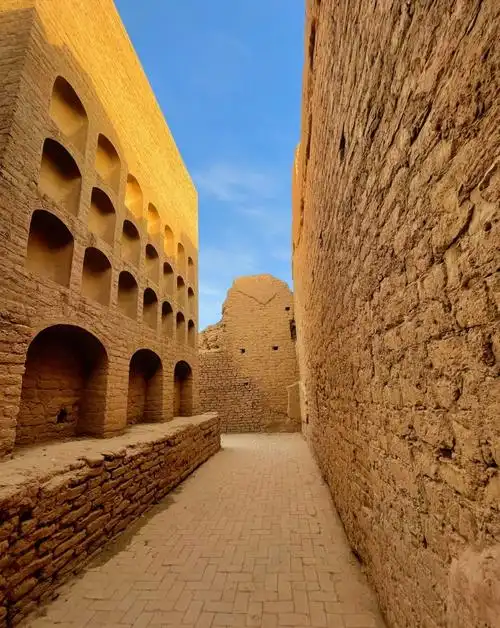
The city's irregular rectangular plan measures 5.4 kilometers in perimeter — roughly comparable to the walls of medieval Carcassonne but on a far grander scale. Modeled on Tang-dynasty Chang'an, the citadel is divided into three concentric enclosures: outer city, inner city, and palace city. Rammed-earth walls, with bases 12 meters thick and surviving heights exceeding 10 meters, still bear the scars of nine monumental gateways, barbicans, and projecting bastions. Built entirely of unfired mud — much like the lost citadel of Bam in Iran or the mud-brick citadels of Yemen — the construction has defied centuries of wind and sun, making Gaochang a masterwork of pre-industrial earth engineering.
**Cultural Significance**
Gaochang was the meeting point where Buddhist monks, Sogdian merchants, Manichaean priests, and Nestorian missionaries once crossed paths. In 628 CE, the celebrated pilgrim Xuanzang paused here for a month, lecturing at the grand Buddhist temple under the patronage of King Qu Wentai — a stop comparable in significance to Marco Polo's later audiences with Kublai Khan. Surviving fragments reveal lotus-pattern murals, a Manichaean chapel, and stupas that whisper of a cosmopolitan age when the oasis was as religiously diverse as contemporary Córdoba or Samarkand.
**Practical Visit Information**
The site lies 40 kilometers southeast of Turpan city in the Flame Mountains region, best reached by taxi, hired car, or organized tour — public transport is limited. Admission is 70 RMB, including a mandatory shuttle bus between key zones. Opening hours run 8:00 AM to 9:00 PM in peak season. Allow two to three hours for the full circuit, which covers the Khan's Fortress, the Great Buddhist Temple in the southwest, the Small Buddhist Temple in the southeast, and panoramic stretches of the north wall where photography is especially rewarding.
**Why Visit**
For travelers seeking the romance of the Silk Road beyond glossy tourist routes, Gaochang delivers a rare authenticity: no reconstructed buildings, no crowds, only the raw poetry of sun-baked ruins stretching toward the Flaming Mountains. Few places on earth allow a Western visitor to walk where caravans once carried silk, spices, and scripture between Rome and Chang'an. Combined with the nearby Bezeklik Caves and the Jiaohe ruins, it forms the heart of any serious Turpan itinerary.
**Historical Context**
Spanning fourteen centuries, Gaochang's history parallels that of Europe's great medieval capitals — from Charlemagne's Aachen to Constantinople under the Paleologoi — yet its origins predate them all. Established around 48 BCE as a Han frontier garrison called "Gaochang Wall," it evolved through the Former Liang, Qu kingdom, Tang dynasty's Xizhou prefecture, and Uyghur-ruled Qocho. Its fortunes rose and fell with the Silk Road: when caravans flowed, Gaochang thrived; when trade collapsed after the Mongol upheavals of the late 13th century, the city was abandoned to the desert. The site thus preserves an unbroken archive of Sino-Central Asian civilization unmatched north of the Himalayas.
**Architecture**
The city's irregular rectangular plan measures 5.4 kilometers in perimeter — roughly comparable to the walls of medieval Carcassonne but on a far grander scale. Modeled on Tang-dynasty Chang'an, the citadel is divided into three concentric enclosures: outer city, inner city, and palace city. Rammed-earth walls, with bases 12 meters thick and surviving heights exceeding 10 meters, still bear the scars of nine monumental gateways, barbicans, and projecting bastions. Built entirely of unfired mud — much like the lost citadel of Bam in Iran or the mud-brick citadels of Yemen — the construction has defied centuries of wind and sun, making Gaochang a masterwork of pre-industrial earth engineering.
**Cultural Significance**
Gaochang was the meeting point where Buddhist monks, Sogdian merchants, Manichaean priests, and Nestorian missionaries once crossed paths. In 628 CE, the celebrated pilgrim Xuanzang paused here for a month, lecturing at the grand Buddhist temple under the patronage of King Qu Wentai — a stop comparable in significance to Marco Polo's later audiences with Kublai Khan. Surviving fragments reveal lotus-pattern murals, a Manichaean chapel, and stupas that whisper of a cosmopolitan age when the oasis was as religiously diverse as contemporary Córdoba or Samarkand.
**Practical Visit Information**
The site lies 40 kilometers southeast of Turpan city in the Flame Mountains region, best reached by taxi, hired car, or organized tour — public transport is limited. Admission is 70 RMB, including a mandatory shuttle bus between key zones. Opening hours run 8:00 AM to 9:00 PM in peak season. Allow two to three hours for the full circuit, which covers the Khan's Fortress, the Great Buddhist Temple in the southwest, the Small Buddhist Temple in the southeast, and panoramic stretches of the north wall where photography is especially rewarding.
**Why Visit**
For travelers seeking the romance of the Silk Road beyond glossy tourist routes, Gaochang delivers a rare authenticity: no reconstructed buildings, no crowds, only the raw poetry of sun-baked ruins stretching toward the Flaming Mountains. Few places on earth allow a Western visitor to walk where caravans once carried silk, spices, and scripture between Rome and Chang'an. Combined with the nearby Bezeklik Caves and the Jiaohe ruins, it forms the heart of any serious Turpan itinerary.