Karez
⭐ 3.20
Yizhou District, Hami, Xinjiang, China
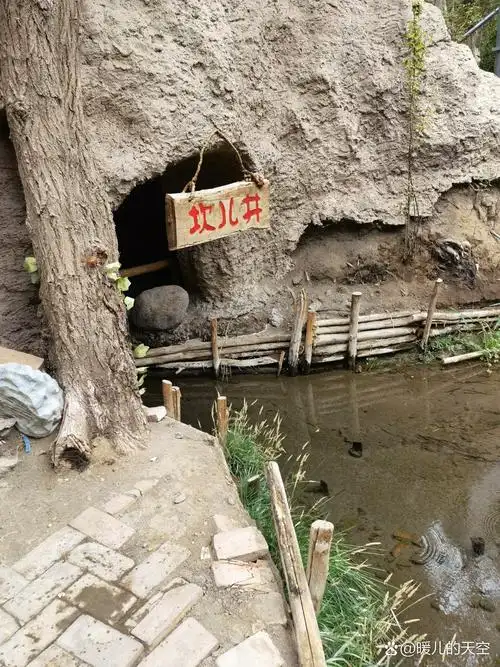 The karez system traces its roots to China's Western Han Dynasty and reached maturity during the Qing era, though its true ancestry lies even further west: it is essentially the same qanat technology developed in ancient Persia, with Iranian examples now recognized by UNESCO. Hami sits at the eastern edge of the Turpan-Hami Basin, one of two major karez heartlands in Xinjiang. The tradition gained recognition as a National Key Cultural Relic in 2006, its craftsmanship joined China's intangible heritage list in 2014, and in 2024 Turpan's sister karez network was inscribed as a World Heritage Irrigation Structure, a distinction akin to honoring Europe's Roman aqueducts. Standing beside a vertical shaft, one witnesses an unbroken engineering lineage stretching from Persia to the Pacific.
The genius of the karez lies in its elegant simplicity. Four elements work in concert: vertical shafts, sunk at regular intervals, served as construction access, ventilation, and light wells; underground canals carry meltwater silently across the desert; open surface channels distribute it to fields; and reservoir pools regulate supply. The entire network relies on natural slope, requiring not a single pump or watt of electricity. By keeping water buried, the system loses almost nothing to evaporation, an extraordinary advantage in a region where summer temperatures routinely exceed 40°C. It is, quite simply, an aqueduct turned upside down and run beneath the earth.
Taku Karez, located just outside Hami city in Erbao Township, was excavated in 1917 and remains a working "living fossil." Its 110 surviving vertical shafts line up like a procession across the landscape, and sections of the buried canal can be peered into where stones have been removed. Nearby, a traditional wooden waterwheel turns lazily beside the courtyard of a local "bayi" landlord's house, recreating the atmosphere of a vanished Silk Road oasis. The air emerging from the shafts is startlingly cold, often 15°C below the scorching surface, which makes the site a blissful retreat in July and August.
Culturally, these flowing wells sustained the oases that allowed travelers, merchants, and Buddhist missionaries to cross the Taklamakan and Gobi deserts along the northern Silk Road. Hami's famous melons and seedless grapes owe their sweetness to karez water that has nourished the soil for centuries. The system embodies the quiet cooperation of Uyghur, Han, and Hui communities who maintained it together, and it stands as enduring testimony to human adaptation in landscapes where most civilizations would have surrendered to the sand.
Practical visiting is straightforward. Admission is roughly 20 yuan, parking is free and easy for self-drivers, and taxis from Hami city are inexpensive. The site covers about ten mu, a comfortable walking scale. Arrive before 9 a.m. or after 4:30 p.m. in summer to dodge peak surface heat, bring water, sunscreen, and sturdy non-slip shoes, since the stone steps around the shafts can be slick. Food options on-site are minimal, so pack a snack. Visitors seeking thrills will be disappointed; this is a place for those drawn to quiet marvels of human ingenuity rather than spectacle.
The karez rewards travelers who pair it with Hami's other treasures: the lively night market for lamb skewers and melon slices, the haunting tombs of the Hui kings, and the vast silent Gobi beyond. Taken together, these stops trace the full arc of oasis life, from the water that made it possible to the civilizations it sustained. For anyone interested in hydraulic history, sustainable design, or simply standing inside a working piece of two-thousand-year-old engineering, Taku Karez offers a rare and cooling encounter with one of Central Asia's most understated wonders.
The karez system traces its roots to China's Western Han Dynasty and reached maturity during the Qing era, though its true ancestry lies even further west: it is essentially the same qanat technology developed in ancient Persia, with Iranian examples now recognized by UNESCO. Hami sits at the eastern edge of the Turpan-Hami Basin, one of two major karez heartlands in Xinjiang. The tradition gained recognition as a National Key Cultural Relic in 2006, its craftsmanship joined China's intangible heritage list in 2014, and in 2024 Turpan's sister karez network was inscribed as a World Heritage Irrigation Structure, a distinction akin to honoring Europe's Roman aqueducts. Standing beside a vertical shaft, one witnesses an unbroken engineering lineage stretching from Persia to the Pacific.
The genius of the karez lies in its elegant simplicity. Four elements work in concert: vertical shafts, sunk at regular intervals, served as construction access, ventilation, and light wells; underground canals carry meltwater silently across the desert; open surface channels distribute it to fields; and reservoir pools regulate supply. The entire network relies on natural slope, requiring not a single pump or watt of electricity. By keeping water buried, the system loses almost nothing to evaporation, an extraordinary advantage in a region where summer temperatures routinely exceed 40°C. It is, quite simply, an aqueduct turned upside down and run beneath the earth.
Taku Karez, located just outside Hami city in Erbao Township, was excavated in 1917 and remains a working "living fossil." Its 110 surviving vertical shafts line up like a procession across the landscape, and sections of the buried canal can be peered into where stones have been removed. Nearby, a traditional wooden waterwheel turns lazily beside the courtyard of a local "bayi" landlord's house, recreating the atmosphere of a vanished Silk Road oasis. The air emerging from the shafts is startlingly cold, often 15°C below the scorching surface, which makes the site a blissful retreat in July and August.
Culturally, these flowing wells sustained the oases that allowed travelers, merchants, and Buddhist missionaries to cross the Taklamakan and Gobi deserts along the northern Silk Road. Hami's famous melons and seedless grapes owe their sweetness to karez water that has nourished the soil for centuries. The system embodies the quiet cooperation of Uyghur, Han, and Hui communities who maintained it together, and it stands as enduring testimony to human adaptation in landscapes where most civilizations would have surrendered to the sand.
Practical visiting is straightforward. Admission is roughly 20 yuan, parking is free and easy for self-drivers, and taxis from Hami city are inexpensive. The site covers about ten mu, a comfortable walking scale. Arrive before 9 a.m. or after 4:30 p.m. in summer to dodge peak surface heat, bring water, sunscreen, and sturdy non-slip shoes, since the stone steps around the shafts can be slick. Food options on-site are minimal, so pack a snack. Visitors seeking thrills will be disappointed; this is a place for those drawn to quiet marvels of human ingenuity rather than spectacle.
The karez rewards travelers who pair it with Hami's other treasures: the lively night market for lamb skewers and melon slices, the haunting tombs of the Hui kings, and the vast silent Gobi beyond. Taken together, these stops trace the full arc of oasis life, from the water that made it possible to the civilizations it sustained. For anyone interested in hydraulic history, sustainable design, or simply standing inside a working piece of two-thousand-year-old engineering, Taku Karez offers a rare and cooling encounter with one of Central Asia's most understated wonders.