Jilin Shipyard Ruins
⭐ 3.20
Longtan District, Jilin City, Jilin Province, China
 The Ashihada carvings date to a fascinating chapter of world history. In 1421, as the Hundred Years' War reshaped France and Florence's great cathedral dome was being raised over Tuscany, Ming emperor Yongle was extending Chinese power deep into the Amur River basin, commissioning General Liu Qing to build a massive shipyard near present-day Jilin. The site supplied grain barges for military operations reaching the Mongolian frontier and beyond—a logistical achievement rivaling in scale Venice's legendary Arsenal. Two surviving inscriptions, cut directly into riverside cliffs, document Liu Qing's three expeditions and remain essential primary sources for scholars of Ming frontier policy.
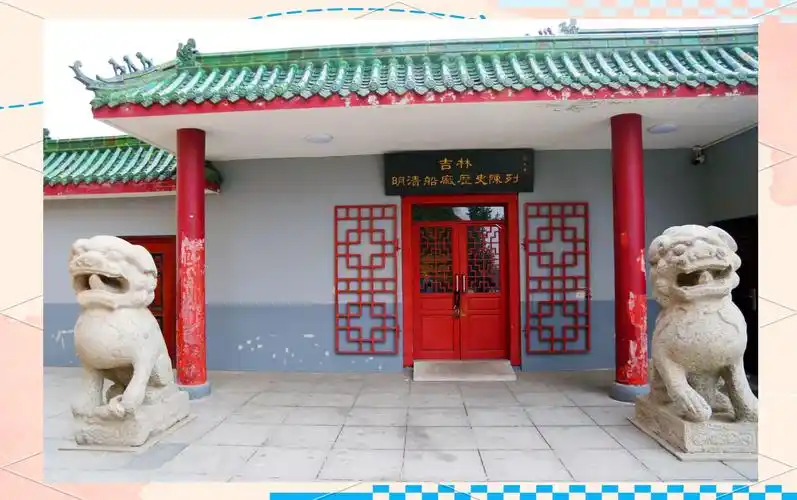
The compact 1,400-square-meter museum nestles between mountain and river, its thoughtful placement complementing rather than competing with Ming-era surroundings. Inside, an 180-square-meter exhibition hall uses scale models and historical documents to reconstruct the original 15th-century shipyard layout. Outside, purpose-built pavilions mimic traditional Ming architectural forms, framing the cliff inscriptions like an open-air gallery. This pavilion-cliff-river arrangement creates a contemplative atmosphere reminiscent of medieval European wayside shrines or the dramatic settings of carved inscriptions found across the ancient Mediterranean world, where stone, architecture, and landscape were designed to inspire awe.
Designated one of China's National Key Cultural Relics Protection Units in 2006, the Ashihada site fills a critical gap in the country's documented Ming-era heritage. For historians, the inscriptions are invaluable primary sources on Ming administration of its vast northern frontier, including governance of the Amur region and the strategic Nurgan Regional Military Commission. The site's 2024 designation as a National Grade-Three Museum further cemented its scholarly standing, while making it increasingly attractive for academic study tours and history enthusiasts seeking lesser-known treasures beyond China's better-trodden imperial landmarks.
Admission is free, though visitors should reserve in advance or register on arrival. Opening hours run 9:00 to 16:30 in summer and 9:00 to 16:00 in winter, with Mondays reserved for maintenance. There is currently no English signage or guided material, so foreign visitors are strongly advised to bring a translation app or hire a Chinese-speaking guide. The museum prohibits food, drinks, and touching of artifacts. Located roughly 10 kilometers from central Jilin, the site is most easily reached by taxi or private car.
Plan to arrive around 9:30 AM and allow three to four hours: begin in the museum's indoor exhibits to absorb the historical context, then walk five minutes to the cliff carvings to read the 600-year-old inscriptions in situ, and finish with a leisurely stroll along the Songhua River boardwalk. Summer offers cool river breezes and lush greenery, but winter is equally magical—the surrounding area lies within Jilin's famous rime-frost corridor, when hoarfrost transforms riverside trees into crystalline sculptures and the icy river mirrors the pale stone of ancient inscriptions. For travelers seeking an uncrowded encounter with one of China's most singular Ming-era monuments, this riverside ruin is an unforgettable detour.
The Ashihada carvings date to a fascinating chapter of world history. In 1421, as the Hundred Years' War reshaped France and Florence's great cathedral dome was being raised over Tuscany, Ming emperor Yongle was extending Chinese power deep into the Amur River basin, commissioning General Liu Qing to build a massive shipyard near present-day Jilin. The site supplied grain barges for military operations reaching the Mongolian frontier and beyond—a logistical achievement rivaling in scale Venice's legendary Arsenal. Two surviving inscriptions, cut directly into riverside cliffs, document Liu Qing's three expeditions and remain essential primary sources for scholars of Ming frontier policy.
The compact 1,400-square-meter museum nestles between mountain and river, its thoughtful placement complementing rather than competing with Ming-era surroundings. Inside, an 180-square-meter exhibition hall uses scale models and historical documents to reconstruct the original 15th-century shipyard layout. Outside, purpose-built pavilions mimic traditional Ming architectural forms, framing the cliff inscriptions like an open-air gallery. This pavilion-cliff-river arrangement creates a contemplative atmosphere reminiscent of medieval European wayside shrines or the dramatic settings of carved inscriptions found across the ancient Mediterranean world, where stone, architecture, and landscape were designed to inspire awe.
Designated one of China's National Key Cultural Relics Protection Units in 2006, the Ashihada site fills a critical gap in the country's documented Ming-era heritage. For historians, the inscriptions are invaluable primary sources on Ming administration of its vast northern frontier, including governance of the Amur region and the strategic Nurgan Regional Military Commission. The site's 2024 designation as a National Grade-Three Museum further cemented its scholarly standing, while making it increasingly attractive for academic study tours and history enthusiasts seeking lesser-known treasures beyond China's better-trodden imperial landmarks.
Admission is free, though visitors should reserve in advance or register on arrival. Opening hours run 9:00 to 16:30 in summer and 9:00 to 16:00 in winter, with Mondays reserved for maintenance. There is currently no English signage or guided material, so foreign visitors are strongly advised to bring a translation app or hire a Chinese-speaking guide. The museum prohibits food, drinks, and touching of artifacts. Located roughly 10 kilometers from central Jilin, the site is most easily reached by taxi or private car.
Plan to arrive around 9:30 AM and allow three to four hours: begin in the museum's indoor exhibits to absorb the historical context, then walk five minutes to the cliff carvings to read the 600-year-old inscriptions in situ, and finish with a leisurely stroll along the Songhua River boardwalk. Summer offers cool river breezes and lush greenery, but winter is equally magical—the surrounding area lies within Jilin's famous rime-frost corridor, when hoarfrost transforms riverside trees into crystalline sculptures and the icy river mirrors the pale stone of ancient inscriptions. For travelers seeking an uncrowded encounter with one of China's most singular Ming-era monuments, this riverside ruin is an unforgettable detour.