Fengman Hydropower Station
⭐ 3.80
Fengman Hydropower Station, Fengman District, Jilin City, Jilin Province, China
 Fengman's story begins in 1937, when Japanese occupation forces conscripted laborers to construct the original dam as part of their industrial exploitation of Manchuria. This places it alongside other contested wartime infrastructure projects in Europe and Asia, where monumental engineering was built at tremendous human cost. After communist forces captured the facility in 1948, engineers rebuilt and expanded it, transforming it into the training ground where China's first generation of hydroelectric professionals learned their craft. The station's 125 billion kilowatt-hours of cumulative output powered the heavy industrialization of the northeast, making it as foundational to modern China's energy sector as the Hoover Dam was to the American West.
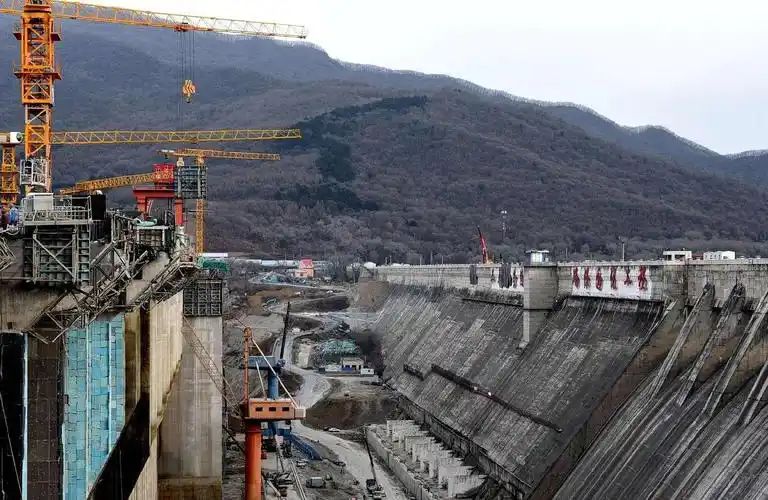
The site's most striking feature is the "one site, two dams" phenomenon, a rare engineering curiosity where a decommissioned 1940s-era concrete gravity dam stands just meters from its 2019 replacement, a 1,068-meter-long roller-compacted concrete giant. The juxtaposition of weathered wartime construction against sleek modern engineering creates a powerful visual narrative, much like comparing a medieval fortress to a contemporary structure side by side. A viewing platform atop the new dam offers sweeping panoramas of the river gorge, making it a paradise for industrial photographers and engineering enthusiasts.
The Fengman Hydropower Museum, located at No. 2 Fengdian Street, holds the distinction of being China's first major facility dedicated to hydroelectric history. Exhibits trace the complete arc from forced wartime construction through postwar reconstruction, featuring preserved control room equipment, scale models, and archival photography. The museum balances technical education with sobering reminders of the labor history, serving both as a science center and a site of remembrance. Its bilingual signage is limited, so visitors should prepare translation tools or arrange guided tours in advance.
Beyond engineering, the reservoir—Songhua Lake—holds 10.8 billion cubic meters of water, creating a vast inland sea that rivals Scotland's Loch Ness in scale and atmosphere. In winter, the station performs an unexpected ecological function: water released from the dam remains relatively warm, and when this moisture meets frigid air, it crystallizes on riverside trees into the celebrated rime ice phenomenon, comparable to Scandinavia's frozen landscapes or Canada's Icefields Parkway in visual drama. This fusion of industrial utility and natural beauty makes winter visits particularly rewarding.
Practical visiting information: the museum and dam complex are typically free but require advance booking one day ahead through official channels, with visitor numbers strictly limited. From central Jilin City, take a public bus to Fengman Station followed by a short walk, or drive directly to "Fengman Hydropower Museum" with complimentary parking available. Spring and autumn offer optimal conditions; arrive before 10 AM or after 3 PM to avoid tour groups. The site pairs well with visits to the Jilin City Laborers' Memorial Hall, boat excursions to Wuhu Island on Songhua Lake, or winter rime ice viewing at downtown Wusong Island.
Strict safety protocols apply throughout the operational facility. Visitors must remain within designated public areas and avoid all restricted power-generation zones. Swimming near the dam is prohibited year-round, and summer visits require extra caution near the river. Guided staff instructions should be followed at all times, given both the active industrial setting and the site's solemn historical significance. The combination of heavy industrial atmosphere and profound historical weight demands respectful, attentive exploration.
Fengman's story begins in 1937, when Japanese occupation forces conscripted laborers to construct the original dam as part of their industrial exploitation of Manchuria. This places it alongside other contested wartime infrastructure projects in Europe and Asia, where monumental engineering was built at tremendous human cost. After communist forces captured the facility in 1948, engineers rebuilt and expanded it, transforming it into the training ground where China's first generation of hydroelectric professionals learned their craft. The station's 125 billion kilowatt-hours of cumulative output powered the heavy industrialization of the northeast, making it as foundational to modern China's energy sector as the Hoover Dam was to the American West.
The site's most striking feature is the "one site, two dams" phenomenon, a rare engineering curiosity where a decommissioned 1940s-era concrete gravity dam stands just meters from its 2019 replacement, a 1,068-meter-long roller-compacted concrete giant. The juxtaposition of weathered wartime construction against sleek modern engineering creates a powerful visual narrative, much like comparing a medieval fortress to a contemporary structure side by side. A viewing platform atop the new dam offers sweeping panoramas of the river gorge, making it a paradise for industrial photographers and engineering enthusiasts.
The Fengman Hydropower Museum, located at No. 2 Fengdian Street, holds the distinction of being China's first major facility dedicated to hydroelectric history. Exhibits trace the complete arc from forced wartime construction through postwar reconstruction, featuring preserved control room equipment, scale models, and archival photography. The museum balances technical education with sobering reminders of the labor history, serving both as a science center and a site of remembrance. Its bilingual signage is limited, so visitors should prepare translation tools or arrange guided tours in advance.
Beyond engineering, the reservoir—Songhua Lake—holds 10.8 billion cubic meters of water, creating a vast inland sea that rivals Scotland's Loch Ness in scale and atmosphere. In winter, the station performs an unexpected ecological function: water released from the dam remains relatively warm, and when this moisture meets frigid air, it crystallizes on riverside trees into the celebrated rime ice phenomenon, comparable to Scandinavia's frozen landscapes or Canada's Icefields Parkway in visual drama. This fusion of industrial utility and natural beauty makes winter visits particularly rewarding.
Practical visiting information: the museum and dam complex are typically free but require advance booking one day ahead through official channels, with visitor numbers strictly limited. From central Jilin City, take a public bus to Fengman Station followed by a short walk, or drive directly to "Fengman Hydropower Museum" with complimentary parking available. Spring and autumn offer optimal conditions; arrive before 10 AM or after 3 PM to avoid tour groups. The site pairs well with visits to the Jilin City Laborers' Memorial Hall, boat excursions to Wuhu Island on Songhua Lake, or winter rime ice viewing at downtown Wusong Island.
Strict safety protocols apply throughout the operational facility. Visitors must remain within designated public areas and avoid all restricted power-generation zones. Swimming near the dam is prohibited year-round, and summer visits require extra caution near the river. Guided staff instructions should be followed at all times, given both the active industrial setting and the site's solemn historical significance. The combination of heavy industrial atmosphere and profound historical weight demands respectful, attentive exploration.