Jilin City Museum
⭐ 3.80
Jilin City Museum, Fengman District, Jilin City, Jilin Province, China
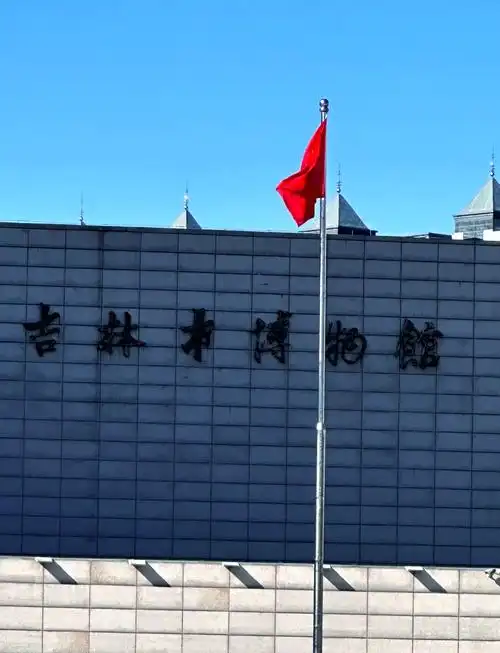 Established in 1962 as the Jilin Exhibition Hall and renamed in 2010, this museum has matured into one of Jilin's premier cultural institutions, housing more than ten thousand artifacts. Its historical narrative begins with the Xituanshan Culture of the early Bronze Age, roughly contemporaneous with the Shang Dynasty of central China, and continues through the Fuyu Kingdom, the Buddhist-influenced Bohai state (698–926 CE)—often compared to Korea's Goryeo in cultural sophistication—before reaching the industrialization era under twentieth-century Chinese and Japanese influence. For Western visitors, this layered timeline echoes the sequential rise and fall of European regional powers from the Vikings to the Habsburgs.
The museum's architecture is monumental and functional, dominated by a spacious central hall that channels visitors toward thematic wings. A second-floor observation platform frames panoramic views of Century Square, much as the cupola of a European civic museum might overlook a city piazza. Adjacent to the main building, the Jilin Manchu Museum forms a cultural cluster, while the meteorite wing sits within its own dedicated hall. Rest areas and a creative cultural-products shop provide comfortable respites between galleries.
The star attraction is undoubtedly the Meteorite Hall, commemorating the extraordinary event of March 8, 1976, when Jilin experienced the largest recorded stony meteorite shower in history—comparable in scale, though different in composition, to the famous Chelyabinsk event of 2013 in Russia. Of 138 recovered specimens, "Jilin No. 1" alone weighs nearly two metric tons and can be examined up close. Sound-and-light installations re-create the descent, while a "time tunnel" interactive corridor allows visitors to simulate space travel—an engaging experience for families and astronomy enthusiasts alike.
Beyond the meteorites, permanent exhibitions cover two thousand years of regional civilization, including the Western Xituanshan culture, the ancient Fuyu and Bohai peoples, and the rise of Jilin as an industrial center. Separate galleries showcase Manchu folk traditions, intangible cultural heritage, calligraphy, painting, and root-carving artistry. Together these displays reveal a Manchu homeland heritage that complements visits to Beijing's Forbidden City by showing how imperial and ethnic cultures intertwined in China's northeast frontier.
Practical details are essential: the museum sits at 100 Jilin Avenue, Fengman District, just south of Century Square. It opens Tuesday through Sunday, 9:00 a.m. to 4:30 p.m., with last entry at 4:00 p.m., and remains closed on Mondays. General admission is free, though the Meteorite Hall requires advance booking via the WeChat account "吉林市博物馆," limited to one ticket per person daily. Bring a passport or other photo ID and call 0432-66072028 for inquiries.
Visitors should allocate at least three hours, beginning with the Meteorite Hall in morning light when crowds are thin, then proceeding chronologically through the historical galleries before ascending to the rooftop terrace at dusk for square views. The museum suits culturally curious travelers, school groups, and astronomy aficionados far better than hurried sightseers—it is a destination for contemplation rather than a quick photograph.
Established in 1962 as the Jilin Exhibition Hall and renamed in 2010, this museum has matured into one of Jilin's premier cultural institutions, housing more than ten thousand artifacts. Its historical narrative begins with the Xituanshan Culture of the early Bronze Age, roughly contemporaneous with the Shang Dynasty of central China, and continues through the Fuyu Kingdom, the Buddhist-influenced Bohai state (698–926 CE)—often compared to Korea's Goryeo in cultural sophistication—before reaching the industrialization era under twentieth-century Chinese and Japanese influence. For Western visitors, this layered timeline echoes the sequential rise and fall of European regional powers from the Vikings to the Habsburgs.
The museum's architecture is monumental and functional, dominated by a spacious central hall that channels visitors toward thematic wings. A second-floor observation platform frames panoramic views of Century Square, much as the cupola of a European civic museum might overlook a city piazza. Adjacent to the main building, the Jilin Manchu Museum forms a cultural cluster, while the meteorite wing sits within its own dedicated hall. Rest areas and a creative cultural-products shop provide comfortable respites between galleries.
The star attraction is undoubtedly the Meteorite Hall, commemorating the extraordinary event of March 8, 1976, when Jilin experienced the largest recorded stony meteorite shower in history—comparable in scale, though different in composition, to the famous Chelyabinsk event of 2013 in Russia. Of 138 recovered specimens, "Jilin No. 1" alone weighs nearly two metric tons and can be examined up close. Sound-and-light installations re-create the descent, while a "time tunnel" interactive corridor allows visitors to simulate space travel—an engaging experience for families and astronomy enthusiasts alike.
Beyond the meteorites, permanent exhibitions cover two thousand years of regional civilization, including the Western Xituanshan culture, the ancient Fuyu and Bohai peoples, and the rise of Jilin as an industrial center. Separate galleries showcase Manchu folk traditions, intangible cultural heritage, calligraphy, painting, and root-carving artistry. Together these displays reveal a Manchu homeland heritage that complements visits to Beijing's Forbidden City by showing how imperial and ethnic cultures intertwined in China's northeast frontier.
Practical details are essential: the museum sits at 100 Jilin Avenue, Fengman District, just south of Century Square. It opens Tuesday through Sunday, 9:00 a.m. to 4:30 p.m., with last entry at 4:00 p.m., and remains closed on Mondays. General admission is free, though the Meteorite Hall requires advance booking via the WeChat account "吉林市博物馆," limited to one ticket per person daily. Bring a passport or other photo ID and call 0432-66072028 for inquiries.
Visitors should allocate at least three hours, beginning with the Meteorite Hall in morning light when crowds are thin, then proceeding chronologically through the historical galleries before ascending to the rooftop terrace at dusk for square views. The museum suits culturally curious travelers, school groups, and astronomy aficionados far better than hurried sightseers—it is a destination for contemplation rather than a quick photograph.